#Industry News
Working Principle of an Engine Oil Seal
Working Principle of an Engine Oil Seal: A Precision-Driven Collaborative Sealing Mechanism
The efficient sealing capability of an engine oil seal stems from its ingenious structural design and the coordinated action of multiple components. Its core principle is to precisely control the flow of oil through contact pressure sealing and structural compensation, while simultaneously blocking the intrusion of external contaminants.
Core Structure and Sealing Basics
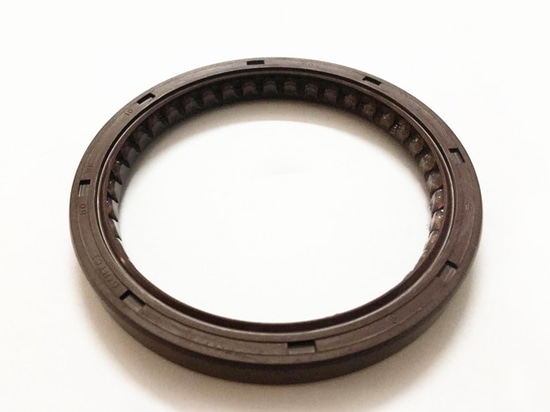
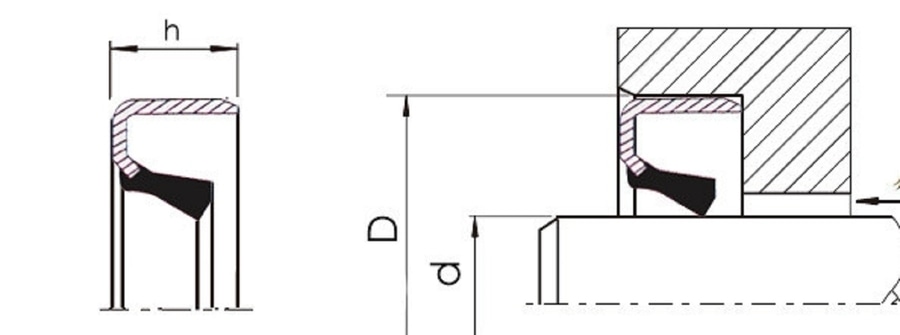
The oil seal primarily consists of four components: a sealing lip, a spring band, a frame, and a rubber base. The rubber base is made of oil- and heat-resistant nitrile rubber or fluororubber, bonded to the metal frame through a vulcanization process, ensuring both overall rigidity and the necessary elasticity for sealing. The sealing lip, a key contact point, features a wedge- or tapered design, creating linear contact with the rotating shaft surface, generating initial contact pressure through the rubber's inherent elasticity.
The spring band (also known as a garter spring) surrounds the base of the sealing lip, applying continuous radial tension to compensate for the loss of rubber elasticity over time, ensuring a consistent, tight seal between the lip and the shaft. This dual pressure mechanism of "rubber elasticity + spring tension" is crucial for maintaining effective sealing. Dynamic Seal Operation
When the engine is running, the rotating shaft and the oil seal lip engage in relative motion, causing the oil seal to enter a dynamic sealing state:
Oil film control: A small amount of oil forms a very thin lubricating film along the shaft surface, reducing friction and wear between the lip and shaft while also preventing significant oil leakage through the oil film's surface tension. The lip's micro-texture design guides excess oil back into the oil chamber, achieving a dynamic balance between sealing and lubrication.
Pressure balance: The circulating oil within the engine generates a certain amount of pressure. The angled design of the lip creates "pressure feedback"—the higher the oil pressure, the greater the contact pressure between the lip and the shaft surface, automatically enhancing the sealing effect and preventing high-pressure oil from breaking through the sealing surface.
Anti-fouling barrier: A dust lip is typically located on the outside of the lip, forming a double barrier with the main sealing lip. The slight contact of the dust lip with the shaft surface prevents the ingress of dust, sand, and other impurities, preventing particles from scratching the main lip or embedding themselves in the sealing surface, potentially damaging the seal. Auxiliary Functions of Static Sealing
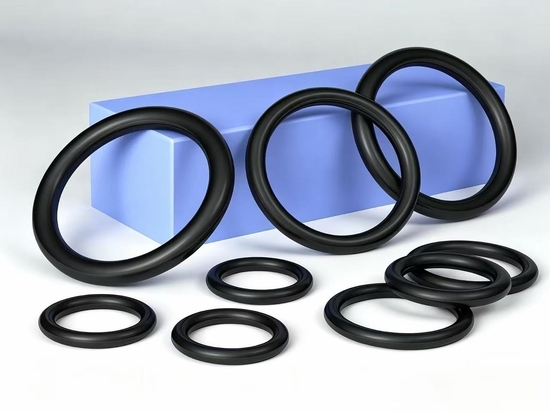
For oil seals on static mating surfaces such as valve covers and oil pans, their operating principle relies more on surface contact sealing: the rubber base is compressed and deformed by the bolt preload, filling the microscopic gaps in the mating surface and forming a continuous sealing ring. Static oil seals are often rectangular or O-shaped in cross-section, leveraging the rubber's compression-rebound properties to offset assembly errors and component thermal deformation, ensuring consistent sealing integrity despite temperature fluctuations and vibration.
Environmentally Adaptable Design
The operating principle of an oil seal is also reflected in its ability to adapt to complex operating conditions: the rubber material's temperature resistance can withstand temperature fluctuations near the engine block, ranging from -40°C to 150°C; the skeleton structure resists deformation caused by oil pressure and vibration; and some high-end oil seals even feature a PTFE coating on the lip to further reduce friction, improve wear resistance, and enhance sealing durability. This multi-dimensional optimized design ensures that the oil seal continues to perform its sealing function in the demanding environments of high speed, high temperature, and high pressure.