#Product Trends
Analysis of the "Four Famous Belts" of Mechanical Transmission: V-Belts, Toothed Belts, Round Belts, and Wrapped Belts, Each with Its Own Special Features
Analysis of the "Four Famous Belts" of Mechanical Transmission: V-Belts, Toothed Belts, Round Belts, and Wrapped Belts, Each with Its Own Special Features
In the world of industrial production and mechanical operation, transmission belts play a crucial role as "power bridges." V-belts, toothed belts (synchronous belts), round belts, and cloth-wrapped belts are the four most widely used transmission components. Each excels in its respective fields due to its distinct structural characteristics. Recently, industry experts systematically analyzed the differences and application scenarios of these four types of transmission belts, providing a reference for industry selection.
V-Belts: The "Powerhouse" of Friction Transmission
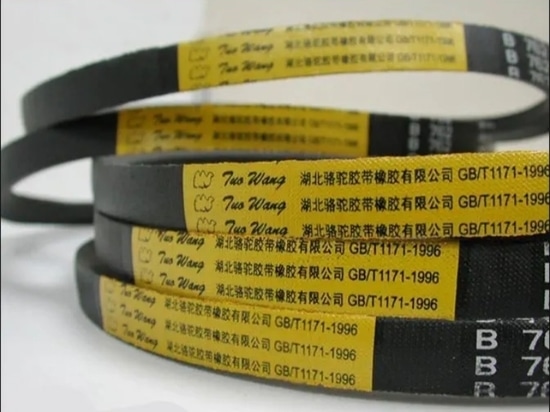
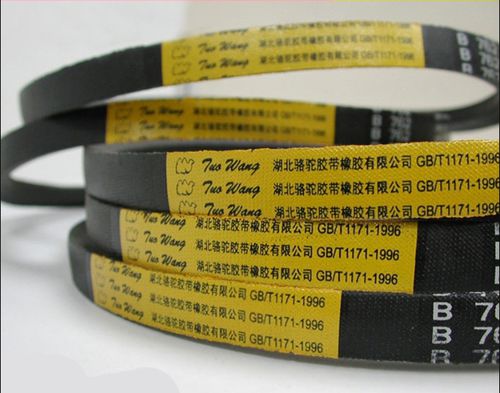
V-belts, with their trapezoidal cross-section, are a versatile tool in mechanical transmission. The belt body consists of a tension layer, a tension layer, a compression layer, and a rubber canvas covering. The two sides serve as working surfaces, transmitting power through friction with the pulley grooves. V-belts can carry power ranging from a few watts to hundreds of kilowatts, tolerate a certain center distance error and axial misalignment, and maintain a transmission efficiency of 92%-96%.
Currently, V-belts are widely used in applications such as machine tool spindle drives, tractor power distribution, and automotive engine accessory drives, playing a particularly important role in power transmission in small and medium-sized machinery. Toothed Belts: The "Pioneer" of Precision Transmission
Unlike V-belts, toothed belts achieve "zero-slip" transmission through their uniformly spaced teeth, which mesh precisely with the pulley's grooves. Made of polyurethane or neoprene as a base material, with glass fiber or steel cord embedded within for added strength, they maintain a transmission ratio error within 0.5% and boast an efficiency of 98%-99%.
This high precision makes them a top choice for precision machinery. Applications requiring stringent transmission accuracy, such as printer paper feeds, synchronous conveyor systems in automated assembly lines, and automotive engine timing systems, all rely on toothed belts for smooth and efficient operation. However, experts caution that toothed belts require high installation precision, and overloading should be avoided to prevent tooth breakage.
Round Belts: The "Flexible" Option for Light-Load Transmission
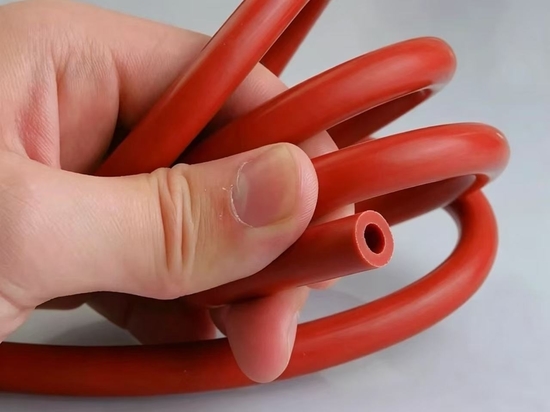
Round belts have a circular cross-section and are primarily made of rubber, polyurethane, or leather. Some versions feature a fiber reinforcement layer. They rely on friction with the U- or V-shaped pulley grooves for transmission, offering a simple structure and easy installation, adapting to tight bend radii. However, due to structural limitations, round belts typically transmit no more than a few kilowatts of power, have low transmission accuracy, and are prone to wear. They are primarily used in light-load, low-speed equipment such as paper shredders, small food conveyors, and household sewing machines, becoming the "invisible power link" in daily life and office settings.
Cloth-wrapped belts: The "stable traveler" of long-distance transmission
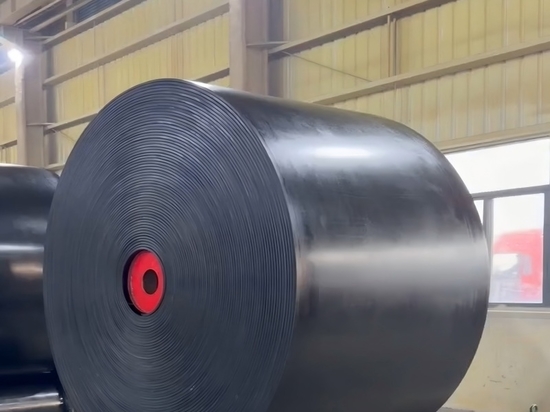
Cloth-wrapped flat belts, characterized by their flat cross-section, are constructed from multiple layers of fiber fabric and rubber, with a canvas or cotton protective layer wrapped around the outside. They utilize friction between the belt and the pulley surface, enabling long-distance power transmission over 10 meters or more. They boast a transmission efficiency of approximately 90%-95%, and operate smoothly and quietly.
Cloth-wrapped belts demonstrate unique advantages in applications such as long-distance power transmission in textile machinery and conveyor belt drives in woodworking equipment. However, caution is advised: the cotton layer easily absorbs water and deforms, requiring proper protection during use.
Industry insiders indicate that while the four types of transmission belts share similar principles, their performance differs significantly. When selecting a model, companies need to comprehensively consider factors such as power, accuracy, and distance to fully utilize its transmission efficiency and safeguard production efficiency.