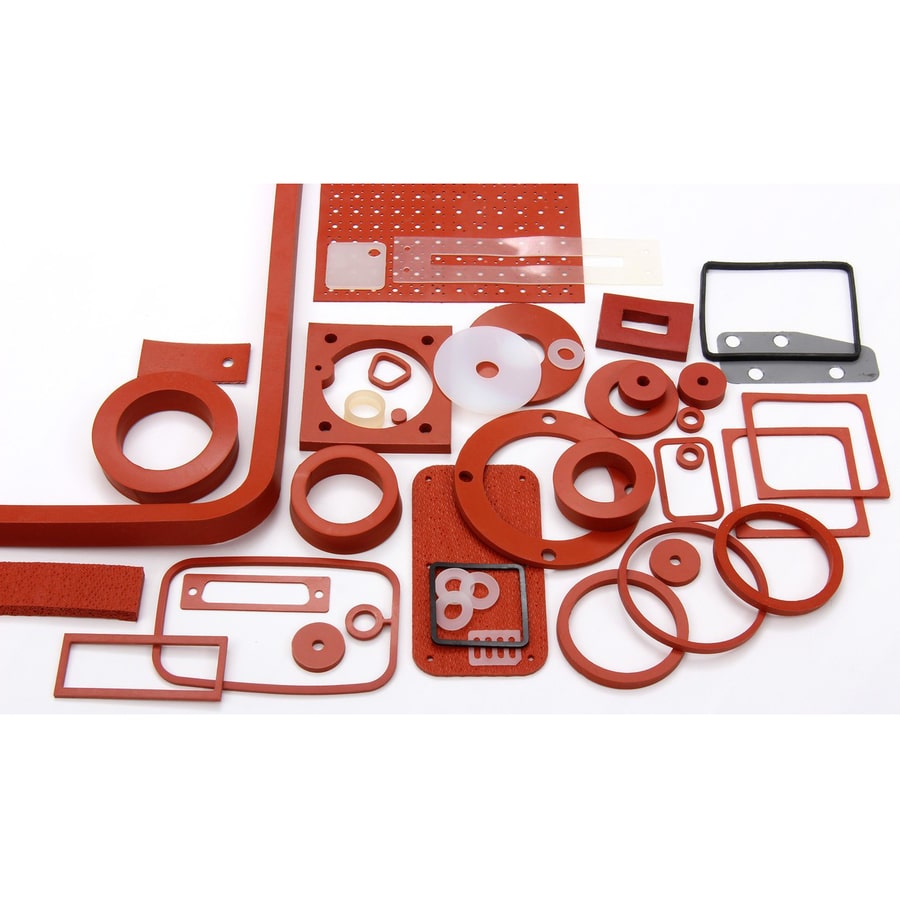
#Industry News
How to choose a suitable seal?
Complete sealing component selection solution (general industrial applications + tailored to your semiconductor vacuum/hydraulic/rubber sealing needs)
The core logic for selection is as follows: first determine the working conditions → select the sealing structure → match the material → check the size and groove → confirm special requirements → verify the sample. You can select a suitable seal in 5 steps. The following is a detailed explanation of each module.
I. Step 1: Organize 5 Core Operating Parameters (Prerequisite for Selection; Missing Even One Can Lead to Incorrect Selection)
1. Sealing Position & Motion Type (Determines Which Structure of Seal to Use)
Type | Definition | Recommended Sealing Structure | Applicable Scenarios
Static Seal (No Relative Motion) | Flanges, End Caps, Pipe Joints, Vacuum KF Flange Blind Plate/Clamp Seals, Completely Fixed | O-rings, Flat Gaskets, Spiral Wound Gaskets, Hollow Rings, C-rings | For ASML Vacuum Pipelines, Valve Flanges, Equipment Cavity Sealing (KF Vacuum Fittings Matching Seals)
Reciprocating Dynamic Seal | Hydraulic Cylinder Pistons/Piston Rods, Cylinder Linear Extension | Y/U-rings, Glyd rings, Step seals, Combination Seals | Hydraulic Cylinders, Agricultural Machinery, Construction Machinery Cylinders
Rotary Dynamic Seal | Motor Shafts, Pump Shafts, Drive Shaft Rotation | Skeleton Oil Seals, Rotary Glyd Rings, Shaft Plug Seals | Gearboxes, Water Pumps, Hydraulic Motor Shafts
2. Working Medium (Most susceptible to corrosion, swelling, and failure, determining the minimum material tolerance)
First, identify the contact medium: hydraulic oil/lubricating oil, water/steam, acids, alkalis, chemicals, organic solvents, vacuum gases, refrigerants, food and pharmaceutical solutions, etc.
• Mineral hydraulic oil, diesel engine oil → NBR nitrile rubber, FKM fluororubber, PU polyurethane
• Pure water, high-temperature steam, antifreeze, weak acids and alkalis → EPDM ethylene propylene diene monomer (EPDM)
• Strong acids and alkalis, solvents such as acetone/toluene, corrosive chemical media → FKM fluororubber / FFKM perfluororubber / PTFE tetrafluoroethylene
• Semiconductor high vacuum, clean and non-precipitating environments, lithography machine chambers → High-purity FKM, FFKM, filled PTFE (low volatility, cleanliness level)
• Food/drinking water FDA certification → Food-grade EPDM, VMQ silicone
3. Pressure (Regular pressure + instantaneous peak pressure)
The higher the pressure, the easier it is for the seal to be squeezed out. High pressure requires a retaining ring/composite structure.
• Low pressure ≤1MPa: O-rings and ordinary gaskets are sufficient.
• Medium pressure 1~30MPa: Y/U-rings, PU lip seals, Glyd rings
• High pressure >30MPa: O-rings + PTFE retaining rings, Step seals, metal composite seals, and plug seals
4. Temperature (Long-term operating temperature range + short-term extreme temperature)
Exceeding the temperature limit will cause rapid hardening, softening, and permanent deformation failure.
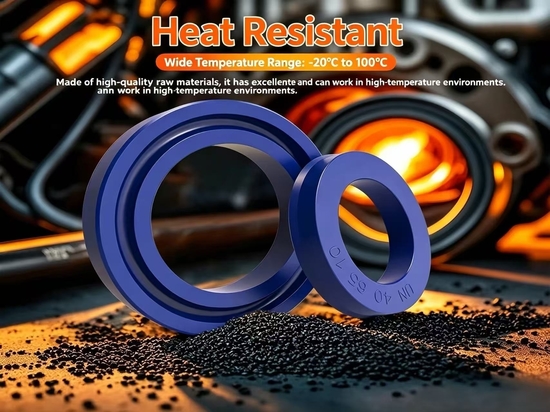
• Room temperature -20~100℃: NBR and EPDM are the best value options.
• High temperature 120~200℃: FKM fluororubber, HNBR hydrogenated nitrile butadiene rubber
• Ultra-high temperature >200℃: FFKM perfluorinated rubber, metal seals, and flexible graphite
• Low temperature <-40℃: VMQ silicone, low-temperature modified FKM, and special HNBR
5. Linear velocity, surface roughness, and environment
• Reciprocating speed > 0.5m/s, high-speed rotation: Do not use ordinary O-rings; select PTFE composite low-friction seals.
• Outdoor/ozone/UV exposure: EPDM or FKM is required; ordinary NBR is prone to aging and cracking.
• Harsh environments with dust and sediment: Use in combination with dustproof rings.
II. Second Step: Mainstream Sealing Structure Selection Comparison Table (Directly match according to working conditions)
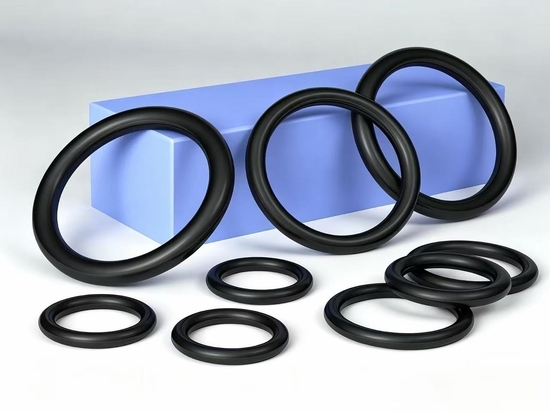
1. O-ring (Most widely used, highest cost-effectiveness)
✅Applicable to: Static sealing, low-speed reciprocating/rotation (<0.3m/s), pressure ≤10MPa; universal for pipe flanges, valves, and vacuum joints.
❌Not applicable to: High-speed reciprocating, high-pressure without retainer rings, large eccentricity shaft seals.
Matching: When pressure > 10MPa, add PTFE retainer rings on both sides of the O-ring to prevent extrusion.
2. Lip Seals (Y/U-rings)
✅Applications: Hydraulic cylinder piston rods, reciprocating piston motion, pressure 0~40MPa, wear-resistant and deformation-resistant, self-tightening seal. PU polyurethane is the preferred material (the king of wear resistance), FKM fluororubber Y-rings are used for high-temperature applications.
3. Glyd Rings/Step Seals (High-Pressure Precision Seals)
• Glyd Ring: Bidirectional high-pressure seal for pistons (inner wall of hydraulic cylinders)
• Step Seal: Unidirectional high-pressure seal for piston rods (axial external leakage seal)
✅Applications: 20~70MPa high-pressure hydraulics, precision equipment, engineering machinery, PTFE slip ring + rubber O-ring combination, low friction and no creep.
4. Skeleton Oil Seals (Dedicated for Rotary Shafts)
✅Applications: Rotary shafts of motors, pumps, and reducers, sealing lubricating oil and preventing dust, sealed by spring-loaded shaft surface. Selected according to shaft diameter, mounting hole diameter, and width, available in TC/SC/VC structures, etc.
5. Gaskets/Flange Sealing Gaskets (Flat Static Seals)
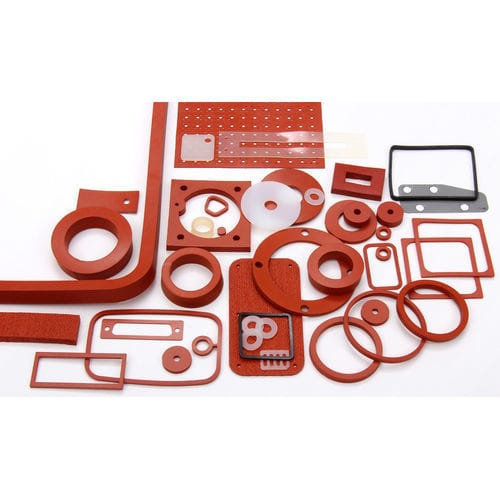
Rubber gaskets, PTFE gaskets, and spiral wound gaskets are used for wide flange faces, rough sealing surfaces, and scenarios where grooves cannot be machined (flat gaskets for vacuum KF flanges also fall into this category).
6. Universal Seal (Universal Seal for Extreme Conditions)
Spring + PTFE/UHMWPE structure, suitable for high and low temperatures, strong corrosion, vacuum, and high and low pressure applications; commonly used in semiconductor, chemical, and liquid nitrogen equipment.
III. Step 3: Quick Reference Table for Sealing Material Selection (4 Core Categories, Covering 90% of Industrial Scenarios)
Material Abbreviation | Full Name | Temperature Range | Core Advantages | Weaknesses | Recommended Scenarios
NBR (Nitrile Butadiene Rubber) | -40~120℃ | Resistant to mineral oil, lowest cost, universal | Not resistant to acids, alkalis/ozone/ketone solvents | Ordinary hydraulic systems, air compressors, agricultural machinery, conventional oil seals/O-rings
EPDM (Ethylene Propylene Diene Monomer) | -55~150℃ | Resistant to water/steam/weak acids, anti-aging and weather-resistant | Swells and fails when exposed to oil Plumbing, automotive cooling systems, outdoor equipment, vacuum water piping
FKM/Viton Fluororubber -20~200℃ (short-term 260℃) Oil-resistant/acid and alkali-resistant/high temperature-resistant/vacuum-resistant, extremely chemically compatible. Relatively high price. High-temperature hydraulics, chemical equipment, semiconductor vacuum, engines, highly corrosive environments.
PU Polyurethane -50~80℃ Super wear-resistant, compression-resistant, high hardness. Poor high-temperature resistance, not hydrolytic. High-pressure cylinders, heavy-duty reciprocating seals, engineering machinery.
VMQ Silicone Rubber -60~230℃ Excellent low-temperature performance, non-toxic food-grade, weather-resistant. Low mechanical strength, not oil-resistant. Food, medical, home appliances, low-temperature sealing, static sealing in oil-free environments.
PTFE/Refilled PTFE -200~260℃ Resistant to all chemicals, extremely low friction, clean and no exudation. Poor elasticity, requires spring preload. Semiconductor high-purity vacuum, highly corrosive media, high-speed motion, plug seals/Glydridge slip rings.
FFKM Perfluoroelastomer (PFE) rubber: -20~320℃, resistant to all chemical reagents, ultra-high clean vacuum, most expensive (ten times the cost of FKM). Used in lithography machines/semiconductor cavities, specialty chemicals, and extreme corrosive conditions.
Quick Material Selection Guidelines:
1. Ordinary machine oil/hydraulic oil, room temperature → NBR (cost-effective and sufficient)
2. Water, steam, outdoor exposure → EPDM
3. High temperature + oil + corrosion + vacuum (ASML compatible) → FKM
4. Wear-resistant, high-pressure reciprocating cylinders → PU/Y-ring
5. Semiconductor clean vacuum, strong solvents → FFKM/filled PTFE
6. Food and medical non-toxic → food-grade EPDM/silicone
IV. Step Four: Size & Groove Verification (90% of selection failures are due to incorrect dimensions)
1. O-ring standards: National Standard GB/T3452, American Standard AS568, marking format: Inner diameter ID × wire diameter CS
2. Shaft seals: Measure shaft outer diameter, groove diameter, and groove width; for bore seals, measure cylinder inner diameter and groove dimensions.
3. Seal compression ratio control (rubber seal core)
◦ Static seal: Compression ratio 18%~25%
◦ Reciprocating dynamic seal: Compression ratio 12%~18%
◦ Rotary seal: Compression ratio 8%~12% Excessive compression leads to rapid aging; insufficient compression results in poor sealing and leakage.
4. Installation grooves must be chamfered and burr-free; shaft surface finish Ra≤0.8μm, otherwise, the seal will be scratched.
V. Step 5: Special Requirements + On-site Verification
Special Additional Conditions (Check the box)
• Semiconductor/Photovoltaic: Requires low precipitation, dust-free, cleanliness level, and vacuum leakage rate; select high-purity rubber materials and dust-free production.
• Food and Pharmaceutical: Requires FDA and RoHS certified materials.
• Explosion-proof/Flame-retardant: Select flame-retardant rubber formulations.
• Refrigerant (Air Conditioning): Select HNBR hydrogenated nitrile butadiene rubber, or dedicated refrigerant FKM
Product Selection Process (Standard Steps for Foreign Trade/Bulk Procurement)
1. Submit a complete operating condition table (medium/temperature/pressure/motion/dimensional) → Manufacturer provides selection solution
2. Small batch sample installation and testing (72-hour operating condition test, leakage, temperature rise, wear)
3. Place a bulk order only after the test is passed to avoid large-scale returns due to incorrect selection
VI. Selection Examples Based on Your Business Scenario (ASML Vacuum Fittings + Rubber Seals)
1. KF Vacuum Flange with Static Seal (DN40/DN50 Vacuum Piping)
Operating Conditions: High vacuum, clean nitrogen/air, ambient temperature ~ 120℃ static seal
Selection: High-purity FKM fluororubber O-rings/PTFE-coated O-rings, matching KF standard groove dimensions
2. Hydraulic agricultural machinery cylinder reciprocating seal
Operating conditions: 46# hydraulic oil, pressure 16MPa, reciprocating motion
Selection: PU material Y-ring/Glyd ring, NBR dustproof ring combination
3. Chemical equipment corrosive media pump shaft rotary seal
Operating conditions: weak acid solvent, 150℃ high temperature, rotating shaft
Selection: fluororubber skeleton oil seal/fluororubber plug seal
5 key points to avoid pitfalls in selection
1. Only looking at the size without considering the operating conditions: NBR of the same size will swell and become unusable when filled with solvent in the environment.
2. Not using a retaining ring for high pressure: O-rings will be squeezed into the gap and sheared and break under pressure.
3. Mixing materials: EPDM will expand and fail immediately when filled with machine oil; FKM cannot be used for long-term operation in pure water.
4. Randomly selecting hardness: High hardness seals are poorly fitted for low pressure; soft rubber is easily extruded for high pressure (Shore A 70A is generally applicable for conventional seals; select 85~90A for high pressure).
5. Ignoring installation tolerances: grooves exceeding tolerances and shafts with burrs will shorten the lifespan of even the best materials.
If needed, you can send me the equipment's operating conditions (medium, temperature and pressure, installation location, dimensions), and I can directly order specific materials and model specifications for you.