#Industry News
What are some common types of flanges? How do I choose the right flange?
Complete sealing component selection solution (general industrial applications + tailored to your semiconductor vacuum/hydraulic/rubber sealing needs)
I. What is a Flange?
A flange, also called a flange plate, is a detachable, sealable, and maintainable connection joint between pipes, valves, and equipment.
Its three main functions are:
1. Connection: Connecting two sections of pipe or equipment.
2. Sealing: Preventing leakage when used with gaskets/O-rings.
3. Disassembly/Assembly: Facilitating later maintenance, cleaning, and replacement of parts.
II. Eight Common Types of Industrial Flanges (Structure + Features + Applicable Scenarios)
1. Plate-type Flat Welding Flange (PL)
Features: Neckless, flat plate structure; pipe is inserted into the flange inner ring and welded; simple structure and lowest price.
Advantages: Low cost, fast processing, and simple installation.
Disadvantages: Poor rigidity, low pressure resistance, not resistant to high temperature and pressure, cannot be used in a vacuum.
Applicable to: Normal pressure and low pressure/normal temperature scenarios. Water supply and drainage, ventilation, ordinary clean water, and low-pressure air pipelines.
2. Slip-on Neck Flange (SO)
Features: Short neck, superior rigidity compared to plate slip-on flanges, more stable welding positioning.
Advantages: Highest cost-effectiveness for medium pressure applications, less prone to deformation.
Applications: Low-to-medium pressure chemical pipelines, oil pipelines, general process pipelines, hydraulic auxiliary pipelines.
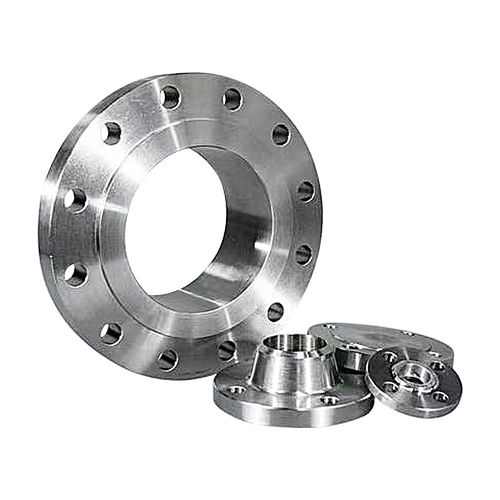
3. Weld Neck Flange (WN) – High-Pressure Main Flange
Features: Long tapered neck, full penetration weld to the pipeline, extremely strong integrity, uniform stress distribution.
Advantages: High temperature resistance, high pressure resistance, vibration resistance, stable sealing performance, suitable for flaw detection.
Applications: High-temperature steam, oil and gas, flammable and explosive media, pressure vessels, high-pressure main pipelines.
4. Socket Welding Flange (SW)
Features: Pipe is inserted into the flange socket and welded, no butt joint gap.
Applications: Small diameter high-pressure pipelines up to DN50, instrument pipelines, fine chemical small pipelines.
5. Threaded Flange (TH)
Features: No welding required; the flange's internal thread directly locks onto the pipe's external thread.
Advantages: Fast installation, no welding deformation, suitable for fire-prohibited environments.
Disadvantages: Prone to leakage in high-pressure, high-temperature, and vacuum environments.
Applications: Low-pressure gas, plumbing, small-diameter temporary piping.
6. Loose/Slip-on Flange (PJ)
Features: The flange can rotate freely and fits snugly onto the pipe flange.
Advantages: Bolt holes can be aligned freely, extremely convenient installation; carbon steel flange + stainless steel flange, cost-saving.
Applications: Stainless steel corrosion-resistant pipelines, large-diameter pipelines, equipment interfaces requiring frequent disassembly and assembly.
7. Integral Flange (IF)
Features: The flange is cast integrally with the valve body, pump body, or equipment cavity and cannot be separated.
Applications: Valves, pressure vessels, reactors, original equipment ports.
8. Blind Flange (BL / Flange Cover)
Features: Solid disc, no through-hole, used for sealing pipe openings. Applications: Sealing spare interfaces, plugging test ports, sealing equipment pressure test ports, and plugging vacuum pipelines.
III. Vacuum Equipment Dedicated Flanges (Semiconductor/Precision Equipment Only)
Ordinary pipe flanges cannot be used in vacuum systems. Vacuum systems have dedicated standard flanges:
1. KF Quick-Connect Vacuum Flange (ISO-KF)
Most commonly used in the industry (KF16/25/40/50/63)
Structure: Flange + O-ring + aluminum clamp, quick disassembly by hand, no tools required.
Features: Clean, low leakage, quick assembly and disassembly.
Applications: Vacuum pumps, lithography machines, laboratory vacuum pipelines, semiconductor equipment bypass.
2. CF Ultra-High Vacuum Flange
Features: Knife-edge compression oxygen-free copper metal seal, no rubber exudation, can be baked at high temperatures.
Applications: Ultra-high vacuum chambers, coating, scientific research precision equipment.
3. ISO Large Diameter Vacuum Flange
Large-size bolt locking structure, used for large vacuum chambers and main exhaust pipelines.
IV. Five Types of Flange Sealing Surfaces (Determining Sealing Effectiveness)
Whether a flange leaks or not depends 80% on the choice of sealing surface:
1. RF Raised Face (Most Common)
A raised ring sealing surface, suitable for a wide range of gaskets.
Applicable to: 90% of conventional water, oil, and gas pipelines at low and medium pressure.
2. MFM Raised Face (Concave-Concave)
A raised and recessed mating surface prevents the gasket from being squeezed out by pressure.
Applicable to: Medium and high pressure, oil, and mildly corrosive media.
3. TG Tongue and Groove Face
The gasket is completely locked within the groove, zero extrusion, and the strongest sealing performance.
Applicable to: Vacuum, toxic, flammable, high-purity media, and semiconductor equipment.
4. FF Flat Face
A completely flat fit, with a weaker sealing effect.
Applicable to: Low-pressure civil water supply and drainage, and plastic pipelines.
5. RJ Ring Connection Face
Trapezoidal groove + metal ring gasket for a hard seal.
Applicable to: Ultra-high pressure, high-temperature power plants, hydrogen refueling, and heavy oil equipment.
V. Common Flange Materials and Applicable Working Conditions
1. Carbon Steel Q235/20#: Highest cost-performance ratio, suitable for clean water, air, and normal temperature and pressure working conditions. Not corrosion resistant, not suitable for vacuum applications.
2. Stainless Steel 304/316L: Rust resistant, water resistant, resistant to weak acids and alkalis, clean and without precipitation.
Suitable for chemical, pure water, food, vacuum equipment, and semiconductor KF flanges.
3. Chromium-Molybdenum Alloy Steel: High temperature resistant, creep resistant, used for high temperature and high pressure steam, power plants, and hydrogenation units.
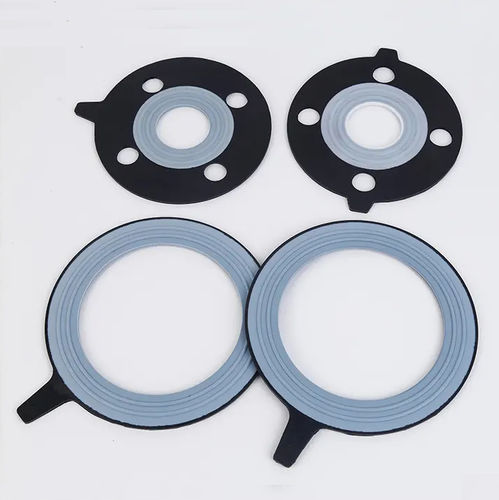
4. PTFE-lined Flanges: Carbon steel lined with PTFE, resistant to strong acids, alkalis, and highly corrosive chemical media.
VI. Six-Step Method for Scientific Flange Selection (Universal Formula)
Step 1: Confirm Pipe Diameter DN
DN15/25/40/50/80/100… Standardize the pipe diameter to ensure correct matching.
Step 2: Confirm Working Pressure
Low pressure ≤ 16 kg, Medium pressure 16–40 kg, High pressure > 40 kg, Vacuum negative pressure. The flange rated pressure must be ≥ the actual maximum working pressure.
Step 3: Confirm Medium
Water/Oil/Gas/Steam/Acid/Alkali Solvent/High-purity Vacuum Gas. The medium determines the material and whether ordinary rubber seals can be used.
Step 4: Confirm Temperature
Normal temperature, high temperature 150℃+, low temperature, and oven-safe vacuum environment
Step 5: Confirm Frequent Disassembly/Reassembly Required
Requires quick disassembly → Select KF quick-connect, loose flange
Permanent piping → Weld neck, slip-on flange
Step 6: Match Sealing Surface + Matching Seals
Ordinary piping → RF + gasket
Medium/high pressure → MFM raised face
Vacuum/toxic media → TG tongue and groove
Ultra-high vacuum → Metal knife edge seal
VII. Quick Selection Reference Table for Scenarios (Directly copy the instructions)
1. Ordinary water supply and drainage, ventilation → Plate slip-on PL + RF raised face
2. Medium and low pressure oil pipelines in the chemical industry → Necked slip-on SO + RF
3. High temperature and high pressure steam, pressure vessels → Necked butt-on WN + MFM/RJ
4. Stainless steel corrosion-resistant large pipelines → Loose slip-on flange
5. Vacuum equipment, semiconductor, lithography machine piping → KF quick-connect flange + High-purity FKM seal
6. Seal spare pipe opening → Blind flange (BL)
7. Small-diameter high-pressure pipeline for instruments → Socket weld (SW) flange
VIII. Five common pitfalls in flange selection
1. Flat-face welding flange for high pressure → Insufficient rigidity, deformation and leakage
2. Ordinary RF flange for vacuum → Leakage, vacuum level not meeting standards
3. Carbon steel flange for corrosive media → Rusting and perforation, extremely short lifespan
4. Choosing a low pressure rating → Bursting after pressure increase, significant safety hazards
5. Mixing standards (mixing national standards/American standards/German standards) → Bolt holes mismatch, unable to install
IX. Summary
Core logic for flange selection: Operating conditions determine structure, medium determines material, pressure determines rating, application determines sealing surface