
#Product Trends
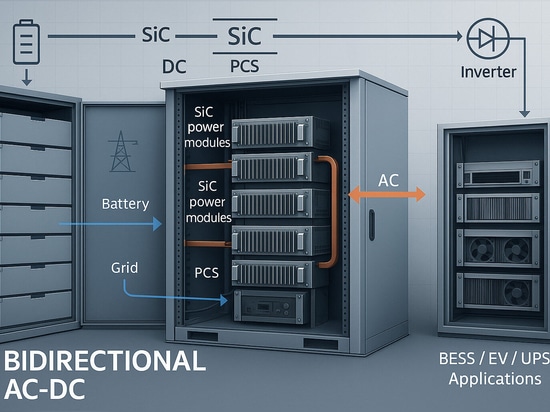
ACDC Bidirectional Modules: Energy Management in Microgrid Systems
Understanding AC to DC and DC to AC Conversion
Alternating current (AC) is the standard electricity from utility grids worldwide. Most electronic devices—smartphones to industrial sensors—need direct current (DC) to operate. This is where ac to dc power supplies and converters come in. They convert AC voltage (e.g., 176-264VAC via our Input Module) to stable, regulated DC for loads.
The conversion process typically involves three key stages:
Rectification: The AC input goes through a rectifier (usually a diode bridge). It turns bidirectional AC into one-way pulsating DC. For high-performance use, our ac dc switching power supply uses advanced rectification. This minimizes voltage ripple at this stage.
Filtering: A capacitor bank or inductor filters pulsating DC. It smooths voltage fluctuations for near-constant DC output. This is critical for sensitive electronics. They need stable power to avoid issues or damage.
Regulation: A voltage regulator (analog/digital) adjusts DC to the load’s exact level (e.g., 12VDC, 24VDC, 48VDC). Our 93.5% AC-DC Efficiency Module optimizes this stage. It uses synchronous rectification and advanced control algorithms. This ensures minimal energy loss during conversion.
Key performance metrics for AC to DC conversion include efficiency, power factor (PF), and total harmonic distortion (THDi). Our PF>0.99 Power Module ensures the converter draws grid current in alignment with voltage waveforms. This reduces grid strain and meets international standards (e.g., IEC 61000-3-2).
Meanwhile, our THDi<5% Power Module minimizes harmonic currents. These currents can interfere with equipment and harm power quality. Together, these features make our ac to dc power supplies ideal for industrial, medical, and data center use. In these applications, reliability and grid compatibility are critical.