
#Product Trends
Open Frame vs. Enclosed Power Supplies: An In-Depth Application Scenario Analysis
Open Frame vs. Enclosed Power Supplies
The Open Frame Power Supply
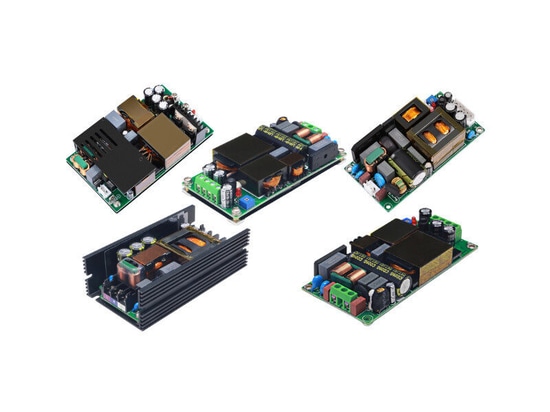
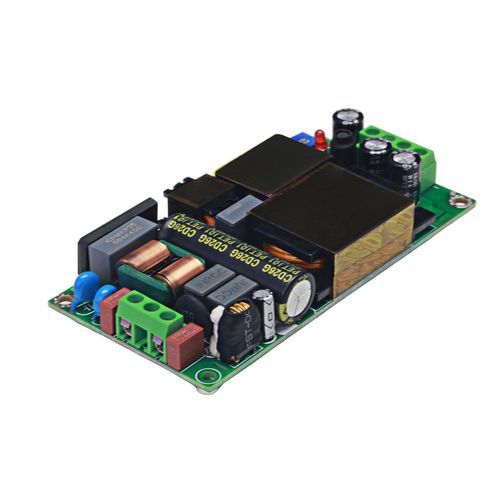
An open frame power supply is characterized by its minimalist construction. In this design, the core components—the input filter, switching circuitry, transformer, and output regulators—are assembled onto a single printed circuit board (PCB). Typically, this board is then mounted to a lightweight metal frame or baseplate, which provides structural rigidity and a means for mounting. Crucially, it lacks a full top or bottom cover, leaving the components exposed.
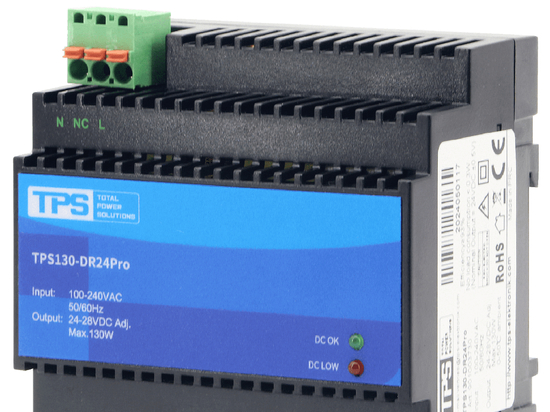
This design philosophy prioritizes direct integration into a host system. As a result, the primary thermal management strategy is natural cooling, relying on convection and the airflow within the end-equipment’s own enclosure to dissipate heat. Furthermore, their low-profile form factor and common compatibility with standard DIN rails make them exceptionally popular in controlled environments like industrial control cabinets. For OEM designers, therefore, the open frame approach offers a highly compact and cost-effective dc power source, becoming a seamless part of the larger machine.
The Enclosed Power Supply
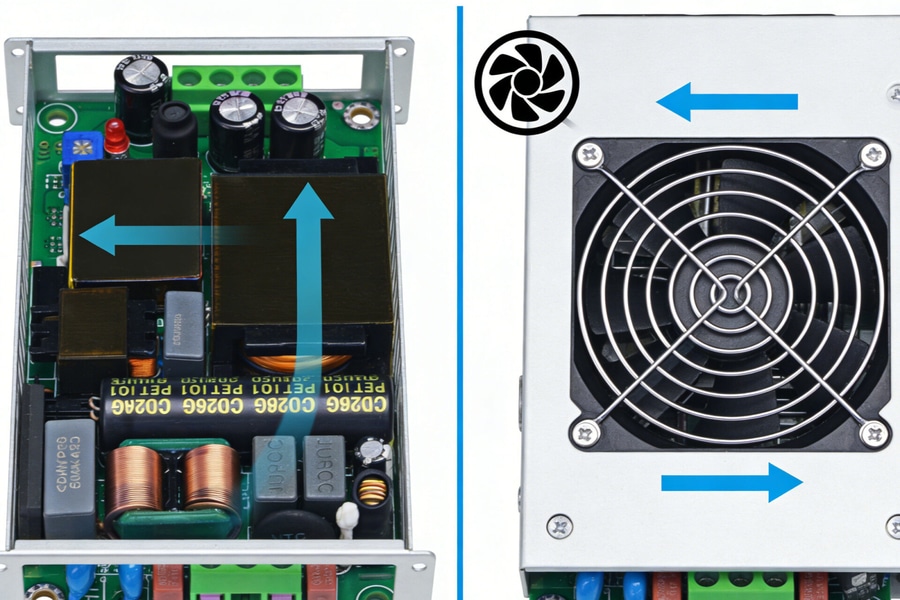
In contrast, an enclosed power supply is a self-contained unit. Here, all electronic components are housed within a protective casing, usually constructed from stamped steel, aluminum, or high-grade plastic. Importantly, this enclosure serves multiple critical functions. For instance, it acts as a shield against electromagnetic interference (EMI). Additionally, it provides mechanical protection from physical damage and environmental contaminants like dust and moisture. Finally, it prevents accidental user contact with live internal parts, thereby enhancing operational safety.
Thermal management in enclosed units often requires more active solutions. While lower-power models may use finned cases to enhance natural convection, most medium to high-power enclosed supplies incorporate fan cooling. In this approach, an internal fan actively circulates air through vented openings in the case. This allows these units to maintain their rated output power across a wider range of ambient conditions, making them ideal for standalone applications or for use in end-user environments where no secondary protective housing exists.