#Product Trends
Overfill Protection & Leak Detection – Safety for Plants and the Environment
Overfill protection and leak detection are essential safety measures in industrial plants, including chemical, pharmaceutical, water management and energy applications. This article highlights the regulatory requirements – from WHG to VLAREM and FM
What is meant by overfill protection and leak detection?
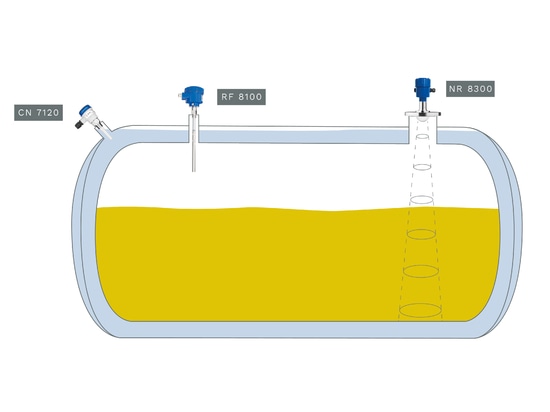
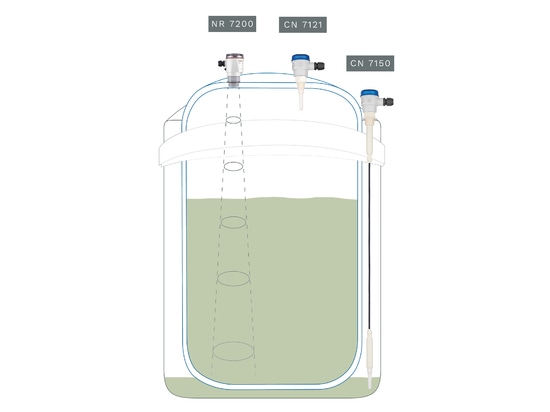
Overfill protection prevents tanks or containers from exceeding their maximum capacity. When a defined limit level is reached, the measurement system sends a signal to the control unit or automatically stops the filling process. This ensures that liquids do not unintentionally escape into the environment and helps avoid potential environmental damage.
Leak detection serves to identify leaks at an early stage – for example in double-walled tanks, pipelines or containment spaces. Modern systems continuously monitor the interstitial space and trigger visual and/or audible alarms in the event of a fault.
------------------------------------------------------------------------------------------------------------
WHERE ARE SUCH APPROVALS REQUIRED?
Approvals or legally compliant designs of level and point level systems are required whenever water-hazardous, flammable or toxic media are stored, processed or transported.
Typical applications include:
* Chemical and petrochemical plants, where aggressive or hazardous liquids such as acids, alkalis or solvents are handled.
* Tank farms and refineries, where overfill protection systems are legally mandated.
* Water and wastewater management, to protect bodies of water from contamination.
* Food and pharmaceutical production, where installations must comply with strict hygiene and safety regulations.
* Industrial facilities with heating oil or diesel tanks, which must meet national safety standards.
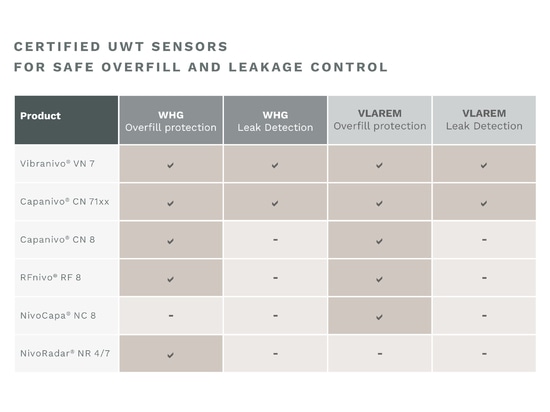
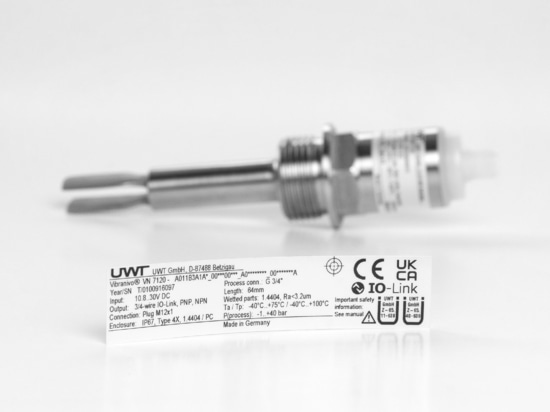
* Agricultural storage tanks for manure, slurry and silage effluent: For these applications, the Vibranivo® VN 7 tuning fork is approved as a leak detection probe – a specific certification for use in environments with high environmental protection requirements.
In all these cases, the regulations aim to ensure operational safety, environmental protection and legal compliance.
TYPICAL APPLICATIONS
Certified or legally compliant overfill and leak detection systems are used wherever water-hazardous, toxic or flammable substances are handled. This includes:
* Storage tanks and process vessels
* Fuel and heating oil tanks
* Dosing and reaction vessels
* Collection and clarification tanks
* WHG, VLAREM, FM & more – what’s behind these standards?
--------------------------------------------------------------------------------------------------------------------
WHG / AWSV (GERMANY):
The Water Resources Act regulates the handling of water-hazardous substances. The associated AwSV ordinance mandates the use of overfill protection and leak detection systems for specific types of installations. Only approved components may be used.
-----------------------------------------------------------------------------------------------------------------
VLAREM (BELGIUM, FLANDERS REGION):
VLAREM is not a certification body but a legally binding environmental regulation for the Flanders region. It defines the technical and safety requirements that installations must meet – including provisions for overfill protection, leak detection and the handling of water-hazardous liquids.
------------------------------------------------------------------------------------------------------------------
FM APPROVALS (USA):
This is not a law but a testing and certification body. FM-approved devices meet high safety standards and are widely required worldwide, particularly in North America.
International standards
-------------------------------------------------------------------------------------------------------------------
IN ADDITION TO WHG, VLAREM AND FM, THERE ARE SEVERAL OTHER GUIDELINES THAT DEFINE REQUIREMENTS FOR OVERFILL PROTECTION AND LEAK DETECTION SYSTEMS:
API 2350 (USA): Standard for preventing overfills in tanks used in the oil and gas industry.
-------------------------------------------------------------------------------------------------------------------
POLISH REGULATIONS (POLAND):
In Poland, the requirements for overfill protection and leak detection are defined by several binding legal frameworks. The Prawo Wodne (Water Law) and the Ustawa Prawo Ochrony Środowiska (Environmental Protection Law) require operators to prevent the release of hazardous substances and to implement suitable technical safeguards in storage and processing installations. Technical regulations for fuel, chemical and industrial tanks mandate the use of overfill protection devices, leak monitoring for single- and double-walled tanks, as well as periodic inspections carried out by the national technical authority Urząd Dozoru Technicznego (UDT). These provisions ensure safe tank operation, early leak identification and strong environmental protection across industrial facilities.
PGS guidelines (Netherlands): National safety regulations for the storage and handling of hazardous substances, including overfill protection.
KVU implementation aids and TRCI guidelines (Switzerland): These define requirements for tank farms, containment areas and overfill protection systems, serving as practical guidance for operators and authorities.
The aim of all these regulations is to ensure the highest possible level of plant safety and environmental protection.
---------------------------------------------------------------------------------------------------------------------------------------------------------
Read more by following the Link "More information"