#Product Trends
Efficient Process Control in Real-Time
Revolutionary Advances: Sensor Enables Machine Learning in Bioprinting
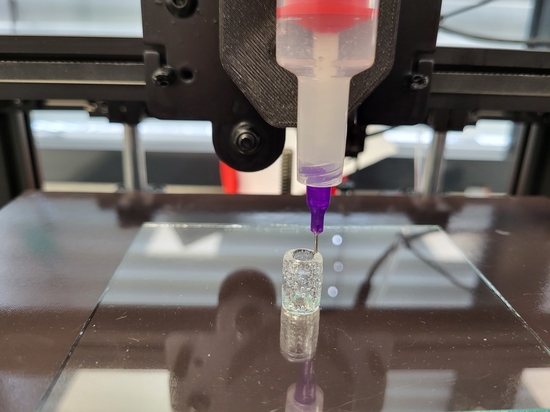
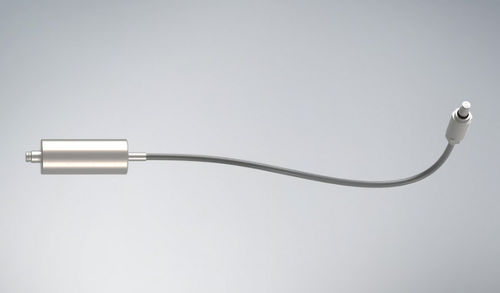
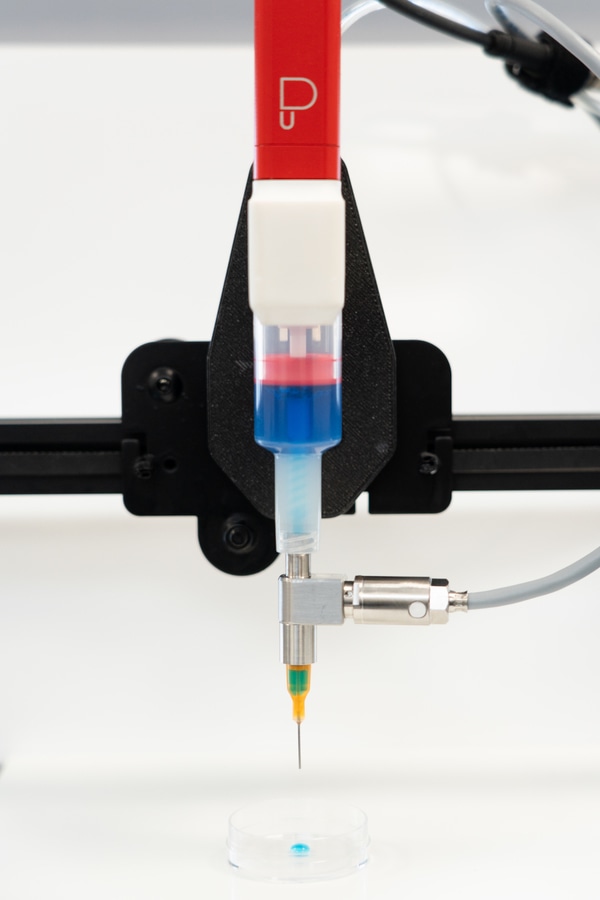
The Puredyne print heads deliver reproducible 3D printing of organic substances through precision-engineered, low-shear dispensing technology. The primary objective is to detect cell damage and ensure process reliability throughout the entire bioprinting process. That is why Puredyne also features in-process control using a pressure sensor.
With this measurement technology, users gain full real-time monitoring and control capabilities throughout the entire bioprinting process. This makes it possible to predict cell damage even during extrusion.
Puredyne’s sensor lays the foundation for integrating machine learning algorithms and drives continuous improvement in printing performance. Users can leverage this technology to develop robust biomaterial databases, which can be crucial for optimizing future bioprinting applications. Another critical advantage: early detection of needle blockages, also known as nozzle clogging, allowing for proactive corrective measures.
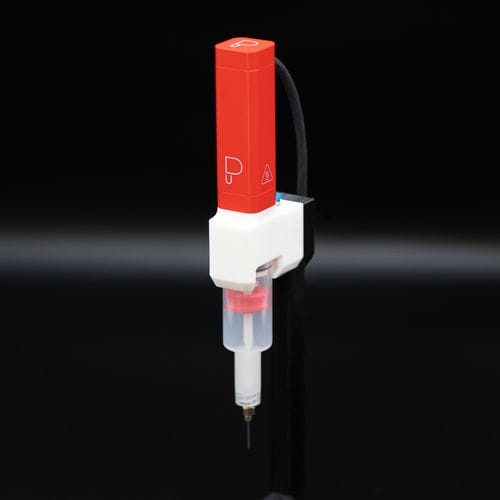
While traditional bioprinting process control relied primarily on optical monitoring, the Puredyne pressure sensor provides a comprehensive data-driven approach to safeguard processes and elevate print quality. The sensor measures pressures between 0 and 10 bar relative pressure with an accuracy of ±2 % within a temperature range of 32 to 122 °F.
The sensor is modular, meaning it can be used with any extrusion technology, even pneumatic. The cartridge or dosing needle connects via Luer-Lock, while the data is transmitted via analog signals to compatible hardware systems for further analysis and integration. With the measurement technology it has developed, Puredyne has set another milestone in the automation and quality improvement of bioprinting processes.