#Industry News
Driving Self-Tapping Screws into Plastic: Why Torque Alone Is Not Enough
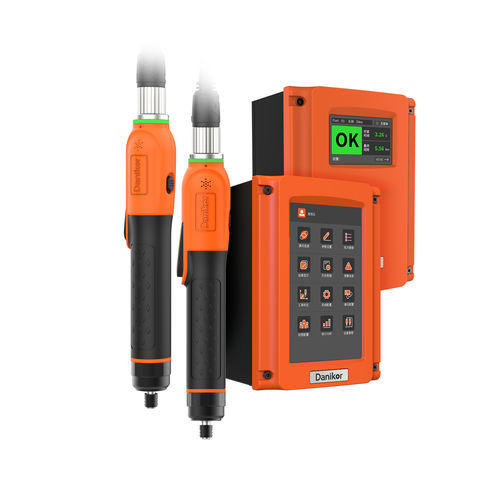
self tapping screw tightening, electric screwdriver with torque control, Danikor
Modern manufacturing uses ever-increasing amounts of plastic parts. Their self-tapping screw joints, however, must be handled very differently from metal joints. Because of the unique properties of plastic, torque-only control is unreliable. Below we explain why a combined torque-and-angle strategy is essential.
1 Particularities of plastic tightening
1.1 Material differences
Plastics have a low elastic modulus and high ductility, so parts deform easily.
Low hardness means the thread can strip or the boss can crack if over-tightened.
1.2 Torque reaches target too early
As the screw cuts its thread, the soft plastic generates a high “tapping torque.” If the driver stops at a preset torque, the screw may still be floating above the seating surface, creating an unacceptable “float” defect.
1.3 Risk of over-tightening
Once the head contacts the plastic, further rotation can strip the thread or crack the part before torque rises enough to trigger a conventional shut-off.
2 The necessity of angle monitoring
2.1 Define a torque-angle window
Laboratory tests determine a safe torque range and a corresponding angular window. This window is based on plastic grade, boss geometry, screw size, and target clamp load.
2.2 Real-time monitoring
During production, the controller logs both torque and angle. A joint is accepted only if:
• Torque ≥ lower torque limit, and
• Angle lies within the pre-defined range.
This dual-criterion method prevents both float (torque OK, angle too low) and over-tightening (torque OK, angle too high), ensuring reliable plastic joints and higher yield.
In practice, companies should establish the torque-angle envelope for every plastic/screw combination and enforce it on the line. This simple extra step avoids costly defects and guarantees consistent, high-quality assemblies.