#Product Trends
How to Solve the Tightening Challenges in Electrical Distribution Cabinet Assembly?
How to Solve the Tightening Challenges in Electrical Distribution Cabinet Assembly?
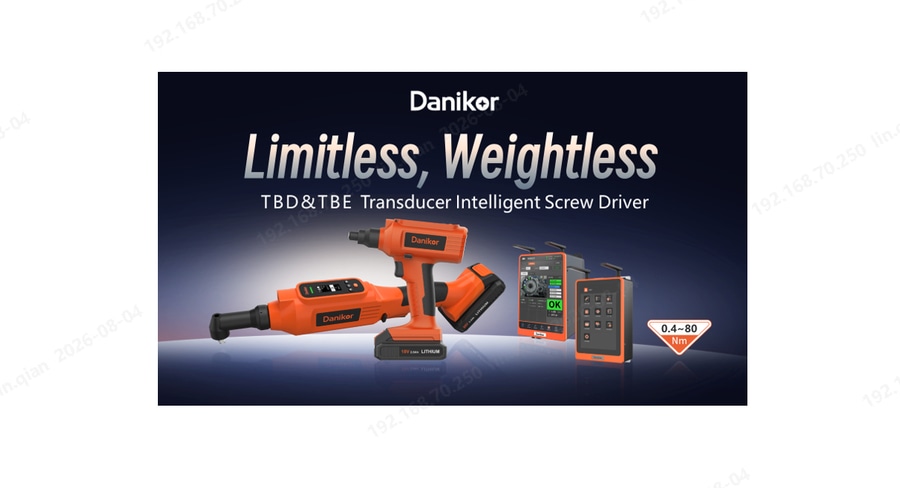
In the manufacturing of electrical industry control cabinets, bolt tightening is a core assembly process. Older clutch-type tightening tools struggle to collect tightening data and cannot interface with MES systems. Wired tightening tools are restricted by cables and are not suitable for mobile workstations. The procurement cost of imported brand equipment is relatively high, leading to a continuous rise in demand for domestic replacement solutions among enterprises. The Danikor TBE series wireless handheld tightening tools are specifically designed for the assembly conditions in the electrical industry, providing a digital tightening solution for cabinet assembly.
I. Typical Pain Points in the Electrical Cabinet Assembly Industry
The production of electrical equipment has distinct operational characteristics. Most assembly workstations are not fixed and are primarily manual, handheld operations. Distribution cabinets and control cabinets have complex internal structures and narrow operating spaces. Additionally, assembly involves various bolt specifications, and different positions require different tightening torques for components, necessitating frequent changes to torque parameters during production.
Traditional clutch-type tools can only perform basic fastening operations. They lack data communication capabilities, cannot record tightening results, and struggle to meet the quality traceability requirements of intelligent manufacturing. Wired intelligent tightening tools involve complex cabling, which significantly restricts workers' movement and operation inside the cabinets.
Simultaneously, many electrical manufacturing enterprises are initiating equipment localization replacement programs, seeking tightening equipment that offers comparable performance to imported brands but at a higher cost-effectiveness ratio. They need to control production costs while also meeting the data acquisition needs of digital production lines.
II. Core Advantages of the Danikor TBE Series Wireless Handheld Tools for Electrical Assembly
1. Wireless Wi-Fi Design, Adaptable to Mobile Assembly Workstations
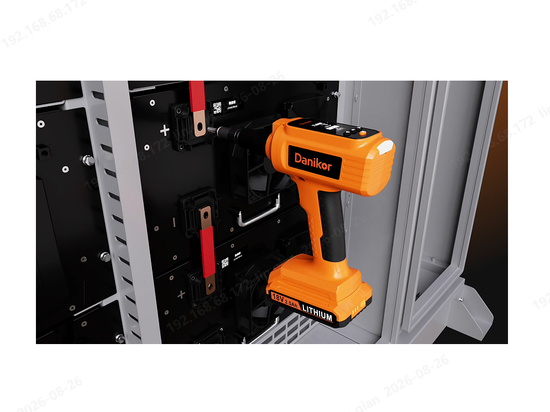
The TBE series features a Wi-Fi wireless communication mode, eliminating cable constraints and making it ideal for scattered, non-fixed assembly workstations for distribution and control cabinets. The tools support both online and offline working modes. In offline scenarios, the tool itself can store tightening data, which is automatically synchronized with the network once connectivity is restored, adapting to the complex site conditions of electrical workshops. The product line includes both pistol-grip and angle-head models. The angle-head model can easily handle bolt assembly in deep or narrow spaces within the cabinet, covering all tightening scenarios both inside and outside the cabinet.
2. Multiple Communication Protocols, Enabling Digital Production Line Connectivity
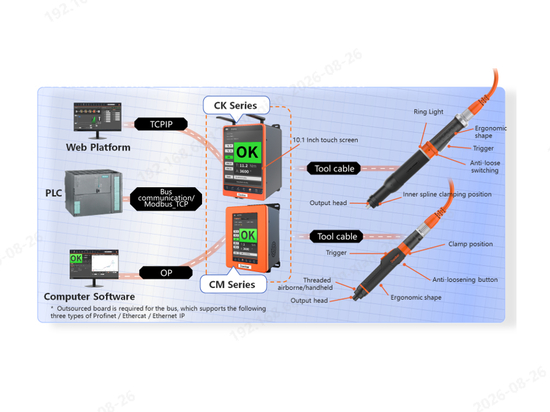
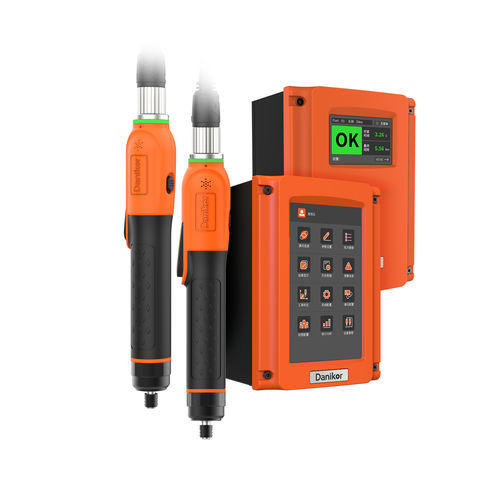
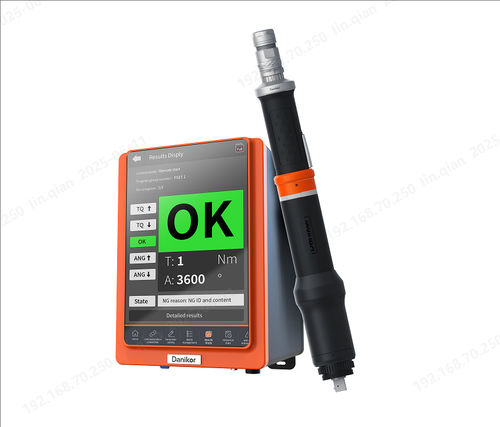
Unlike conventional clutch tools, Danikor TBE wireless tools have comprehensive data interaction capabilities. The tool itself comes with TCP/IP communication, and an optional controller can expand communication methods such as Modbus TCP and OP. Tightening data can be directly pushed to MES and PLC systems, allowing for complete retention of tightening results. This ensures full traceability of the assembly process, meeting the quality inspection and standardized production requirements of the electrical industry. The tool features a built-in small display screen that shows tightening results and PSET program information in real-time, facilitating quick on-site confirmation for operators.
3. Pulse Tightening Mode, Reducing Operator Workload
Given that electrical assembly relies on prolonged manual handheld operations, the TBE supports pulse tightening technology to achieve low-reaction force operation, effectively alleviating operator arm fatigue during extended work periods. The device offers rapid tightening capability, matching the production rhythm of electrical assembly lines. It adopts an integrated drive-and-control design, allowing the tool to be used independently or with a controller to load multiple tightening strategies. In conditions involving multiple bolt specifications and frequent torque changes, it can quickly switch tightening programs, enhancing assembly efficiency.
4. High Cost-Effectiveness, Facilitating the Localization Replacement of Imported Tools
Currently, many electrical companies are replacing tightening tools from overseas brands like Atlas Copco and Ingersoll Rand. The Danikor TBE series wireless intelligent tightening tools balance performance and cost, aligning with the high price sensitivity characteristic of the electrical industry. The equipment has a short prototype validation cycle, making it convenient for enterprises to quickly conduct on-site testing. Whether for standard basic assembly stations or critical quality control stations requiring data traceability, the TBE series provides a corresponding assembly solution.
The TBE wireless handheld tightening tool is widely applicable to the assembly processes of electrical products such as control cabinets, capacitor cabinets, variable frequency drive cabinets, and high/low voltage distribution cabinets. For stations requiring only basic fastening, it can serve as an upgrade to replace traditional clutch tools. For critical stations with quality management requirements, its wireless data transmission function enables the collection and upload of tightening data, contributing to the digital transformation of electrical factory production lines.