#Product Trends
Intelligent Tightening Solutions Resolve Hidden Thermal Management Failure Risks
Intelligent Tightening Solutions Resolve Hidden Thermal Management Failure Risks
As new energy vehicles rapidly evolve towards higher range, higher power, and greater thermal efficiency, the stability, precision, and reliability of the entire vehicle thermal management system have become core systems ensuring vehicle range, driving experience, and operational safety.
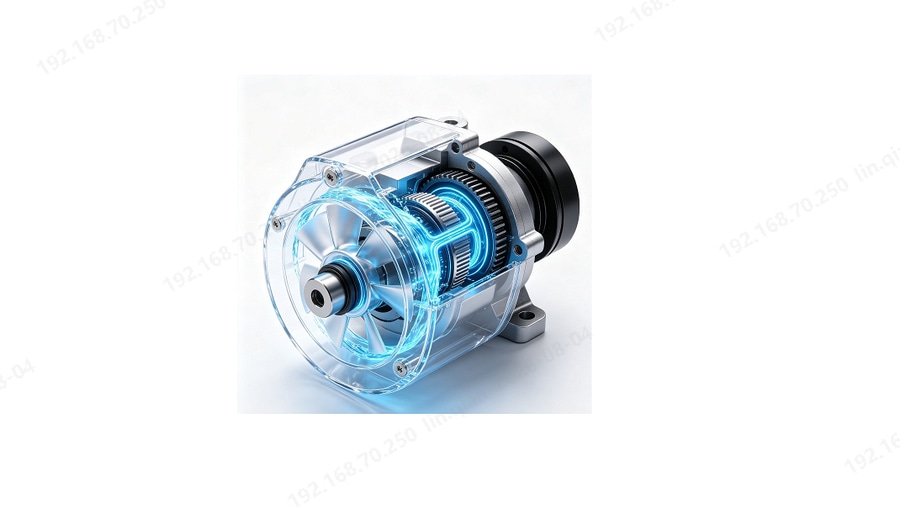
Within this thermal management architecture, the new energy vehicle circulation water pump undertakes the core functions of coolant circulation and heat dissipation temperature control. It is a key precision component that ensures the stable operation of the battery, motor, and electronic control systems—the "three-electric" system. Its assembly precision, sealing, and structural stability directly determine the vehicle's thermal management performance. In the mass production and assembly process of water pumps, the bolt tightening process is of paramount importance and is also the critical link most prone to hidden quality defects.
Traditional tightening equipment has rigid processes and limited precision, making it unable to adapt to the soft-hard composite connection structure of new energy pumps. This easily leads to tightening anomalies such as torque overshoot, torque decay, floating screws, thread stripping, and insufficient clamping force. Long-term use can cause bolt loosening and coolant leakage, ultimately leading to vehicle thermal management failure and overheating faults in the three-electric system. Therefore, optimizing and upgrading intelligent tightening processes to solve the assembly pain points of new energy vehicle water pumps is a core measure for current new energy component manufacturers to improve quality, increase efficiency, and strictly control quality.
I. Core Process Difficulties and Quality Risks in New Energy Vehicle Water Pump Assembly
Compared to traditional internal combustion engine vehicle water pumps, new energy cooling pumps have a more precise structural design, often employing a composite structure with a metal housing hard connection and plastic component soft connection. The physical properties, stress limits, and stress rebound of these two materials differ significantly, demanding distinct process requirements for tightening speed, torque application method, tightening steps, and final tightening accuracy. Traditional single-mode tightening processes cannot adapt to this differentiated structure, becoming a primary bottleneck in pump assembly production and generating numerous mass production quality problems. This is a common pain point in the new energy pump tightening process across the industry.
The primary and most critical issue is improper torque control, which is also the most frequent process problem in new energy pump assembly. In metal housing hard connection assembly scenarios, traditional equipment often uses a high-speed one-time tightening method. After the screw quickly contacts the surface, the equipment cannot brake in time, easily causing torque overshoot. This results in the final tightening torque exceeding the process standard, leading not only to substandard assembly precision but also to micro-deformation of the metal housing, damaging the sealing structure and creating hidden leakage risks. Conversely, for plastic component soft connection structures, the material's inherent stress rebound characteristic leads to irreversible torque decay after tightening. Even if the initial torque meets the standard, subsequent torque reduction and insufficient clamping force can occur as a hidden tightening failure. Routine manual inspection and standard equipment sampling are often insufficient for accurate detection, making it easy for defective products to flow into subsequent processes.
Secondly, thread assembly defects such as floating screws and stripped threads are highly prevalent and extremely difficult to detect and control. Floating screw faults in new energy pump assembly mainly fall into two categories: first, the final tightening torque reaches the standard value, but the screw does not fully contact the mounting surface, leaving a slight assembly gap; second, the screw contacts the surface but fails to generate effective locking clamping force—the assembly appears intact but is functionally completely failed. Stripped threads, on the other hand, involve wear or damage to the threads during tightening, directly rendering the bolt's locking function ineffective. These two types of tightening anomalies are difficult to identify with the naked eye or standard detection equipment, resulting in a very high rate of missed detections. Once installed in vehicles, they can easily trigger large-scale after-sales faults, severely impacting the brand reputation of the vehicle manufacturer.
More critically, pump tightening failure can trigger cascading driving safety risks. During new energy vehicle operation, body vibrations and changing operating conditions subject the pump to continuous dynamic loads. If bolt clamping force is insufficient, bolts may gradually loosen or detach, directly causing coolant leakage and cooling circuit failure. Without timely heat dissipation, the three-electric system can experience faults such as battery overheating, motor derating, and electronic control errors. This not only significantly reduces vehicle performance and shortens the lifespan of core components but can also, in severe cases, lead to battery thermal runaway, creating major driving safety hazards. This clearly demonstrates that the quality of the water pump tightening process directly determines the operational stability of the new energy vehicle's thermal management system and overall vehicle safety.
II. Core Process Upgrade Requirements for the New Energy Pump Assembly Industry
Faced with the various pain points in new energy pump tightening, the new energy vehicle component manufacturing industry has been moving away from extensive, uniform traditional tightening modes. With the popularization of smart manufacturing and lean production, the industry has set higher standards for intelligent pump tightening processes and equipment, focusing on four core directions: high precision, intelligence, traceability, and mass production adaptability, to fully align with the assembly standards for new energy precision components.
First, there is a need for flexible tightening processes with differentiated adaptation. Equipment must be capable of configuring exclusive tightening strategies for both metal hard connections and plastic soft connections, addressing torque overshoot and torque decay issues respectively, to achieve precise locking across all structures.
Second, there is a need for intelligent error-proofing throughout the entire process. For frequent anomalies like floating screws, stripped threads, torque deviation, and re-tightening, the system should enable real-time monitoring, automatic warnings, and rejection of defective parts, eliminating assembly defects at the source and reducing human error and missed detections.
Third, there is a need for a comprehensive data closed-loop traceability system. This must meet the smart manufacturing and quality management requirements of vehicle manufacturers, retaining all core tightening data throughout the process to support process review, quality traceability, parameter optimization, and continuous improvement of assembly consistency.
Fourth, there is a need for lightweight mass production adaptability. To suit the characteristics of rapid changeover and flexible production in new energy lines, the equipment needs strong compatibility, simple deployment, and convenient maintenance, reducing the cost of production line upgrades and modifications.
III. Danikor TTC Series Intelligent Tightening Tools: A Dedicated Solution for Pump Assembly
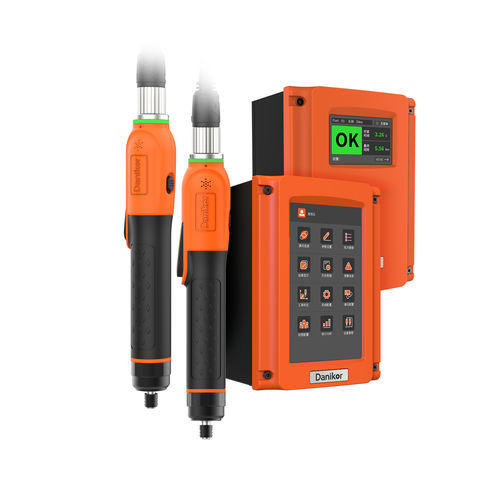
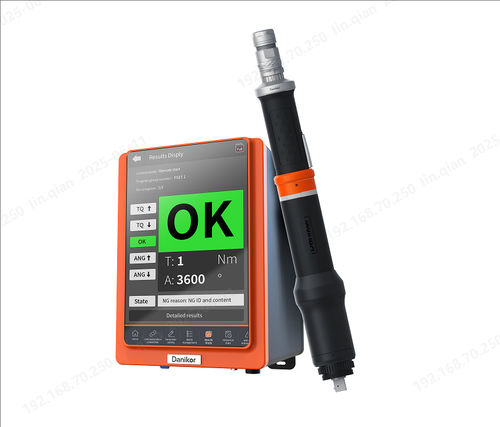
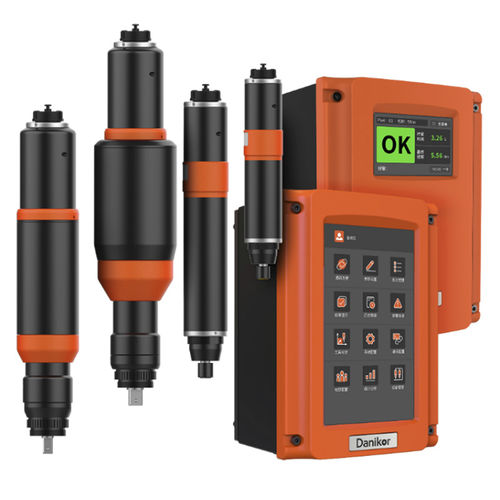
Addressing the assembly pain points of the soft-hard composite structure in new energy vehicle pumps and the rigid requirements of mass production, the Danikor TTC series sensor-type tightening tools leverage core high-precision sensing technology and flexible, configurable tightening strategies. They precisely solve industry challenges such as poor tightening accuracy, frequent torque anomalies, recurring hidden defects, and difficult quality traceability in new energy pump assembly. They have become a mainstream intelligent tightening solution for the mass production assembly of new energy thermal management pumps, cooling fans, and valve components.
The Danikor TTC intelligent tightening tool supports customizable multi-dimensional tightening strategies to meet the differentiated assembly requirements of both soft and hard connection structures in new energy pumps.
For metal hard connection housings, it employs the industry-preferred "high-speed initial tightening + low-speed final tightening" two-step process. The high-speed phase ensures rapid screw seating to enhance production efficiency, while the low-speed phase precisely applies the target torque, fundamentally preventing torque overshoot and ensuring tightening accuracy and housing structural integrity.
For plastic soft connection components, it utilizes a multi-step tightening strategy that releases assembly stress in stages. This effectively suppresses torque decay defects after tightening, maintaining stable effective bolt clamping force and thoroughly solving the problem of hidden tightening failure in soft connections. The equipment is also equipped with pre-set tightening strategy templates, enabling rapid switching between different working conditions to suit the flexible, multi-variety mass production needs of new energy pumps.
In terms of intelligent error-proofing throughout the process, the equipment innovatively employs a dual torque judgment mechanism combining sensor and current data, verifying the qualification of tightening torque from two dimensions to eliminate detection errors inherent in single-judgment modes. The tool supports customization of core process parameters, including torque, angle, tightening slope, and step intervals. It can enable specialized anomaly monitoring functions for floating, stripped threads, re-tightening, torque deviation, and idle tightening with a single click. This allows for fully automated identification of various tightening defects during the pump assembly process, eliminating the need for complex manual adjustments, significantly reducing the operational threshold and human error. This ensures intelligent error-proofing and automatic rejection of defects throughout the tightening process, guaranteeing the assembly quality of new energy pumps from the source.
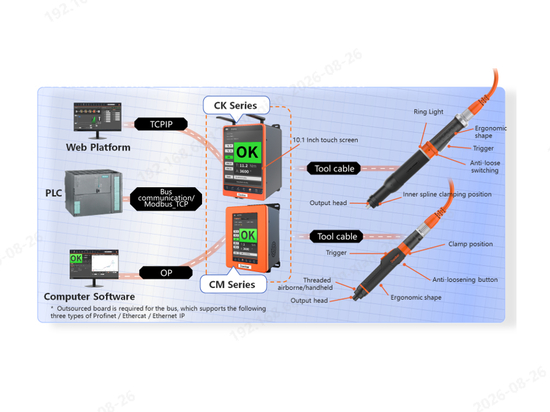
For smart manufacturing data traceability, the Danikor TTC tightening tool can collect and completely record core data in real-time throughout the entire pump tightening process, including slope, torque, angle, tightening steps, and production time. It automatically uploads this data to the MES (Manufacturing Execution System) to establish a full-chain data traceability system. Production managers can access tightening data at any time and overlay historical tightening curves for comparison and analysis. This not only enables precise traceability of every bolt's tightening data to meet stringent quality management standards of vehicle manufacturers but also provides accurate data support for process iteration, parameter optimization, and defect analysis, continuously enhancing the assembly consistency and production yield of new energy pumps.
IV. Conclusion
As a core precision component of the thermal management system, the tightening assembly quality of the new energy vehicle water pump is the foundation for the stable operation of the entire vehicle's thermal management system and is directly related to the safety of the three-electric system and the vehicle's overall durability. Traditional tightening equipment, with its rigid processes, insufficient precision, weak error-proofing capabilities, and lack of data traceability, can no longer meet the high-precision, high-reliability mass production assembly demands of new energy vehicles.
The Danikor TTC series sensor-type intelligent tightening tools precisely resolve core assembly challenges for new energy pumps, such as torque overshoot, torque decay, floating screws, stripped threads, and insufficient clamping force. They fundamentally eliminate quality and safety hazards like bolt loosening, coolant leakage, and thermal management failure. Providing a one-stop intelligent tightening solution for new energy vehicle pumps and thermal management precision components, the Danikor TTC series assists in upgrading new energy vehicle component manufacturing towards higher precision, intelligence, traceable, and lean production.