#Product Trends
Danikor Wireless Transducer Tool Empowers High-Precision Intelligent Assembly of Automotive Steering Wheels
Danikor Wireless Transducer Screwdriver, Cordless Transducer Screwdriver, calibrated torque screwdriver
In the automotive manufacturing process, steering wheel assembly is a core critical procedure that directly impacts vehicle handling safety and driving experience. As the key interface between the driver and the vehicle, the tightening precision and fastening stability of the steering wheel assembly directly determine the vehicle's safety coefficient. It is also a crucial link for automakers to control overall manufacturing quality and achieve lean production.
With the rapid iteration of new energy vehicles and intelligent connected vehicles, automakers have set higher standards for steering wheel assembly in terms of tightening precision, production flexibility, data traceability, and error-proofing control. The traditional assembly modes using wired tightening tools and ordinary pneumatic tools are no longer able to meet the demands of modern intelligent production lines.
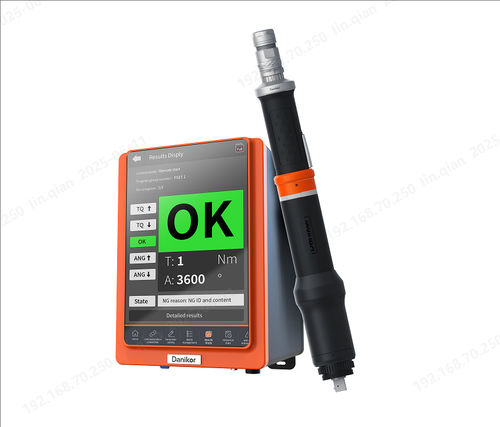
Danikor's wireless sensor tools, with deep expertise in the field of precision automotive assembly, systematically address various industry pain points in steering wheel assembly. They provide efficient, precise, and traceable intelligent assembly solutions for automotive OEMs and parts manufacturers.
I. Core Industry Pain Points in Traditional Automotive Steering Wheel Assembly
The steering wheel assembly environment is unique, characterized by narrow spaces and compact structures, with stringent tightening process parameters. Traditional assembly tools exhibit significant drawbacks in mass production applications, becoming key bottlenecks that constrain production efficiency and quality improvement.
First is the limited operating space and insufficient operational flexibility. The steering wheel is located in the narrow front area of the cockpit, with dense internal structures and interlaced components. Traditional wired tightening tools, restricted by cable drag and equipment size, are prone to operational interference and angle limitations. This makes it difficult for workers to operate, and some points cannot be precisely aligned for tightening, leading to risks of under-tightening or missed tightening. Simultaneously, the reaction force generated during high-torque tightening operations lacks auxiliary tooling for cushioning. Long-term operation not only affects assembly precision but also reduces production efficiency.
Second is the unstable tightening precision and difficulty controlling yield rates. The torque and angle parameters for steering wheel fastening screws have strict industry standards. Excessive torque deviation can easily lead to steering wheel loosening and driving noise, while excessively high torque can cause screw thread stripping, component cracking, and create safety hazards. Traditional tools rely on manual experience to control force, resulting in significant precision errors. They also cannot adapt to the differentiated tightening requirements of steering wheels of different specifications, leading to poor product consistency in mass production.
Finally, there is the lack of data, and weak quality traceability and production control. Modern automobile manufacturing emphasizes digital and traceable production. However, traditional assembly tools cannot collect or store core data—such as torque, angle, and operation time—during the tightening process in real-time. Once an assembly quality issue occurs, it is impossible to precisely trace the root cause, making it difficult to support process optimization and quality accountability. Additionally, the inability to interface with MES and other intelligent production systems hinders the digital upgrade of production lines. Furthermore, traditional tools suffer from short battery life and high failure rates. Frequent repairs and replacements directly impact production line tact time and increase production costs.
II. Danikor Wireless Sensor Tools: Precisely Solving Assembly Challenges
Targeting the specific pain points of automotive steering wheel assembly, Danikor, leveraging years of accumulated expertise in industrial intelligent assembly technology, has developed specialized wireless sensor intelligent tightening tools. Integrating high-precision sensing technology, intelligent algorithms, and wireless connectivity advantages, these tools comprehensively upgrade the steering wheel assembly process across four dimensions—precision, efficiency, flexibility, and digitalization—perfectly adapting to the demanding conditions of mass automotive production.
1. Lightweight Wireless Design, Adapting to Narrow Assembly Spaces
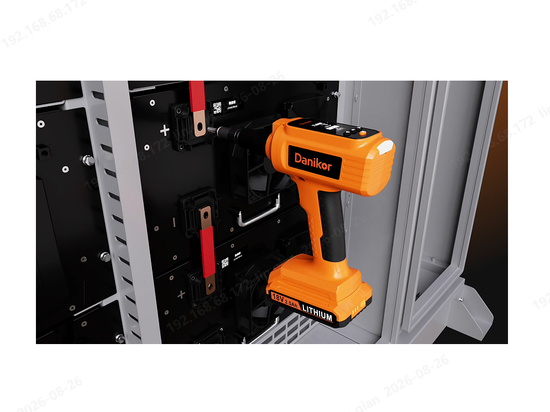
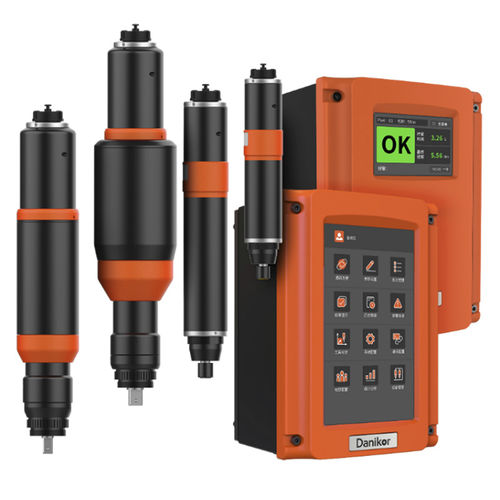
Danikor wireless sensor tools feature an integrated lightweight body design, eliminating traditional cable constraints and completely resolving issues of cable entanglement and operational interference. The wireless angle-head electric screwdriver can easily reach the narrow assembly areas of the steering wheel, adapting to multi-angle and multi-point precision tightening operations, significantly reducing operator difficulty. Moreover, the tools require no fixed tooling, offering flexible deployment and high mobility. They can adapt to mixed-line production needs for different vehicle models, greatly enhancing production line flexibility and perfectly solving the challenges of high-torque tightening operations in conditions without reaction tooling.
2. High-Precision Sensing Monitoring, Ensuring Consistent Assembly Quality
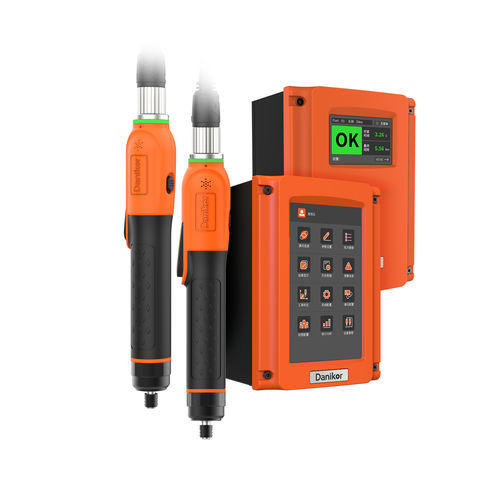
Precision is the core lifeline of steering wheel assembly. The tool is equipped with Danikor's self-developed high-precision sensors and intelligent computational algorithms. It achieves a standard deviation accuracy of ±1.67% across the full range, and under traditional mode, can meet the high-precision 6σ ±5% quality control standard, eliminating manual operation errors. Paired with the CK series controller, the equipment supports various advanced intelligent tightening strategies such as angle-monitoring torque control and clamping force control. It can automatically identify the screw seating point, effectively preventing issues like floating screws, under-tightening, and over-tightening. This makes it suitable for the tightening process requirements of various precision screws in steering wheels, ensuring uniform assembly parameters and stable quality for every vehicle.
3. Full-Process Data Acquisition, Enabling Digital Traceability and Control
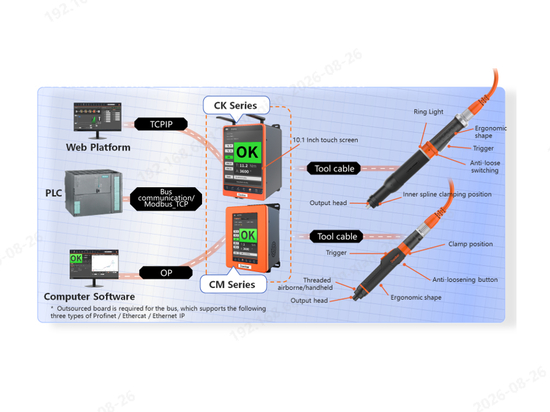
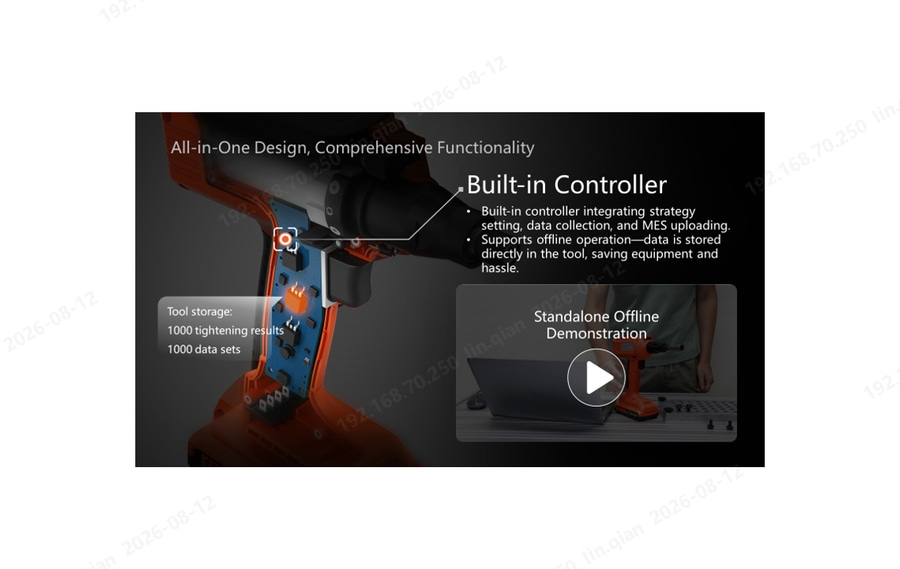
Distinguishing itself from the data-free operation mode of traditional tools, Danikor's wireless sensor tool achieves intelligent management and control of data throughout the entire tightening process. Paired with the CK series controller, it supports various industrial communication formats, enabling real-time upload of tightening data to the MES system. It also features a data breakpoint resume function to ensure complete data integrity. It supports binding tightening results with corresponding workstations, workpieces, Jobs, and Pset barcodes, achieving operational standardization and full-process traceability. This facilitates later optimization of tightening processes and quality traceability. When quality anomalies occur on the production line, staff can quickly retrieve data for traceability and investigation, precisely pinpointing the root cause. This provides solid data support for process iteration, quality rectification, and quality accountability, helping automakers build a full-process quality management and control system.
4. Long-Lasting Battery Life, Adapting to Efficient Mass Production Operations
To meet the demands of high-frequency, continuous mass production in automotive factories, Danikor's wireless nutrunner is equipped with high-performance batteries offering strong endurance. It easily meets the needs of single-shift production without requiring additional charging, eliminating concerns about power outages. This effectively ensures production line tact time and reduces equipment maintenance and overall production costs. At 80% of the torque range, the 36V battery enables 8,020 consecutive tightening operations, while the 18V battery enables 2,500 consecutive tightening operations, eliminating range anxiety.
Currently, Danikor wireless sensor tools are widely used in the final steering wheel assembly processes of major automotive OEMs and parts manufacturers. They are suitable for steering wheel assembly scenarios for all types of vehicles, including fuel-powered and new energy vehicles. Their stable performance and professional technical services have earned widespread industry recognition.
III. Conclusion
Steering wheel assembly, as a core safety procedure in vehicle manufacturing, demands continuous process upgrading and quality improvement. Under the broader trends of intelligent and lean development in the automotive industry, traditional assembly tools can no longer meet high-end manufacturing needs. Danikor wireless sensor tools, with their four core advantages—wireless flexibility, ultra-high precision, data traceability, and long-term stability—precisely solve industry pain points such as operation in narrow spaces, precision control difficulties, data deficiency, and insufficient production flexibility. They provide a one-stop intelligent solution for precision steering wheel assembly.
Looking ahead, Danikor will continue to deepen its presence in the automotive intelligent assembly field, iteratively optimizing sensing technologies and intelligent algorithms. With its robust intelligent manufacturing capabilities, Danikor is committed to helping more automakers achieve production quality improvement, efficiency enhancement, and cost reduction, thereby driving the high-quality digital transformation of the automotive assembly industry.