#Product Trends
Danikor Flexible Feeding System Solves the Sealing Ring Feeding Challenge
Sealing Ring Automated Feeding
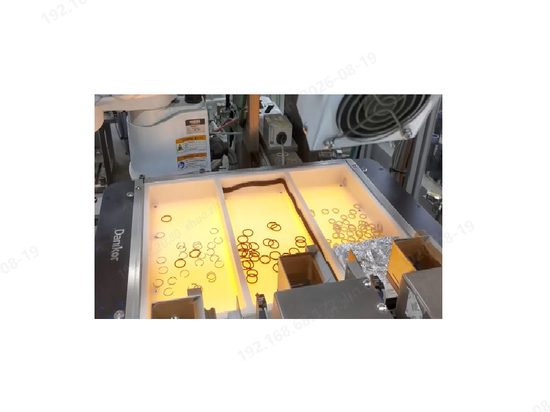
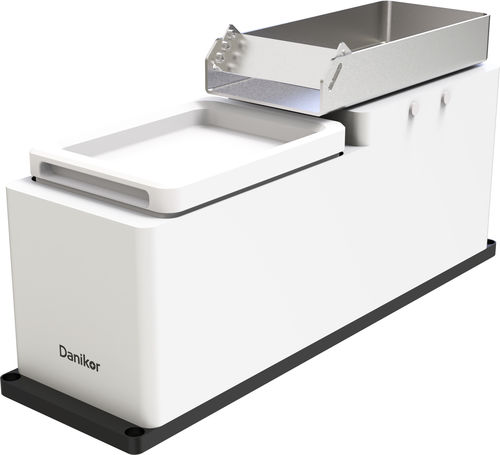
The soft, elastic, smooth-surfaced, and easily mutually adhesive nature of sealing rings has long been a recognized challenge in automated feeding processes. Danikor's Flexible Feeding System, combining a flexible feeder bowl, AI vision, and a smart storage hopper, provides a reliable solution for the flexible feeding of sealing rings.
I. Three Major Pain Points in Sealing Ring Feeding: Why Do Traditional Solutions Frequently Fail?
Pain Point 1: Tangling and Adhesion, Making Single Separation Difficult
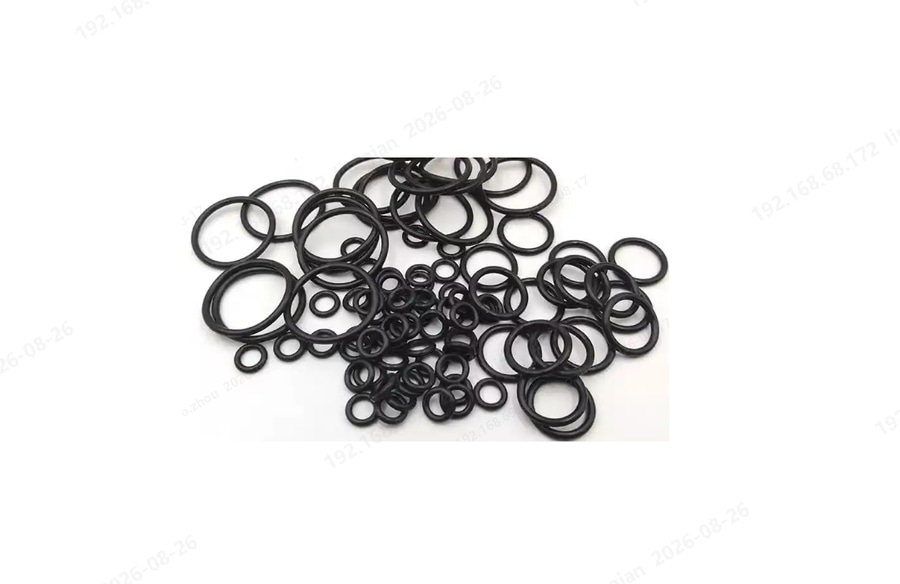
Sealing rings are often made of elastic materials like rubber and silicone, which have high surface friction and are prone to electrostatic adsorption. When stored in bulk, they easily tangle, nest, and adhere to each other. Traditional linear vibratory bowl feeders rely on track conveying. During vibration, the sealing rings often nest together and get stuck at track curves, causing material jams and machine stoppages.
Pain Point 2: Difficulty in Distinguishing Obverse and Reverse Sides, and in Pose Recognition
Some sealing rings have specific requirements for their front/back orientation or direction, and must be assembled in the correct pose. Traditional vibratory bowls use mechanical structures to select orientation. However, for soft, deformable sealing rings, methods using mechanical stops or air blowing have a low success rate and are prone to misjudgment.
Pain Point 3: Material Damage; Surface Wear Affects Sealing Performance
Sealing rings require extremely high surface integrity. Any scratches, wear, or deformation can directly lead to seal failure, leakage, and other quality issues. Traditional metal vibratory bowls have hard surfaces. Under high-frequency vibration, sealing rings repeatedly rub and collide with the bowl surface, leading to surface wear and deformation, which severely impacts the sealing reliability of the final product.
II. Danikor Flexible Feeding System: A Tailored Solution for Sealing Rings
Danikor's Flexible Feeding System is architected on the core principle of "flexible feeder bowl + vision + robot picking." It optimizes the entire process—from supply, scattering, and identification to picking—specifically for the characteristics of sealing rings, systematically solving the problems of tangling, orientation, and damage.
Flexible Feeder Bowl Scattering: Open Bowl Surface Easily Separates Tangled Sealing Rings
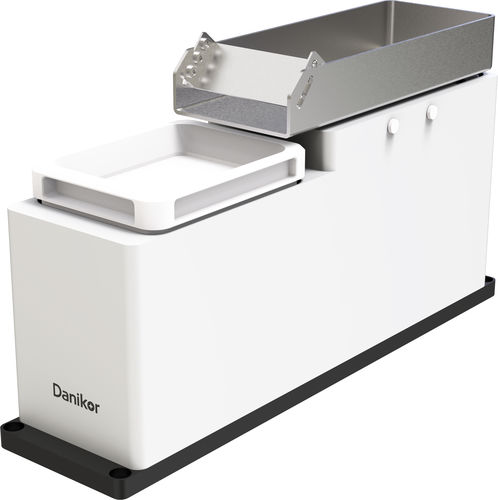
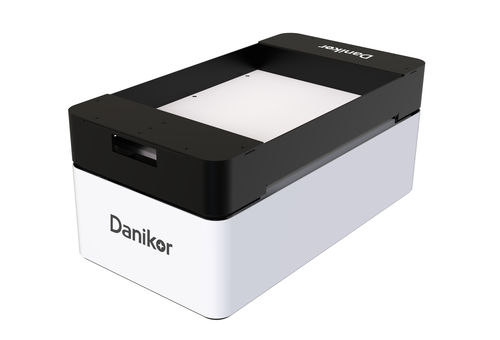
The Danikor flexible feeder bowl uses a customized high-polymer bowl with an open, unobstructed surface, completely eliminating the jamming issues of traditional track-type vibratory bowls.
To address the tangling issue, the flexible feeder bowl supports a flipping and scattering motion mode. Combined with its directional self-control function, it can flexibly control the vibration direction to quickly correct the vibration state and position of the sealing rings, preventing material accumulation in local areas. For silicone sealing rings that are particularly prone to sticking, an anti-stick coating can be customized for the bowl surface to further reduce adhesion between materials.
AI Vision Recognition: Accurately Identifies Front/Back Pose, Even with Minimal Differences
The core difficulty in recognizing the front/back of sealing rings is that the difference between the two sides is extremely subtle, leading traditional vision algorithms to frequent misjudgment. Danikor's vision system is equipped with a self-developed AI intelligent algorithm. It supports AI self-learning of correct and incorrect material poses and automatically searches for material feature points. This allows for stable recognition even of features with minimal differences, such as the direction of a sealing ring lip or tiny chamfers.
The workflow is clear and efficient: An operator adds sealing rings to the storage hopper. The hopper feeds the rings to the flexible feeder bowl via vibration or a belt conveyor. After the bowl scatters and spreads the rings, the vision camera captures an image to identify the correct pose of each ring and sends the position coordinates and angles to the robot. The robot then precisely picks the correctly oriented rings from the bowl surface for assembly. For rings with incorrect poses, the system can re-scatter and flip the bowl until a valid pose appears, requiring no manual intervention throughout the process.
III. Four Core Technologies Ensuring Efficient and Stable Sealing Ring Feeding
Intelligent Frequency Finding: One-Key Adaptation in 12 Seconds, Debugging No Longer Relies on Experience
The optimal vibration frequency varies for sealing rings of different specifications and materials. Traditional methods rely on manual, time-consuming, and laborious debugging. Danikor's flexible feeder bowl supports a one-key intelligent frequency finding function. It can automatically adapt and match the material's vibration frequency in just 12 seconds, significantly reducing changeover and debugging time while minimizing dependence on operator experience.
Instant Stop/Start: Residual Vibration Reduced from 1 Second to 0.2 Seconds for Faster Cycle Times
After scattering, the sealing rings must wait for the bowl's residual vibration to stop before the camera can capture images. The residual vibration time directly impacts the feeding cycle. The flexible feeder bowl has an instant stop/start function. The residual vibration time after stopping is shortened from the traditional 1 second to 0.2 seconds. The quick stop reduces waiting time for vision capture, and the quick start saves cycle time, significantly improving single-station efficiency.
Vibration Isolation: Avoids Interference for More Stable Robot Picking
The flexible feeder bowl's vibration isolation design effectively prevents bowl vibration from transferring to the robot, worktable, or other mechanisms. This reduces vibration interference, enhancing the precision and stability of robotic picking. This is particularly crucial for picking small-sized materials like sealing rings that require precise positioning.
Wide Compatibility: Covers 1-300mm Sizes for Flexible Changeovers
Sealing ring specifications vary greatly, from miniature O-rings of a few millimeters in diameter to large seals exceeding 100mm. Danikor flexible feeder bowls are compatible with a size range of 1-300mm and cover various materials including metal, plastic, rubber, silicone, and ceramic. The full series, from U10 to U60 models, is available. For changeovers, simply retrain the material features and adjust vibration parameters in the vision system without needing to change mechanical structures. This truly achieves multi-purpose use and flexible production.
Danikor flexible feeding systems are widely applied in various industries, including automotive components (engine seals, transmission oil seals, chassis rubber parts), new energy vehicle (NEV) battery packs and electric motors (battery pack seals, motor seals), 3C electronics (waterproof rings for phones, seals for watches), and home appliances (seals for water heaters, air conditioners).
By combining a flexible feeder bowl with flipping/scattering to solve tangling, AI vision algorithms for accurate orientation identification, and low-damage feeding, Danikor's Flexible Feeding System provides a stable, reliable, and efficient complete solution for automating the sealing ring feeding process. This empowers manufacturers to improve assembly yield, reduce operational and maintenance costs, and achieve an upgrade in flexible smart manufacturing.