


#Product Trends
Battery Pack Assembly: Precision & Traceable Tightening
battery pack assembly, smart tightening, angle head transducerized tool, floating height, deviated screw, stripped threads, error-proofing, data traceability, MES, DANIKOR
As NEV battery packs move toward higher integration, larger formats and structural integration, pack assembly has become a comprehensive test of precision, efficiency, safety and data. When five pain points — confined space, mixed-model production, error-proofing pressure, high safety classes and weak data traceability — overlap, single-point tools can no longer keep up. What manufacturers need is an integrated quality closed loop that combines precision tightening with data management. DANIKOR breaks the space-and-accuracy bottleneck with angle-head transducerized tools, connects every link with a web server platform, and has validated the solution at production scale — a practical path to smart tightening and digital assembly on NEV shop floors.
1. Five Pain Points in NEV Battery Pack Assembly
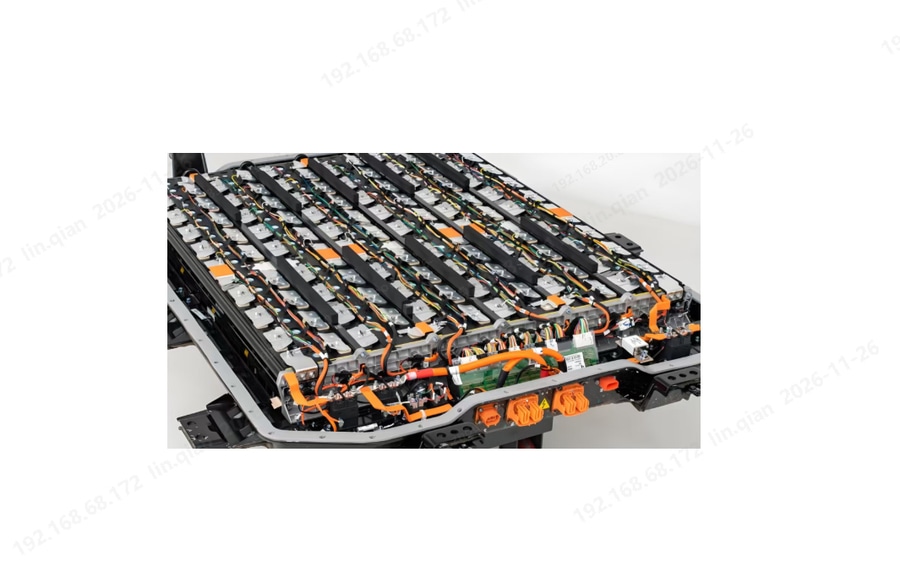
As battery packs evolve toward high integration, large dimensions and integrated structures, the demands on the tightening process keep rising. Complex geometry, multi-model mixed lines and high-takt production require not only stable process execution but full-process quality control and data traceability. Manufacturers commonly face five categories of pain points:
Confined space and poor accessibility. Battery packs contain many deep cavities and side-facing stations. Standard straight tools are hard to insert or interfere with surrounding structures, causing assembly anomalies such as Deviated Screw (schräg eingedrehte Schraube) and Floating Height (überstehender Schraubenkopf) that directly weaken joint integrity.
Mixed-model production and hard-to-control consistency. Frequent changeovers across vehicle models and processes complicate parameter management. Switching between tightening programs is costly, tightening consistency is difficult to hold, and quality variation is hard to suppress.
Heavy error-proofing pressure. Screw Missing, wrong screw and Repeat Tightening (mehrfaches Anziehen) must be prevented throughout production to enforce critical process specifications. A human or program error means rework at best and a latent safety hazard at worst.
High safety class and stringent reliability. Critical pack joints are typically Safety Class A/B, with extremely strict requirements on residual torque and joint integrity. Any deviation can affect vehicle high-voltage safety, so connection quality must be verifiable and traceable.
Incomplete data traceability. Tightening data from the whole process must be collected uniformly and managed centrally to support quality traceability and process optimization. Scattered, broken or missing data makes anomaly location and root-cause analysis inefficient or impossible.
These five pain points compound one another: confined space aggravates error-proofing, mixed-model production multiplies traceability complexity, and the safety class demands zero tolerance across all three. Breaking the deadlock takes not a single tool, but a quality closed loop covering precision tightening plus data management.
2. DANIKOR's Smart Tightening Solution: A Quality Closed Loop
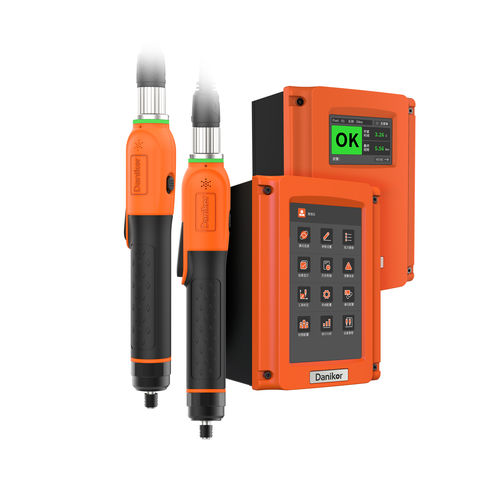
Built for NEV battery pack assembly, DANIKOR's solution centers on angle-head transducerized tools + a web server platform, closing the loop from a single screw's precise fastening to line-wide quality data management. The logic is clear: first make every tightening accurate with the tool, then make it controlled and traceable with the platform.
2.1 Angle-Head Transducerized Tools: Precision Tightening in Confined Spaces
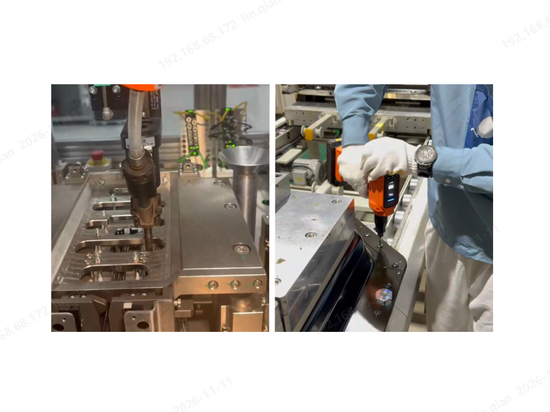
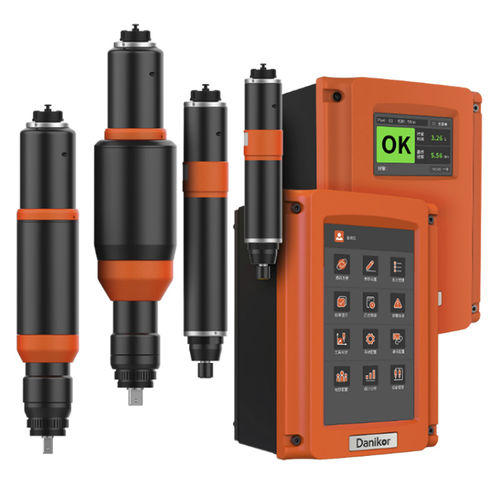
The biggest physical obstacle in pack assembly is the complex internal geometry. DANIKOR's angle-head design (angle head) avoids interference conditions and significantly improves tool accessibility, meeting multi-angle and multi-posture tightening needs so that deep cavities, side-facing stations and compact spaces remain workable.
For accuracy, the tool integrates a Dynamic Torque Transducer and an in-house Torque Control Algorithm to precisely control Torque (Drehmoment) and Angle (Drehwinkel). It satisfies the A/B safety-class requirements of critical joints such as high- and low-voltage wiring harnesses and the Battery Management System (BMS), balancing tightening precision with process consistency at high takt. Even the most demanding critical joints achieve a balance between efficiency and reliability.
For dense screw patterns, the tool supports Job management and Pset program recall, enabling rapid torque switching and count management. This delivers two benefits: it effectively prevents human errors such as Screw Missing and Repeat Tightening, and it supports mixed-specification screw assembly so one line handles multiple vehicle models with ease. Meanwhile, the tool performs full-process monitoring of torque, angle, time and tightening curves, identifying Stripped Threads (Durchdrehen) and Floating Height in real time to keep critical-joint quality stable.
2.2 Web Server Platform: End-to-End Data Traceability
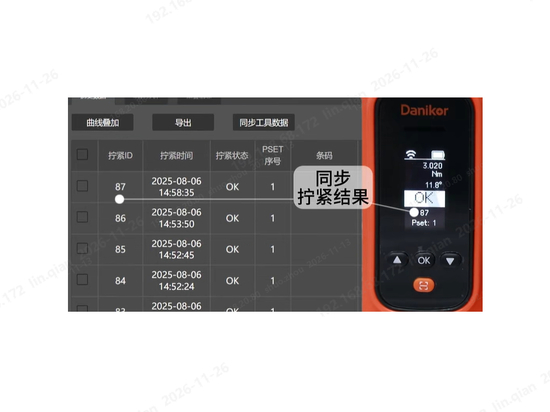
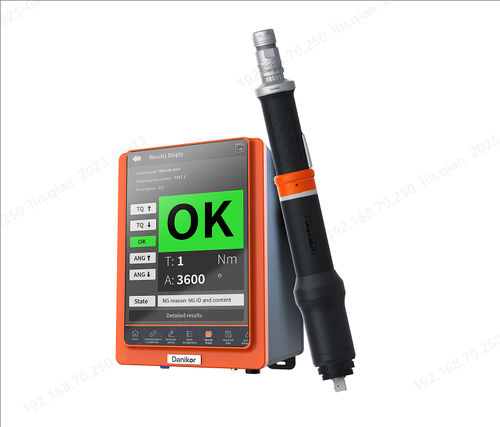
If the angle-head tool solves "tightening it right," the web server platform solves "keeping it under control and tracing it clearly." It covers everything from monitoring a single tool to managing line-wide quality, supporting real-time collection of torque, angle, curves, time, tool status and station information, and integrating seamlessly with MES — Manufacturing Execution System so tightening data becomes part of the manufacturer's digital production flow.
For data reliability, the platform provides Store-and-Forward, intelligent backup and access control, keeping data complete, secure and protected against loss from network fluctuations or unauthorized access. Through equipment running monitoring, process execution analysis and Curve Overlay comparison, engineers can see data at a glance, locate anomalies quickly, trace the source of problems, and sharply cut review time — making analysis more efficient and decisions more precise.
Further, the web server generates role-specific data analysis reports and automatically emails them to external addresses, delivering real-time quality alerts and shop-floor reports to key responsible people. This proactive quality-warning mechanism provides sustained data support for continuous process optimization, equipment maintenance and quality improvement, enabling digital management of the entire production process.
3. Scaled Deployment: Validation from One Tool to a Whole Line
A solution's reliability is ultimately proven on a real production line. DANIKOR's smart tightening solution has been recognized by NEV customers — wired angle-head transducerized tools have been deployed in batches on the battery pack production line of a long-established state-owned NEV automaker, covering multiple critical assembly stations, providing solid technical support for high-precision, high-reliability tightening in battery manufacturing.
The project is more than a scaled product rollout. With mature smart tightening technology, it continuously validates DANIKOR's industry practice in NEV battery pack assembly: from single-tool stability to line-wide deployment synergy, from process execution accuracy to traceability completeness, and from equipment delivery to system coordination. The scaled application demonstrates integrated capability in smart tightening, process control and industrial digitalization.
Customer value comes in multiple dimensions:
Higher assembly efficiency. The angle-head structure and fast program switching eliminate waiting caused by space constraints and model changeovers.
Stronger in-process quality control. Full-process monitoring and error-proofing stop anomalies before the next process step.
Faster digital manufacturing upgrade. Tightening data connects to MES through the web server platform, giving pack production its first complete, traceable quality data foundation.
4. DANIKOR's Systematic Capability and NEV Focus
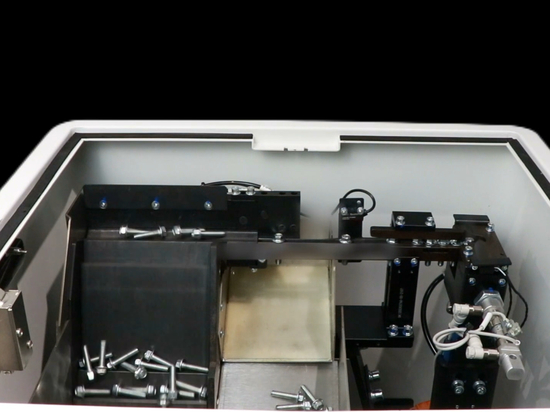
From core tightening to upstream screw feeding and the industrial data platform, DANIKOR builds smart assembly capability with a systematic mindset. Looking ahead, the company will keep deepening its work in NEV smart manufacturing, centering on smart tightening, automatic screw feeding and industrial data platforms, and refining an overall assembly solution spanning tools, controls, software and data management.
With more specialized technology, more reliable products and better service, DANIKOR continues to help NEV manufacturers improve assembly quality and efficiency, moving toward more efficient, reliable and intelligent manufacturing together with industry partners. For manufacturers, choosing a scale-validated solution means more than buying tools — it means gaining a deployable, evolvable digital assembly methodology.
Frequently Asked Questions
Q1: How do angle-head transducerized tools solve confined-space problems in deep cavities and side-facing stations of battery packs?A1: The angle-head structure avoids interference from surrounding structures and improves accessibility in deep cavities, side-facing stations and compact spaces, meeting multi-angle, multi-posture tightening needs. It removes the physical barrier of "cannot reach the screw" while preventing anomalies such as Deviated Screw and Floating Height.
Q2: How are Safety Class A/B critical joints assured?A2: The tool integrates a high-precision torque transducer and an in-house control algorithm to precisely control torque, angle and other key parameters, meeting A/B safety-class requirements for critical joints such as high- and low-voltage wiring harnesses and the BMS. Full-process monitoring also identifies Stripped Threads and Floating Height in real time, keeping joints reliable.
Q3: How does the web server platform connect to MES and enable traceability?A3: The platform collects torque, angle, curves, time, tool status and station information in real time, integrates seamlessly with MES, and supports Store-and-Forward, intelligent backup and access control. Combined with curve overlay comparison and role-specific reports, it delivers end-to-end quality traceability.
Q4: What value does scaled deployment (e.g., batch rollout on a battery pack line) bring to customers?A4: Using the batch deployment of angle-head transducerized tools on a battery pack line as an example, value appears in three areas: higher assembly efficiency (no waiting for space or changeover), stronger in-process quality control (error-proofing and full-process monitoring), and faster digital manufacturing upgrade (tightening data connected to MES, forming a traceable quality foundation).
 鄂公网安备42018502009509号