


#Industry News
Honed Tube Ra: Matching Bore Finish to Seal Type - EAST AI
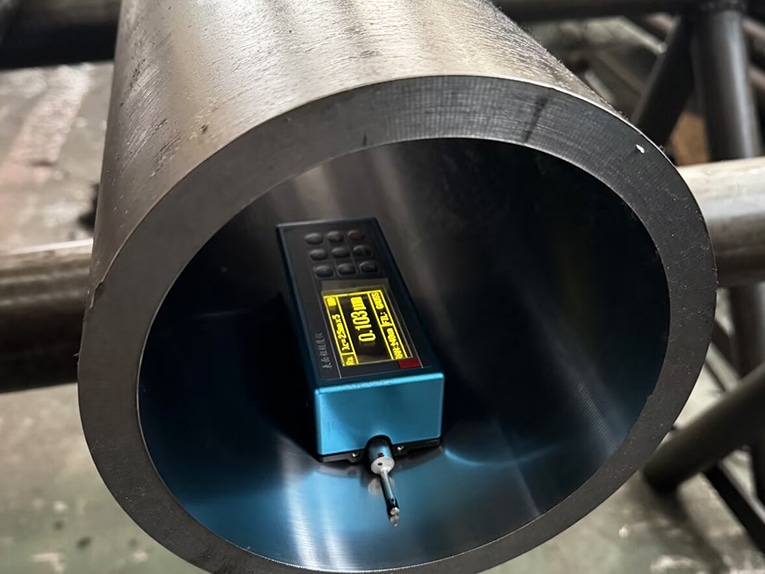
Ra 0.4 on honed tube is a default, not an engineering choice. Here is the seal-family Ra matrix that reduces over-specification cost and extends service life.
The "Smoother is Better" Myth: Why Your Ra 0.4 μm Specification Is Costing You Money
Open almost any hydraulic cylinder drawing, and you’ll likely see "Ra 0.4 μm" specified for the honed tube bore. Most engineers treat this as a safe industry default.
The reality? It’s a costly trap.
At EAST AI, we hone tube across Ra 0.2 to 0.8 μm daily, and we consistently see two massive problems caused by this default specification:
You are overpaying. You are paying a premium for a hyper-smooth finish that your specific seal system doesn't actually require.
You might be causing premature failure. If your bore is too smooth (like Ra 0.2 μm for a Polyurethane seal), it can’t retain the micro-thin oil film needed for lubrication. The seal runs dry, generates heat, and micro-cracks.
Two tubes can measure the exact same Ra 0.4 μm, but if one has sharp, jagged peaks (high Rpk) and the other has smooth plateaus (low Rpk), they will perform completely differently. Ra only tells you the average height—it hides the shape of the surface that actually destroys seals.
And here is the kicker: as cylinder pressures push past 250 bar, the oil film becomes so thin that hidden surface peaks can shred your seals.
So, how do you know if your specification is over-engineered, or dangerously mismatched to your seal type?
Stop copying-and-pasting your bore finish specs. Read the full article to see the optimal Ra ranges for PU, PTFE, and NBR seals—and how to specify Rpk and Rvk to guarantee seal life.
 鄂公网安备42018502009509号