


#Industry News
42CrMo4 vs E355 Honed Tube: High-Pressure ROI - EAST AI
Upgrading cylinder barrels from E355 to 42CrMo4 honed tube raises material cost but slims wall thickness above 250 bar. Compare the OEM cost trade-offs.
The 35% Material Premium That Actually Saves You Money: High-Pressure Tube Selection
When upgrading a cylinder from 210 bar to 320 bar, the knee-jerk reaction is to stick with standard E355 carbon steel and just make the wall thicker. It’s cheaper per ton.
But that's a costly mathematical illusion.
As pressure climbs, the laws of physics (Lame's hoop stress equation) turn against standard carbon steel. You have to add massive amounts of dead weight to contain the pressure.
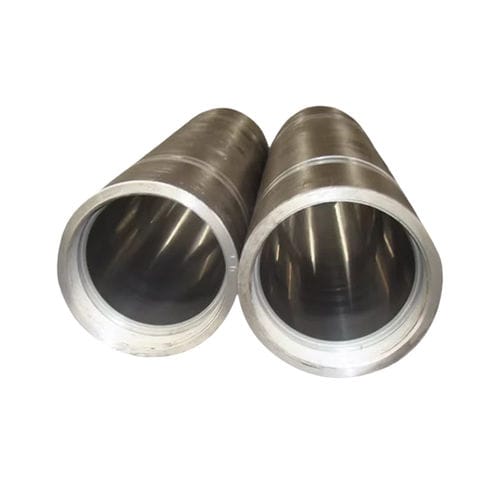
The alternative? Switching to 42CrMo4 (AISI 4140) quenched-and-tempered alloy tube. Yes, it costs 35–55% more per ton. But it allows you to make the wall 30–40% thinner.
On a 160mm bore cylinder at 320 bar, switching to 42CrMo4 removes 41 kg of steel per meter of barrel length. This weight reduction immediately offsets the per-ton price premium—and it unlocks secondary savings by allowing you to downsize the gland forgings, piston guides, and mounting clevis rings.
But there is a hidden danger: 42CrMo4 has a high carbon equivalent. If your shop tries to weld it without strict pre-heating and post-weld heat treatment, it will form untempered martensite and crack catastrophically under pressure.
So, how do you know if your specific application justifies the alloy premium? And what is the "middle-ground" steel (20MnV6) that can save you weight without the welding headache?
Don't let thick walls weigh down your high-pressure design. Read the full article to see the exact ROI crossover point, the metallurgical rules for welding 42CrMo4, and the OEM grade selection matrix.
 鄂公网安备42018502009509号