#Product Trends
The Automotive Supply Chain’s Revolution: Reusable Packaging
Why returnable packaging matters more than ever
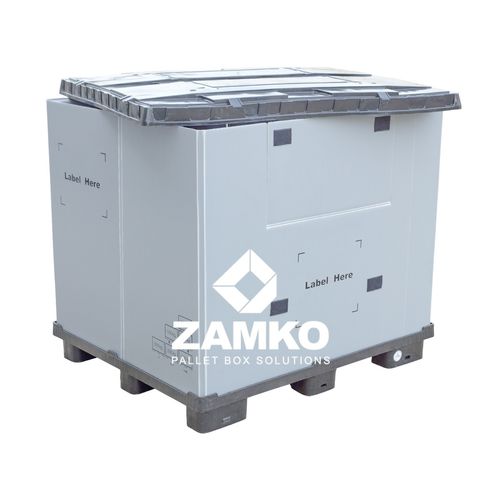
In the fast-moving world of the automotive industry, every part and sub-assembly travels dozens of times. We often focus on components, production lines, and final vehicles. But the way each part is transported, the packaging, quietly reshapes efficiency and cost. A reusable system of Zamko-style pallet boxes could transform operations, yet it’s rarely the headline topic. We use this space to explore how materials like plastic pallet boxes and steel pallet boxes are becoming strategic assets rather than an afterthought.
Consider this: the global market for automotive returnable packaging (including pallets, crates and racks) was estimated at USD 22.6 billion in 2023, and is forecast to reach roughly USD 32.8 billion by 2030 at a CAGR of about 5.5%.
That scale reflects more than simple containers , it signals a shift in how supply chains are built.
________________________________________
What are the main drivers in automotive reuse?
1. Cost-efficiency gains
• Lower spend on disposable materials because you invest once and reuse many times.
• Less waste management cost and disposal burden thanks to returnable packaging loops.
• Better volume utilisation in transport and warehousing because stacks of reusable pallet boxes are often standard size.
2. Sustainability and regulation
Automotive OEMs and Tier-1 suppliers are under rising pressure to reduce waste, carbon emissions and single-use packaging. Reusable packaging systems deliver lifecycle carbon-reductions of 60-80% compared to single-use alternatives.
The global transport packaging market is projected to rise from USD 31 billion in 2025 to over USD 50 billion by 2035, much of that driven by sectors like automotive.
3. Complexity of automotive supply chains
Automotive parts supply chains are long, tiered and often global. Reusable pallet boxes and returnable steel containers help standardise logistics across multiple plants, countries and suppliers. The automotive segment held about 35% of the returnable transport packaging market in 2024.
________________________________________
Plastic vs Steel: which material fits which need?
Plastic pallet boxes & sleevepack systems
Plastic-based solutions dominate many high-volume loops. Advantages include:
• Lighter weight, saving transport fuel and load capacity.
• Corrosion-free and easy to clean, ideal when cleanliness is required (for example in electronics sub-assembly).
• Often compatible with sleevepack or nestable systems that reduce empty-return freight cost.
However:
• They may have lower load capability compared to steel in heavy-duty applications.
• They require careful asset tracing to avoid losses, loss rates of up to 30% of reusable plastic trays have been noted.
Reusable steel pallet boxes
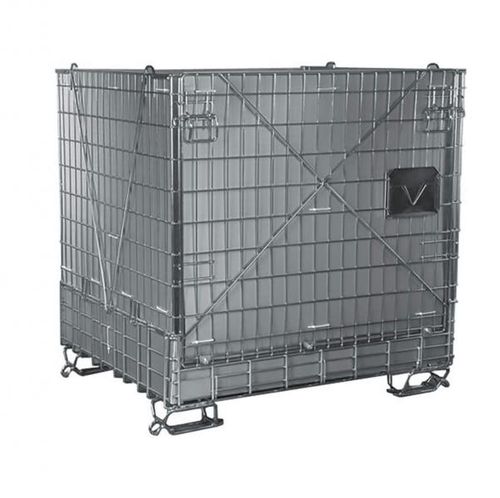
Steel or metal frames and containers play a crucial role where durability, high load and rugged conditions are required. The metal segment of the returnable packaging market held ~28% share in 2024 (per one analyst) and is important for heavy duty industrial/automotive use. Steel pallet boxes are ideal for components like engine blocks, transmissions or battery modules which demand high strength and rigidity.
Practical selection criteria
When we advise businesses we look at:
1. Load & environment: heavy parts or rough transport favour steel.
2. Loop length and return logistics: long returns may favour collapsible plastic types to reduce empty-shipping cost.
3. Traceability & asset control: RFID or tracking systems help whichever material is chosen.
4. Total lifecycle cost: initial investment is higher for reusable systems, but payback comes via many reuse cycles. Some studies show cost reductions of 25-40% over 3-5 years when switching to returnable packaging.
________________________________________
What are the key challenges and how can they be addressed?
While the benefits are strong, implementation in the automotive industry is not straightforward.
Challenges we face:
• Complex logistics for reverse flows: recovering empty containers, cleaning them, repositioning them can add cost and delay.
• Traceability and loss: without good asset tracking, reusable boxes wander or are lost. Loss rate in plastic trays is reported at up to 30%.
• Standardisation across multiple suppliers: automotive supply chains involve many tiers and geographies, so container standardisation is hard.
• Up-front investment and changing processes: Management often balks at the capital required, while existing single-use workflows remain entrenched.
How we suggest tackling them:
• Start with high-volume, local loops (e.g., plant to supplier) where return logistics are simple.
• Deploy tracking and pooling systems early to maintain visibility.
• Choose materials and formats (plastic vs steel) matched to part weight and transport profile.
• Run pilot programmes, capture data on savings and sustainability, then scale.
• Partner with experienced providers who already support asset-management for reusable packaging.
________________________________________
What lessons from automotive logistics can we apply beyond vehicles?
The automotive industry tends to lead in logistics innovation because its cost pressures and quality requirements are high. Some of the transferable lessons for any operation considering reusable packaging:
• High-frequency loops favour reuse: When an asset like a pallet box is turned many times per year, payback is quick. In fact reuse loops are far more attractive than one-way systems.
• Standardisation is powerful: Unified footprints, handling interfaces and stackability simplify operations.
• Data and traceability matter: Knowing where your pallet boxes are, how many cycles they’ve done, when they need maintenance or replacement is key to success.
• Lifecycle thinking wins: Considering purchase cost, cleaning/maintenance, transport of empties, loss rates and disposal gives a clearer picture than upfront capex alone. One study shows packaging costs drop dramatically when you shift from one-way to foldable reusable packaging.
• Integration with supply-chain strategy: Reusable pallet boxes aren’t a silo. They tie in with return logistics, VMI (vendor-managed inventory), kitting and just-in-time production.
________________________________________
In summary – and what we want you to consider
When we look at the rise of reusable packaging in the automotive supply chain, we see not just cost and sustainability benefits, but a strategic shift in how companies handle logistics. Materials matter: plastic pallet boxes, sleevepack systems, reusable steel pallet boxes, they each have a place. But the real value lies in building systems around reuse: standard assets, tracking, return logistics and lifecycle management.
If you’re evaluating packaging options for high-volume, complex supply-chains (or parts flows) we advise:
• Map your flow: count the turns, distances, return-rates.
• Choose your material based on load & loop length.
• Set up tracking so assets don’t vanish.
• Run a pilot, measure savings, then scale.
If you’d like to talk through your specific needs, feel free to reach us at Zamko B.V. by phone at +31 40 711 47 17 .You can also connect with us on https://www.facebook.com/zamko.eu.palletboxes/ and https://www.linkedin.com/company/zamko/ for case-studies and insights.
We hope this article helps you think differently about reusable packaging, not as simply a type of box, but as a strategic asset in logistics.