#Product Trends
STAINLESS STEEL AND PPR: DIFFERENT MATERIALS FOR MODERN THERMAL PLANTS
Comparato develops stainless steel and PPR components for fluid distribution, combining material-specific advantages with flexible and tailor-made engineering.
Modern HVAC-R and plumbing systems require distribution solutions capable of adapting to different operating conditions, installation environments and project requirements.
Drawing on its experience in fluid management, Comparato Nello Srl develops components for thermal plants in different materials, including AISI stainless steel and PPR polypropylene, providing designers and installers with solutions engineered around the specific characteristics of each application.
Stainless steel: reliability and corrosion resistance
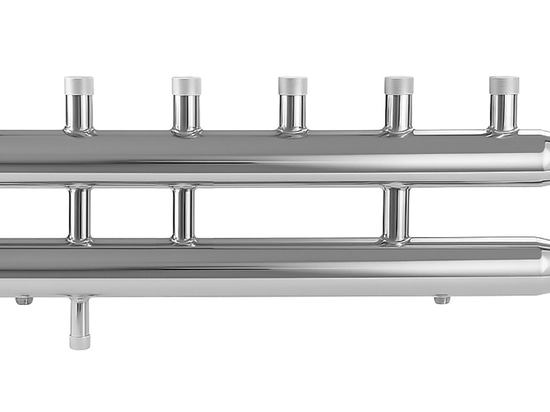
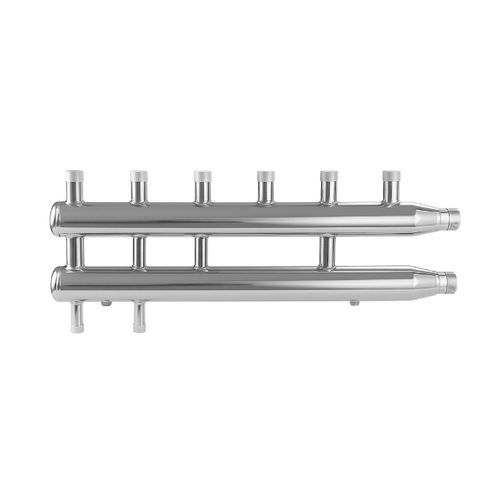
For applications where robustness, durability and corrosion resistance are key requirements, Comparato offers a range of thermal plant components manufactured in AISI 304 stainless steel.
The properties of stainless steel make these solutions particularly suitable for technical environments where humidity, condensation or demanding operating conditions may be present, helping ensure reliability and long service life.
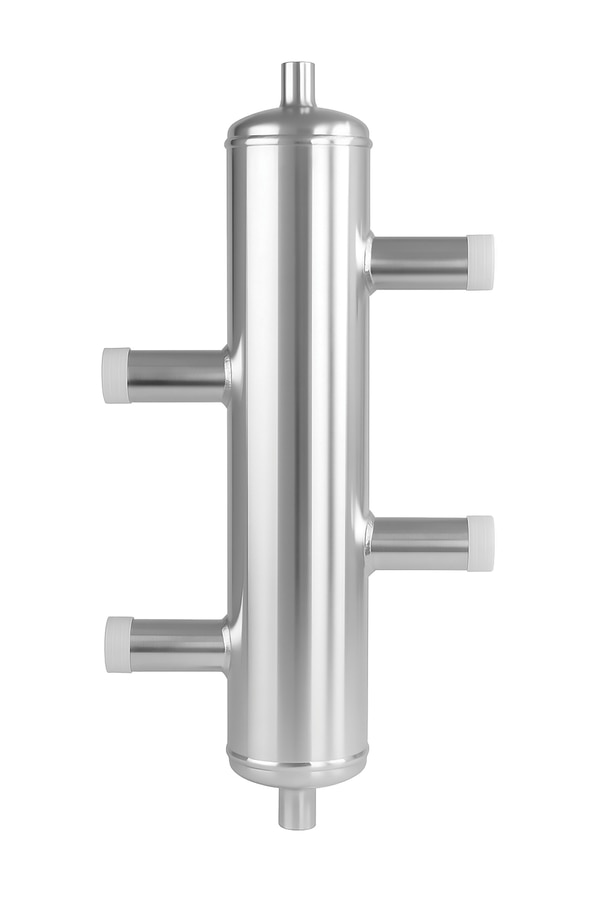
The range includes components for fluid distribution and hydraulic management such as manifolds, hydraulic separators and dirt separators, which can be integrated into heating and cooling systems according to plant requirements.
For particularly demanding applications, Comparato can also manufacture thermal plant components in AISI 316L stainless steel, offering increased corrosion resistance.
PPR: lightweight and efficient fluid distribution
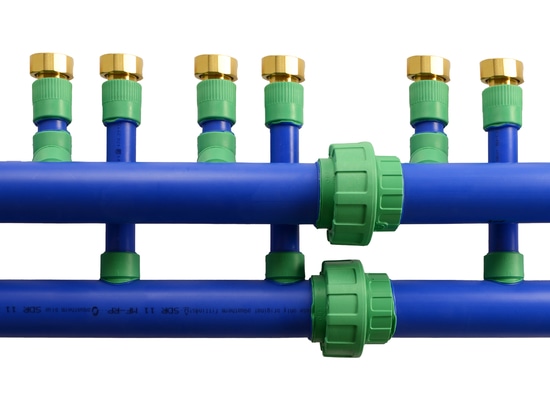
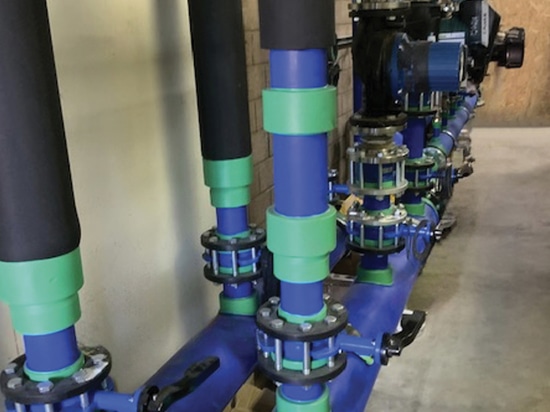
Alongside its metal solutions, Comparato develops custom-designed PPR components for thermal plants.
Polypropylene combines low weight with excellent resistance to corrosion and scaling, making it an interesting solution for modern heating, cooling and air-conditioning systems.
Unlike metallic materials, PPR is not subject to oxidation and does not release metallic impurities into the system water. Its reduced weight facilitates handling and installation, while its low thermal conductivity contributes to limiting heat transfer through the distribution components.
Other characteristics include good resistance to temperature and pressure, long service life and reduced maintenance requirements.
These properties make PPR particularly suitable for applications where corrosion resistance, thermal efficiency and ease of installation are important design factors.
Different materials for different applications
There is no single material suitable for every thermal plant.
Stainless steel provides mechanical robustness, durability and high corrosion resistance, while PPR offers lightness, resistance to oxidation and low thermal conductivity.
Comparato's approach is therefore based on selecting and engineering the solution according to the specific application rather than adapting the plant to a predefined configuration.
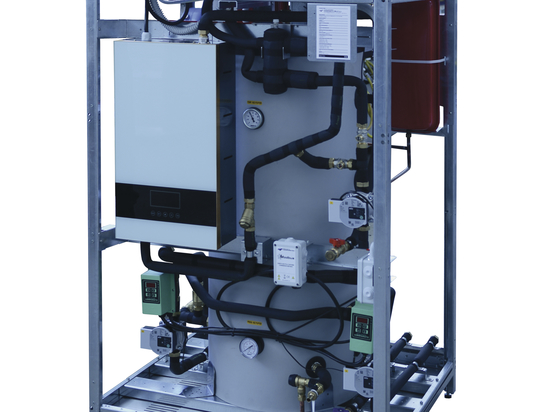
Thanks to its internal technical expertise and production flexibility, the company can develop standard and tailor-made manifolds, hydraulic separators, dirt separators and distribution components, adapting dimensions, connections and configurations to the requirements of the system.
From stainless steel to PPR, the objective remains the same: to provide reliable, efficient and application-specific solutions for fluid distribution in modern HVAC-R and plumbing systems.