#Product Trends
Application Case of DCS4MA2 in Residual Chlorine Monitoring of Wastewater Treatment Effluent
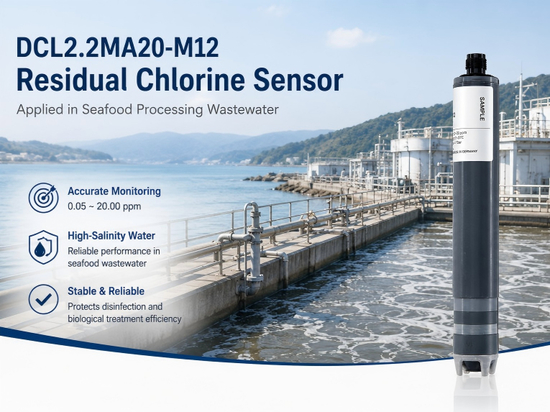
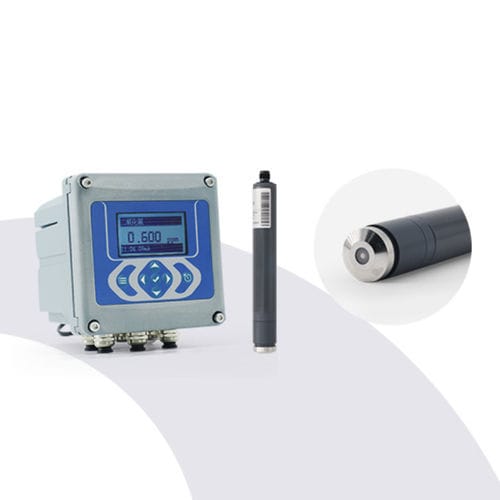
Residual Chlorine Sensor
I. Application Background
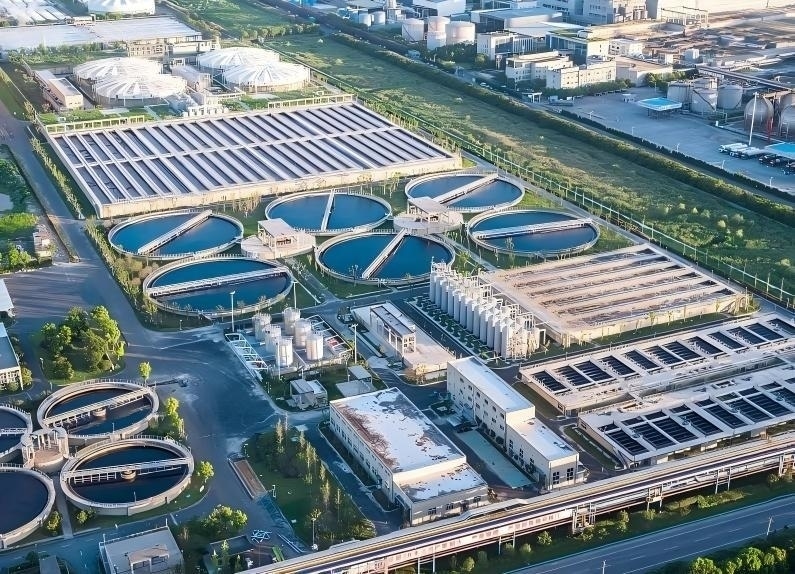
A municipal wastewater treatment plant adopts sodium hypochlorite for effluent disinfection, requiring strict control of effluent residual chlorine within 0.5~1.0ppm (in line with the requirement of "residual chlorine ≤1.0ppm" in Discharge Standards for Pollutants from Urban Wastewater Treatment Plants). This prevents microbial exceedance due to excessively low residual chlorine and adverse impacts on aquatic organisms in the receiving water body (river) caused by excessively high residual chlorine.
The previously used monitoring solution had obvious shortcomings:
• Large low-concentration measurement deviation: Traditional sensors had an error of ±0.1ppm in the 0.5~1.0ppm range, often misjudging the actual 0.45ppm (non-compliant) as 0.55ppm (compliant), leading to 1 failed river water quality sampling inspection;
• Significant environmental interference: Effluent pH fluctuated between 6.0~8.0 with influent water quality; water temperature reached 32℃ in summer and dropped to 8℃ in winter. Traditional equipment required weekly calibration under such conditions, otherwise the measurement deviation expanded to ±0.15ppm;
• Response lag: Manual sampling and testing were conducted every 2 hours. If residual chlorine anomalies were detected, approximately 5,000m³ of effluent had already been discharged, posing environmental compliance risks.
II. Selection Basis and Adaptability of DCS4MA2
Based on process requirements, the technical parameters of DCS4MA2 (4-20mA version) are highly compatible with wastewater treatment scenarios, with the following selection basis:
Technical Parameters
Compatibility with Residual Chlorine Requirements for Wastewater Treatment
Measurement range: 0.005…2.000ppm; Resolution: 0.001ppm
pH adaptation range: 4–9 (reduced pH dependence)
Operating water temperature: 0…+45℃ (supports automatic temperature compensation)
Response time: T90 ≈ 2 minutes
IP68 protection rating (5-pin M12 aviation connector)
III. Implementation Plan and Application Effects
• Installation and Linkage: DCS4MA2 is installed on the effluent pipe of the disinfection tank, collecting residual chlorine signals in real time and transmitting them to the central control system. When residual chlorine is <0.5ppm or >1.0ppm, it automatically triggers the start/stop of the dosing pump to achieve closed-loop control;
• Maintenance Support: The equipment’s membrane cap replacement cycle is 1 year, and the electrolyte is replaced once a year—reducing maintenance workload by 96% compared to traditional sensors (which require weekly calibration) and avoiding monitoring interruptions caused by maintenance;
• Application Effects:
a. Residual chlorine control accuracy improved to 0.5~0.9ppm, with fluctuation range narrowed from ±0.2ppm to ±0.05ppm, achieving 100% qualification rate in environmental sampling inspections;
b. Sodium hypochlorite consumption reduced by 8%, with annual chemical cost savings of approximately 12,000 yuan;
c. Manual testing frequency decreased from 12 times per day to 0, saving 30,000 yuan in annual labor costs.
With its accurate low-concentration residual chlorine measurement capability, anti-environmental interference performance, and low maintenance advantages, DCS4MA2 provides reliable monitoring support for the compliance of effluent disinfection in wastewater treatment plants.