#Product Trends
The "Temperature-Humidity Balancer" for Fuel Cell Production Lines
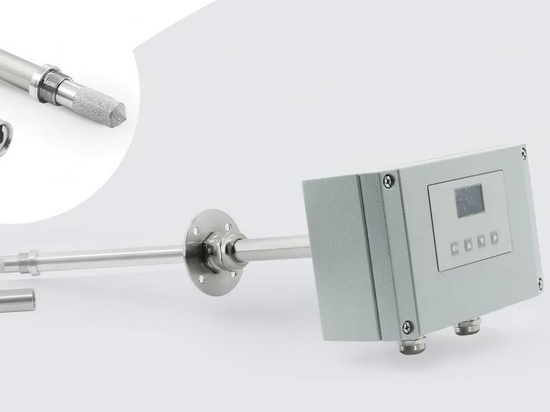
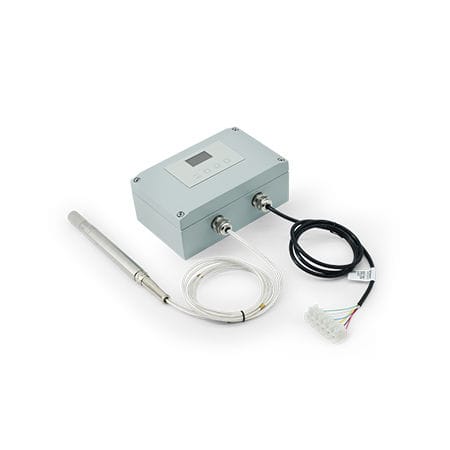
DB441 Humidity and Temperature Transmitter
Hydrogen fuel cell production hinges on two critical factors: proton exchange membrane (PEM) stability and stack sealing reliability, both demanding laboratory-grade precise temperature and humidity control. A new energy enterprise’s 5,000-stacks/year line once struggled with uncontrollable environments, resulting in an 82% membrane electrode assembly (MEA) qualification rate and 15% poor stack sealing rate—until the DB441 high-temperature humidity transmitter made every production link’s temperature and humidity visible and controllable.
"Invisible Precision Killers" in Production
Three core manufacturing links have strict environmental requirements. For MEA catalyst coating, humidity must be 45±3% RH and temperature 25±0.5℃ (precision: ±3% RH/±0.5℃); deviation causes PEM swelling or uneven coating. Stack assembly requires 20-25℃ and 30-40% RH (±1℃ precision), with temperature fluctuations leading to sealing gaps or plate corrosion. Stack drying needs 120±2℃ and <5% RH (±2℃ precision), as insufficient heat or residual moisture risks sealant failure or side reactions.
Traditional monitoring fails here: high-temperature areas (60℃) overwhelm 50℃-max integrated sensors, causing frequent shutdowns; on-site data checks rely on central control, taking 10 minutes per point with delays; ordinary stainless steel probes rust in 6 months in MEA workshops, expanding deviation to ±5% RH.
DB441’s Split-Type Intelligence: Tailored Solutions
The DB441’s split design (transmitter + probe) addresses these pain points. For MEA coating, it offers ±2% RH humidity precision and ±0.2℃ temperature precision at 25℃, ensuring PEM deviation <3μm and 15% better coating uniformity. For stack assembly, its -40~200℃ range and ±0.5℃ full-range precision control metal plate expansion to <0.05mm. For drying, it handles 200℃ max and <1% RH low-humidity deviation.
Its split structure adapts to scattered production layouts (workshops 50-100m apart). 316L stainless steel probes withstand 120℃ drying ovens, while wall-mounted transmitters operate stably at -10~70℃. Customizable 3-meter wires avoid cable entanglement, and LCD screens cut inspection time from 30 to 15 minutes.
Corrosion Resistance & Stability for Harsh Environments
Built for fuel cell production’s hydrogen, coolants, and solvents, the DB441 boasts 316L probes (3x more corrosion-resistant than 304 stainless steel) that last 2 years in MEA workshops, maintaining ±2% RH deviation. It resists 0.6Mpa pipeline pressure fluctuations and connects to MES via RS485/Modbus (complying with ISO 16750), with 10-minute on-site calibration (no disassembly needed).
Application Effects: Stable Mass Production Achieved
Three months post-installation, MEA qualification rate jumped to 95% (coating humidity stabilized at 45±1.5% RH, PEM deviation <2μm), stack poor sealing rate fell to 3% (assembly temperature locked at 23±0.5℃), and maintenance efficiency doubled. Calibration cycles extended from 1 to 6 months, reducing annual shutdowns by 40 hours.
In hydrogen fuel cell production, stable temperature and humidity equal stable performance. The DB441’s flexible split design, corrosion-resistant probe, and on-site LCD screen turn abstract data into tangible stability—laying a solid foundation for fuel cells to move from laboratory samples to mass-produced products.