#Product Trends
DB442-DB141: The Core "Precision Monitoring" Component for Fuel Cell Test Systems
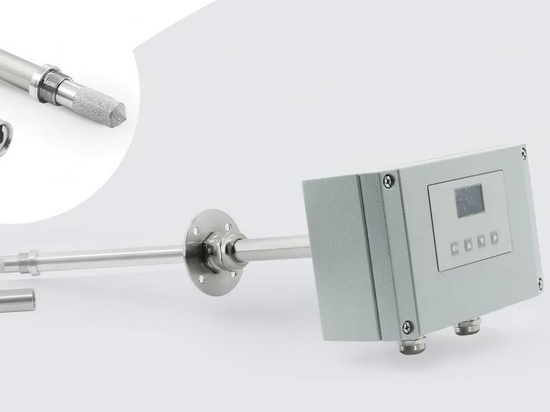
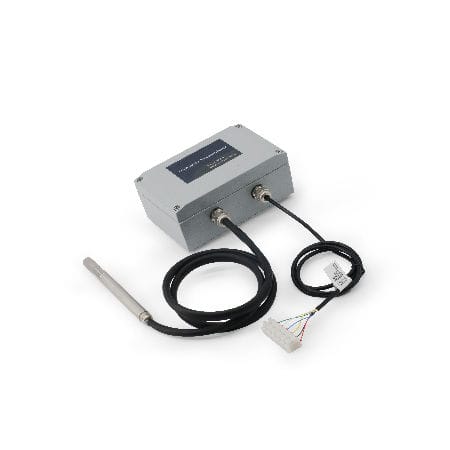
DB442-DB141 Humidity and Temperature Transmitter Upto 200℃
A new energy enterprise specializes in fuel cell stack testing, with 8 test systems conducting over 200 projects annually. Previously, sensor probes were corroded by trace hydrogen, requiring replacement every 3 months at an annual cost of RMB 40,000; the spacing between test benches was only 12cm, making it difficult to install integrated sensors in air ducts, resulting in data deviations exceeding ±0.5℃ and ±3%RH and a high rework rate; additional dew point meters were needed, leading to complex wiring and unsynchronized data.
II. Environmental Requirements
Monitoring temperature (60-80℃) and humidity (40-60%RH) in the stack heat dissipation air duct:
Temperature <60℃ reduces reaction efficiency; >80℃ accelerates membrane aging.
Humidity <40%RH causes membrane dehydration; >60%RH leads to "flooding".
Requirements also include hydrogen corrosion resistance, anti-condensation, 24/7 operation, sampling interval ≤5 seconds with synchronized power data, and dew point ≥5℃ to prevent freezing.
III. Core Adaptability of DB442-DB141
Corrosion Resistance + Split Design
High Precision + Wide Temperature Range
Multi-parameter + Pressure Resistance
Low Power Consumption + Stability
IV. Specific Application/Installation Method
Sensor Installation: Mount 10cm upstream of the air duct outlet using a movable flange; insert the 150mm 316L probe 50mm into the duct. Route 1.2m temperature-resistant leads along the frame, with Viton seals to prevent hydrogen leakage and waterproof connectors to protect wires.
Transmitter Installation: Wall-mount in the control cabinet, connect to 24VDC power and three signal lines; link to the acquisition module via RS485 (9600bps). Set thresholds (temperature 62-78℃, humidity 42-58%RH, dew point ≥5℃)—alarm and shut off hydrogen when exceeded.
Calibration: Calibrate with high-precision equipment to ensure compliance; set 5-second sampling intervals and verify data synchronization through 72-hour tests.
V. Application Effects
After deployment:
Sensor lifespan extended to 18 months, saving RMB 33,000 in annual replacement costs;
Test rework rate dropped from 15% to 1%, enabling 30 additional projects annually and increasing revenue by RMB 1.5 million;
2 stack aging accidents avoided, achieving 98% customer satisfaction.