#Product Trends
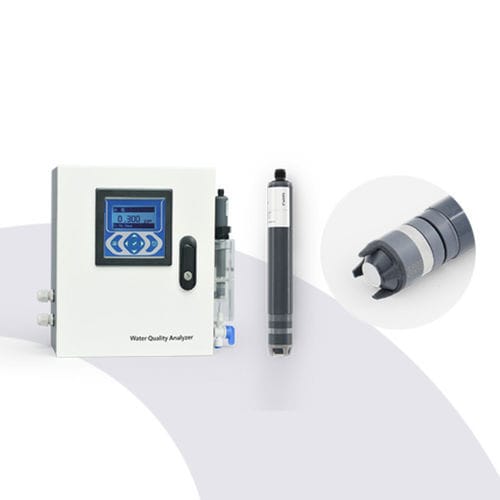
W761-DCL2.2 Free Chlorine Analyzer
Online Monitoring of Pretreatment for Seawater Desalination
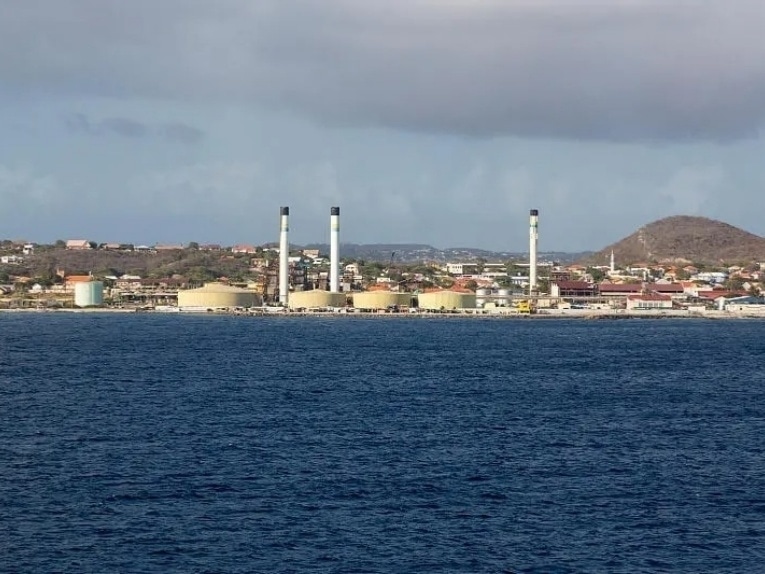
A large coastal seawater desalination plant, designed with a daily freshwater output of 50,000 m³, mainly supplies production and domestic water for surrounding industrial parks and some residents. The seawater in this area features high temperature (18–35℃), high turbidity (up to 50 NTU during the summer algae bloom period), high microbial content (TBC ≥ 10⁵ CFU/mL) and salinity of approximately 3.5%–3.8% (corresponding to conductivity > 50 mS). In the seawater desalination process, residual chlorine control in the pretreatment stage is crucial — the residual chlorine must be stably maintained at 0.5–1.5 ppm. This not only effectively kills algae, bacteria and other microorganisms in seawater to prevent their growth and clogging in subsequent membrane treatment units, but also avoids oxidative damage to key equipment such as reverse osmosis membranes caused by excessively high residual chlorine.
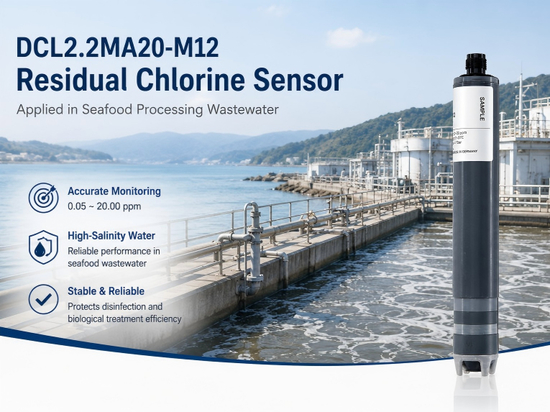
Based on the above requirements, after comprehensive evaluation, DABECO recommends the W761-DCL2.2MA2-M12 residual chlorine analyzer. With its precise measurement range of 0.005–2.000 ppm, it is adapted to the complex working conditions of seawater and ensures the pretreatment effect.
Operation Effect Evaluation
Since the sensor was put into use for 12 months, the operation effect has been remarkable:
Precision of Residual Chlorine Control: Real-time monitoring data shows that the residual chlorine in pretreated seawater is always stably maintained between 0.6–1.4 ppm, fully meeting the process requirement of 0.5–1.5 ppm. Compared with the on-site portable residual chlorine detector, the deviation is within ±0.05 ppm, effectively ensuring microbial control and equipment safety of subsequent membrane treatment units.
Stability and Reliability: Despite seasonal fluctuations in seawater temperature, salinity, turbidity and other parameters, the sensor measurement data remains stable, with no measurement drift or faults caused by working condition changes. The slope drift is only -3% within 12 months, far lower than the allowable limit of approximately -1% per month, reducing the frequency of calibration and maintenance and lowering operation costs.
Maintenance Cost-Effectiveness: Strict implementation of the calibration and maintenance plan requires regular investment in consumables such as electrolyte and membrane caps, but effectively avoids production accidents and equipment damage caused by sensor faults or inaccurate measurements. According to calculations, compared with previously used sensors of other brands, the annual maintenance cost is reduced by about 20%. Meanwhile, equipment operation stability is improved, and the overall capacity of the seawater desalination plant is increased by about 5%, achieving significant economic benefits.