#Product Trends
OZ1.2MA2 Ozone Sensor in Ozone Concentration Monitoring and Control
For Mineral Water Production
# Ozone Monitoring & Process Optimization Case Study
## I. Case Background
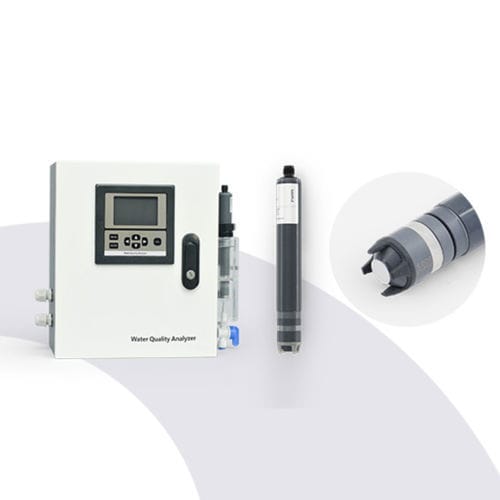
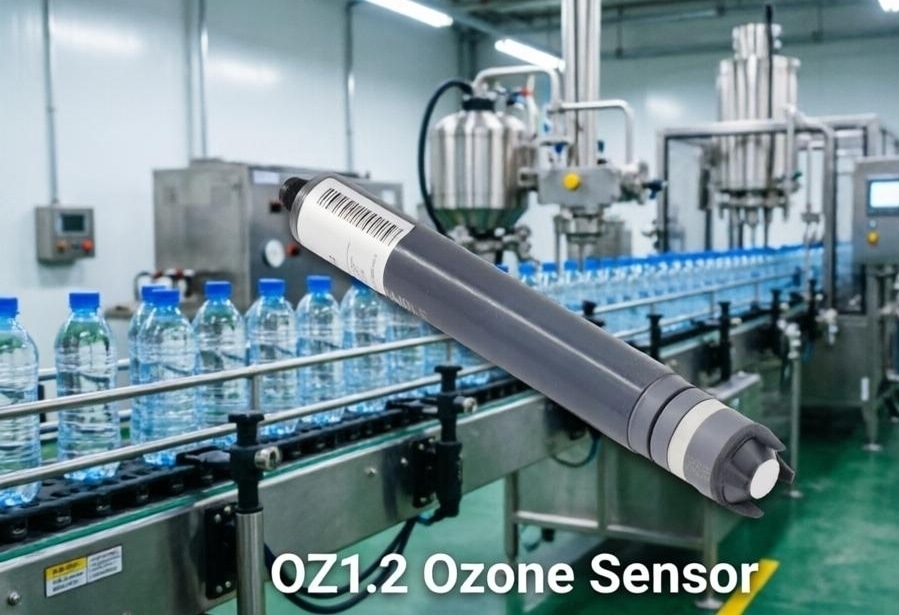
A mineral water plant uses a **UF + RO** treatment process with groundwater and ozone disinfection. It applies DABECO’s **OZ1.2 ozone sensor** with a third-party transmitter for real-time monitoring. The sensor’s 0.005–2.000 ppm range, 4–20 mA output, high resolution, and wide pH tolerance suit the required 0.1–0.5 ppm control range.
## II. Fault Phenomenon
During commissioning:
- Ozone rose to 0.5 ppm then dropped below 0.1 ppm within 10 minutes.
- Lab titration matched the sensor trend, excluding instrument error.
- Stable calibration could not be completed due to fluctuating values.
## III. Troubleshooting
Full inspection confirmed the sensor, installation, flow, pressure, and consumables were all normal.
The issue came from **high alkalinity in UF water** reacting rapidly with ozone. The initial 8:2 UF:RO ratio caused excessive ozone consumption. After changing to **2:8 UF:RO**, alkalinity fell and ozone concentration stabilized.
## IV. Solution & Optimization
- Fixed UF:RO ratio at **2:8** to control alkalinity (50–60 mg/L).
- Flow maintained at 20–25 L/h for stable sensor response.
- Closed-loop control via 4–20 mA: start ozone below 0.1 ppm, stop above 0.25 ppm.
- Calibrated under stable conditions; error within ±2%.
- Regular maintenance: membrane cap every 6 months, electrolyte every 3 months.
## V. Summary
The OZ1.2 sensor provides stable, high-precision low-concentration ozone measurement. Abnormal readings should first rule out sensor issues, then process and water quality.
For groundwater mineral water production, optimizing the UF-RO ratio is key to stable ozone control. With the OZ1.2 sensor and closed-loop control, reliable water treatment performance is achieved.