#Industry News
Solving Coastal Drinking Water Challenges
with German-made CL2.2 Free Chlorine Sensor
The “Special Challenge” of Coastal Drinking Water: Residual Chlorine Monitoring in High-Salinity Water
“Our raw water comes from shallow groundwater, but due to seawater intrusion, salinity remains between 3.6% and 4.0%, with conductivity reaching 52–58 mS. Conventional chlorine sensors often suffer from membrane clogging and measurement drift under such conditions,” recalled the plant manager.
According to Drinking Water Hygiene Standards, residual chlorine in treated water must remain within 0.3–0.8 ppm. If control fails, microbial contamination or excessive chlorine affecting taste may occur.
Previously, the plant relied on manual DPD colorimetric testing twice per day, which could not capture real-time water quality changes.
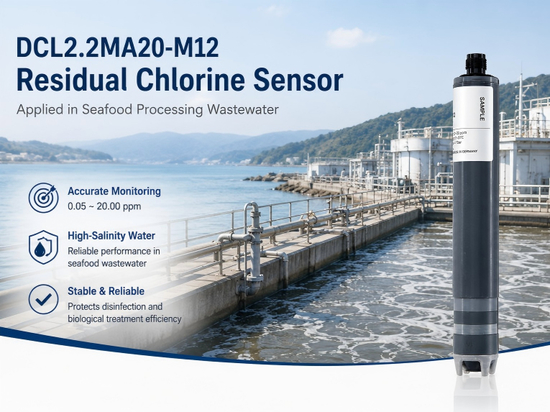
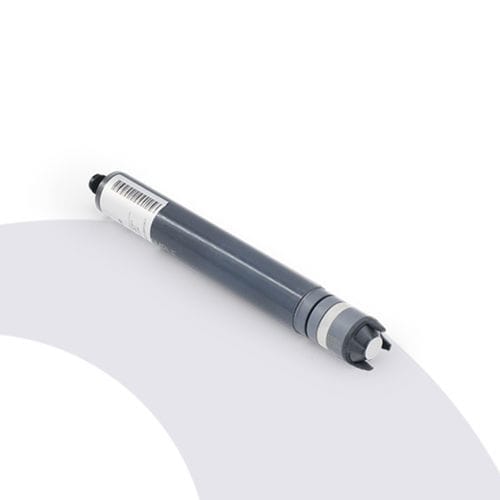
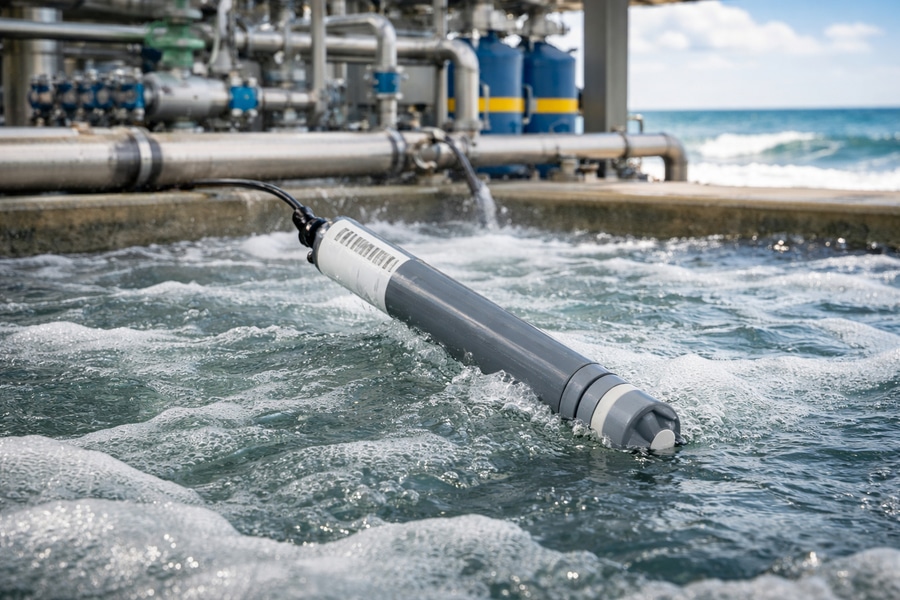
After evaluating several options, the technical team selected the German-made CL2.2 Free Chlorine Sensor. The sensor is specifically designed for high-salinity environments (>3.5% salinity or >50 mS conductivity) and can operate in salt concentrations up to 26%, provided the water contains no surfactants.
This specification perfectly matched the plant’s coastal groundwater conditions.
The Technical Strength of CL2.2: Precision in High-Salinity Environments
Unlike conventional sensors that struggle in saline water, the CL2.2 free chlorine sensor provides three key advantages.
1. High Precision and Suitable Measuring Range
The sensor offers a measuring range of 0.005–2.000 ppm with 0.001 ppm resolution, perfectly covering the drinking water control range of 0.3–0.8 ppm while detecting very small fluctuations.
“Previously, manual testing errors could reach 0.1 ppm. Now the sensor reads 0.52 ppm, and the DPD comparison shows only 0.03 ppm difference,” said the plant’s water quality engineer.
2. Excellent Resistance in High-Salinity Water
The sensor combines a semi-permeable PVC-U membrane with a specialized electrolyte, allowing stable operation in 3.6–4.0% salinity water without clogging.
Its design emphasizes stable performance in saline water without surfactants, perfectly suited to the plant’s groundwater source.
Installed with a PETP fixing ring, the system operates at 0.4 bar pressure without pulsation, ensuring stable measurement performance.
3. Intelligent Compensation for Environmental Changes
Water temperature in coastal regions fluctuates between 12°C and 28°C.
The built-in temperature sensor automatically compensates for temperature changes. Even after heavy rainfall causing a sudden 5°C drop, measurement deviation remained below 0.02 ppm.
The sensor operates within pH 6–8, and the plant stabilized the water source at pH 7.0–7.3. At pH 7.2, the sensor maintains a nominal slope of 8.0 mA/ppm, ensuring accurate measurement.
Installation and Maintenance: Designed for Real Water Plant Needs
To ensure optimal performance, installation and operation follow strict procedures:
Installation location: 6 meters downstream of the chlorination mixing tank to ensure full mixing
Upstream filtration: A 100 μm filter removes sediment and protects the membrane cap
Electrical connection: Two-pole terminals (IP65 protection) connect directly to the SCADA system using an 8 m shielded cable
Maintenance:
No zero adjustment required
Monthly calibration using the DPD-1 method
Electrolyte replacement every 5 months
Membrane cap replacement once per year
This approach keeps maintenance simple and operating costs low.
Reliable Drinking Water for 80,000 Residents
After 8 months of operation, the CL2.2 Free Chlorine Sensor delivered excellent performance:
Treated water residual chlorine maintained at 0.4–0.7 ppm
Distribution network residual chlorine always ≥0.05 ppm
Microbiological tests consistently compliant
Total slope drift only –3.8%, with a monthly average of –0.47%
Even after heavy rainfall increasing turbidity to 5 NTU, the sensor continued operating without failure
“Previously we worried that high salinity would affect monitoring reliability. With the CL2.2 sensor, we now have full confidence in water quality safety,” said the plant manager.
For coastal water utilities facing similar challenges, the German-made CL2.2 Free Chlorine Sensor provides a reliable and precise solution for high-salinity drinking water monitoring.