#Product Trends
German-Made CCF1 Residual Chlorine Sensor in Large-Scale Municipal Drinking Water Treatment
Application Case
Full Disinfection Control in a Mega City Water Supply System
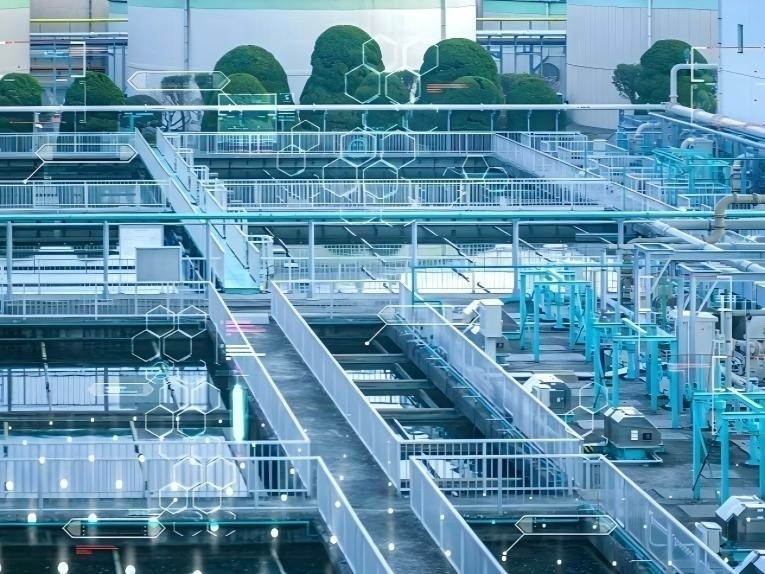
A large metropolitan water treatment plant, serving tens of millions of residents with a daily capacity of 2 million tons of drinking water, operates under strict compliance with China’s Drinking Water Sanitation Standard (GB5749-2006). According to the regulation, free residual chlorine in finished water must be maintained between 0.3–4 mg/L, while the distribution network terminal must not fall below 0.05 mg/L.
To ensure stable and compliant disinfection performance across the entire process, the plant deployed the German-made CCF1 residual chlorine sensor at multiple critical monitoring points, including:
Sedimentation tank outlet
Filtration effluent
Main outlet pipeline (finished water)
End points of the distribution network
High-Precision Chlorine Monitoring Technology
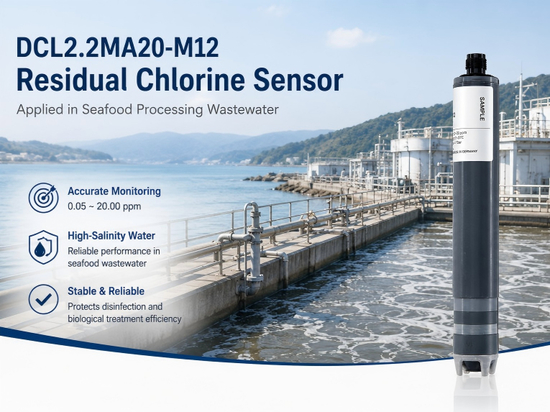
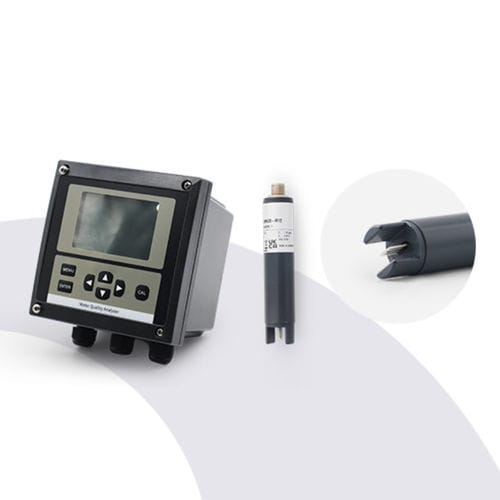
The CCF1 sensor is based on a membrane-free three-electrode constant amperometric measurement principle, ensuring long-term stability and low maintenance requirements.
Key technical specifications include:
Measurement range: 0.05 – 20 mg/L
Resolution: 0.01 mg/L
Accuracy: ±2% FS
Temperature compensation: 0–45°C automatic calibration
Compensation accuracy: ±0.03 mg/L
Even under significant seasonal variation—summer raw water temperatures reaching 35°C and winter dropping to 3°C—the system maintains stable performance with measurement deviation consistently within ±2%.
Stable Operation Under High-Pressure Pipeline Conditions
The municipal pipeline network experiences significant pressure fluctuations, reaching up to 7 bar. The CCF1 sensor is designed with a robust 316L stainless steel housing, enabling it to withstand pressures up to 8 bar, ensuring long-term operational reliability in harsh hydraulic environments.
Real-Time Data Transmission and Automated Dosing Control
The sensor integrates a Modbus RTU digital communication interface with the following features:
Communication speed: 9600 bps
Data refresh cycle: 1 second
Real-time transmission with no delay
With a fast response time of T90 ≤ 20 seconds, the system immediately detects deviations from the optimal chlorine range (0.6–1.4 mg/L) and triggers automatic adjustment of sodium hypochlorite dosing.
Dosing control accuracy: ±0.05 mg/L
This closed-loop control system ensures stable disinfection while minimizing chemical overuse.
Long-Term Calibration Stability and Data Reliability
Daily calibration checks are performed using the DPD-1 reference method, ensuring high measurement traceability.
Calibration deviation: ≤ ±0.02 mg/L
Annual data agreement rate: 99%
Industry benchmark: ~95%
The system consistently outperforms industry standards in both accuracy and reliability.
Conclusion
The deployment of the German-made CCF1 residual chlorine sensor significantly improves the accuracy, stability, and automation level of chlorine monitoring in large-scale municipal water treatment systems. Its high precision, strong environmental adaptability, and real-time control capability make it an ideal solution for modern drinking water disinfection management.