#Industry News
How to Test an Ultrasonic Transducer: Impedance, Sensitivity, Ringing, and Pair Matching
How to Test an Ultrasonic Transducer: Impedance, Sensitivity, Ringing, and Pair Matching
Define the decision before choosing the test
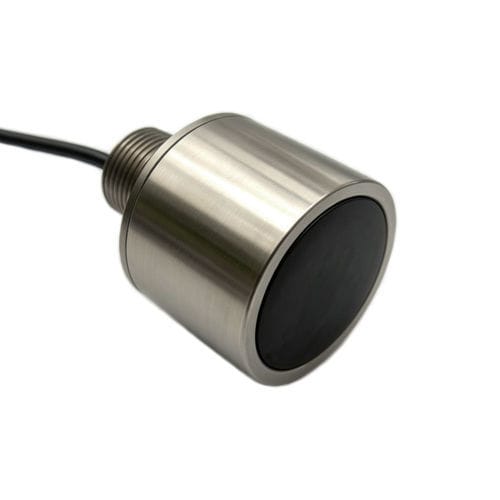
An ultrasonic transducer cannot be accepted or rejected from its frequency label alone. “40 kHz” may describe a nominal operating region, while the measured resonance, impedance, bandwidth, sensitivity, and decay depend on construction, mounting, cable, temperature, acoustic load, and test method. A useful test plan begins with the decision it must support: incoming inspection, supplier comparison, circuit design, matched-pair selection, production screening, or failure analysis.
The same measurement should not be stretched across all those decisions. An electrical impedance sweep is valuable for identifying resonances and loading, but it does not by itself prove acoustic output or receive sensitivity. A pulse-echo waveform reveals system ring-down, but it includes the driver, fixture, target, medium, receiver, and threshold. This guide shows how to separate the measurements and document their boundaries.