#Product Trends
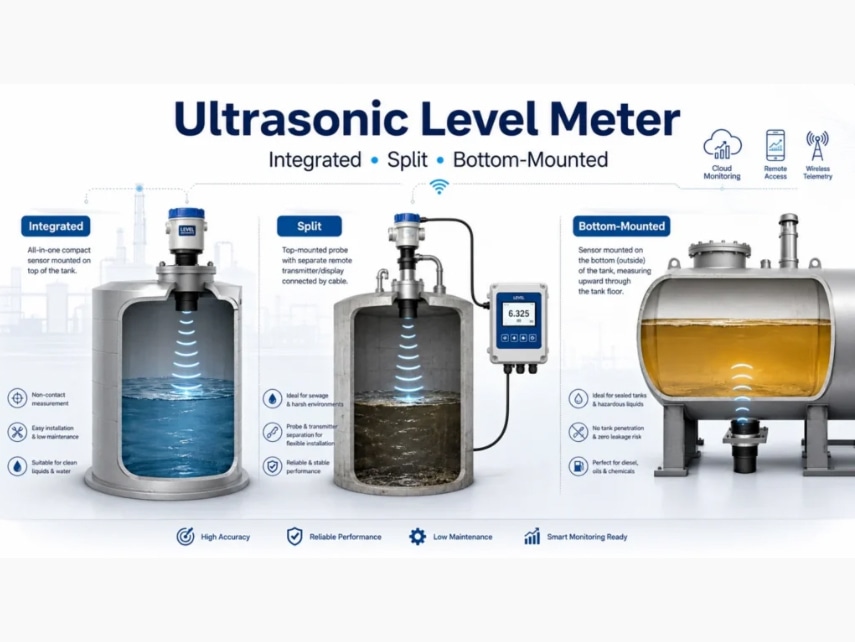
Ultrasonic Level Meter: Integrated, Split, and Bottom-Mounted Types Explained
Ultrasonic Level Meter: Integrated, Split, and Bottom-Mounted Types Explained
What Is an Ultrasonic Level Meter?
An ultrasonic level meter is a level measurement device that uses ultrasonic sound waves to measure the distance between the sensor and the surface of a liquid or solid material. In many tank and process applications, this distance is then converted into a level value based on the tank height or installation position.
Unlike mechanical float switches or contact-type level sensors, an ultrasonic level meter can measure without direct contact with the measured medium. This makes it suitable for water tanks, sewage tanks, diesel tanks, storage vessels, open channels, and some solid material containers where contamination, corrosion, or mechanical wear should be reduced.
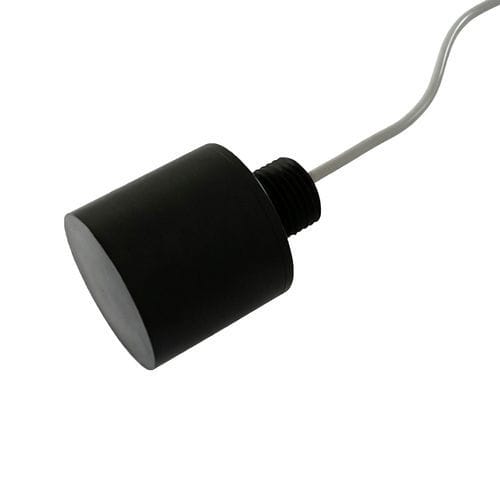
In a complete level measurement system, the instrument may include an ultrasonic probe, signal processing electronics, display, output interface, housing, cable, and mounting accessories. Depending on the installation condition, it can be designed as an integrated type, a split type, or a bottom-mounted type.
Deep Minds provides the BBULM-T top-mounted ultrasonic level meter for non-contact level measurement, external bottom-mounted tank monitoring, high and low level alarms, telemetry input, and remote monitoring applications.