#Product Trends
Is Argon Filling Mandatory for Insulating Glass? SuperVIG® Breaks Down Thermal‑Performance Trade‑Offs
Understand real‑world gains, limitations and specification pitfalls for argon‑filled insulating‑glass units in building projects
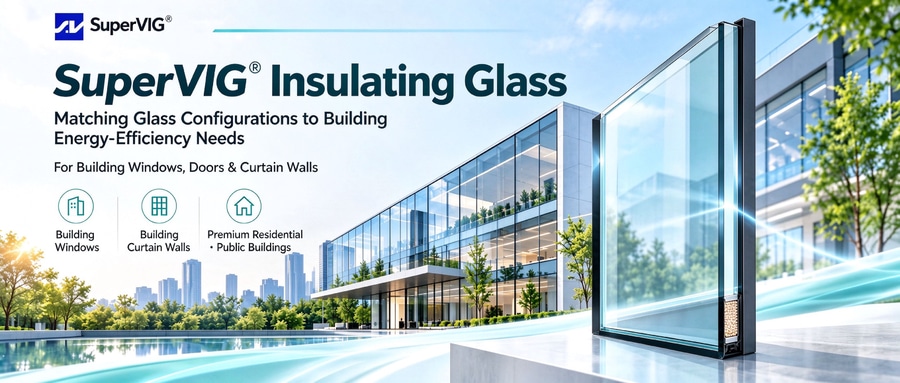
Argon‑filled insulated glass units (IGUs) are widely marketed for energy‑efficient windows, yet many specifiers misunderstand actual performance improvements versus marketing claims. Argon is an inert gas with roughly 31% lower thermal conductivity than dry air, which can reduce glass Ug‑value and improve insulation when properly configured. However, adding argon does not deliver proportional 31% whole‑window efficiency gains. Real‑world outcomes are constrained by argon fill concentration, edge‑seal gas‑retention quality, cavity width, Low‑E coatings and frame thermal bridges. This article quantifies practical benefits: reduced winter heat loss, lower summer air‑conditioning loads, improved interior glass‑surface temperature and reduced condensation risk. Critical caveats: higher argon concentration does not equal unlimited performance; poor sealing leads to gradual gas leakage and degraded long‑term performance. Instead of treating argon fill as a standalone checkbox, architects and engineers should evaluate full glass‑assembly configuration aligned with project‑specific building‑energy requirements. SuperVIG® matches gas‑fill, coating and spacer solutions to each project’s thermal targets.