#Product Trends
Drying shaped containers
What the air supply has to deliver
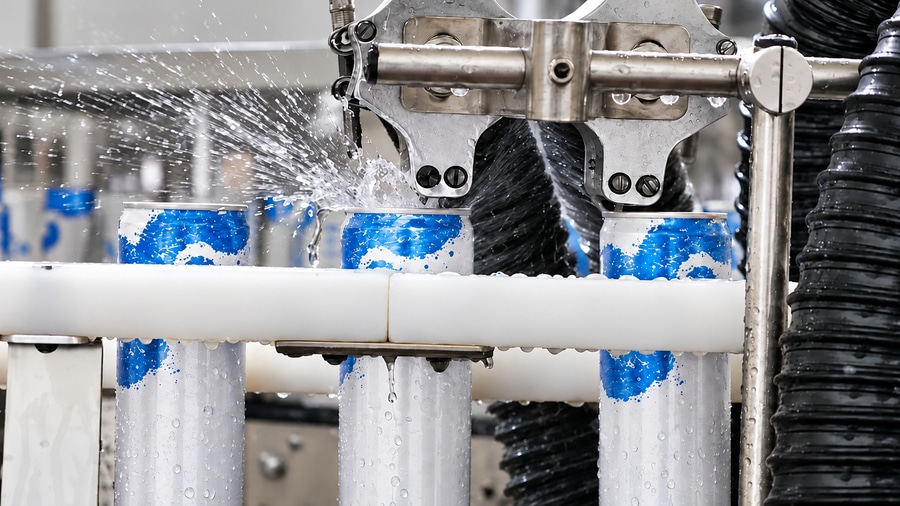
A shaped container leaving the rinser holds water where a straight slot cannot reach — the shoulder curve, the waist, the recessed panel. Multi-nozzle headers answer this. Dozens of adjustable nozzles surround the container, each one aimed at a surface from an angle that works. It is a solution of coverage.
Coverage has a price, and the blower pays it.
Every nozzle draws air. A working header carries far more total outlet area than a linear slot of the same width. Each nozzle then routes that air out of the manifold, through a swivel body, into a slot under two millimetres wide. None of that path is free.
So the duty is neither high pressure nor high flow alone. It is about 15 m³/min delivered at about 17 kPa — both together, held all shift.
A blower that reaches 17 kPa but spends its flow getting there leaves nothing at the nozzle. The header needs a machine with flow still in hand once pressure climbs.
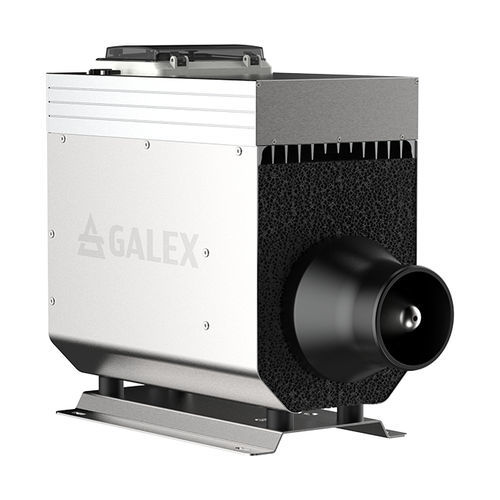
The X730
The X730 holds its volume at this point in the pressure range rather than trading it away. That reserve matters, because headers do not stay new. Filters load, nozzle gaps open, pressure creeps up — and the drying result has to hold anyway.
Two things carry weight on a filling line. The air touches the container and often reaches the product contact zone, so oil-free delivery removes that variable. Drying demand follows line speed and format, so the blower can follow each changeover instead of holding full output.
Shaped containers are not getting simpler. Coverage will keep asking for more air. Whether that was sized in at the design stage, or discovered after commissioning, decides whether a line holds its output.
Figures describe a representative duty, calculated from published nozzle geometry and standard air properties. Final selection must be confirmed against the installed header.