


#Industry News
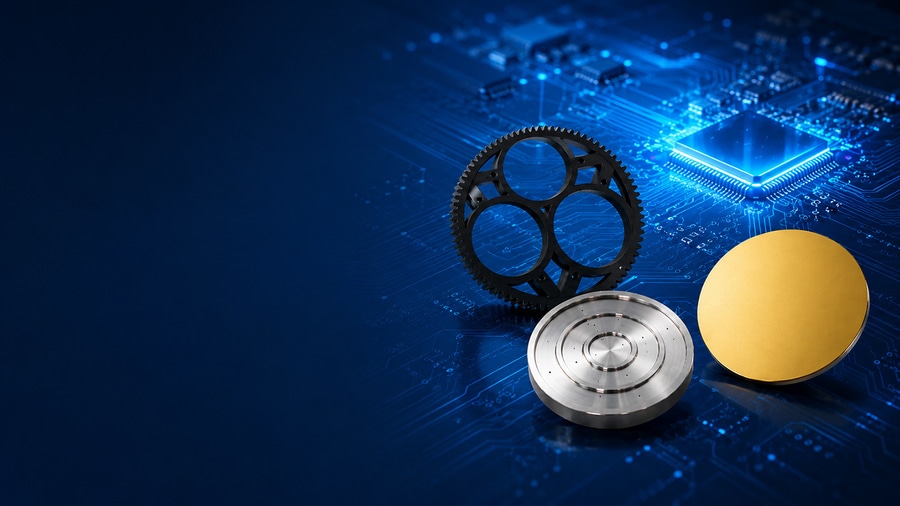
Semiconductor Component Coating Solutions
Why is coating necessary for semiconductors?
Huasheng’ s semiconductor coating solutions cover atomic layer deposition (ALD), DLC, and ta-C technologies for controlled thin-film deposition and precision component protection. ALD technology supports precise film thickness and conformal coverage, while DLC and ta-C coatings address friction and wear in precision equipment components. Each solution is selected according to substrate material, geometry, film function, and operating conditions.
Challenges in Semiconductor Coating and Thin-Film Deposition
Semiconductor applications place demanding requirements on film thickness, surface cleanliness, material compatibility, and coating reliability. Device structures and equipment components require different coating properties, making application-specific process selection essential.
1.Precise Film Thickness
Semiconductor thin-film deposition requires controlled thickness and repeatability. ALD uses self-limiting surface reactions to support precise film growth through repeated deposition cycles.
2.Coverage Of Complex Structures
Deep features and three-dimensional surfaces require suitable film coverage. Atomic layer deposition can provide conformal coatings, with performance depending on geometry, precursor access, and process conditions.
3.Surface Cleanliness And Compatibility
Coating materials and processes must meet application-specific contamination limits. Film composition, substrate compatibility, cleaning procedures, and operating conditions all influence suitability.
4.Component Friction And Wear
Repeated motion can damage precision contact surfaces. DLC and ta-C coatings help address friction and wear, with coating thickness and surface finish selected to suit component tolerances.
Semiconductor Component Types We Support
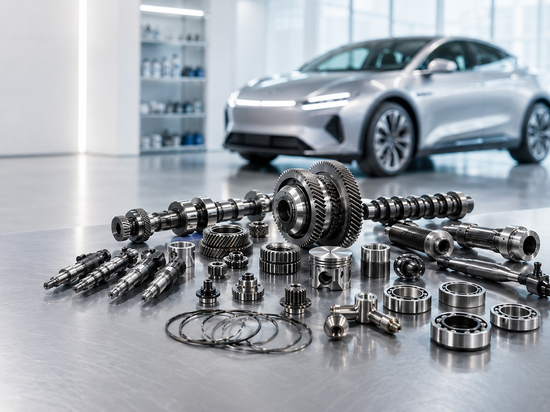
Huasheng coating equipment supports precision semiconductor parts that require wear resistance, corrosion protection, low friction, and stable coating quality.
1.Precision Transmission Components
Suitable for precision shafts, guide rails, sliding parts, bearings, sleeves, pins, and motion-related semiconductor components, with DLC and ta-C coatings helping reduce friction and improve wear resistance.
2.Fluid Spray & Flow Components
Suitable for spray nozzles, showerhead components, valve parts, pump parts, flow-channel parts, and fluid-contact components, with DLC, CrN, ta-C and hybrid coatings helping improve corrosion
resistance and surface durability.
3.Vacuum Chamber Components
Suitable for chamber liners, shields, covers, trays, rings, fixtures, plasma-facing parts,and internal chamber components, with dense PVD, DLC, ta-C, HiPIMS, and hybrid coatings helping improve hardness, adhesion, and long-term stability.
Coating Technologies for Semiconductor Applications
1.Atomic Layer Deposition (ALD)
Atomic layer deposition is a thin-film deposition process based on sequential, self-limiting surface reactions. Separate precursor and reactant exposures, with purge steps between them, build films through repeated cycles.
ALD thin films are used in semiconductor applications such as high-k dielectrics, surface passivation, and diffusion barriers. ALD coating can also provide protective barrier layers for selected equipment components. Film material, geometry, and service conditions determine the appropriate process.
2.Diamond-Like Carbon (DLC)
DLC coatings provide low-friction, wear-resistant surfaces for precision semiconductor equipment components. Applications include shafts, pins, sleeves, and sliding parts.
Coating selection considers contact conditions, substrate material, surface finish, dimensional tolerances, and operating temperature. Components exposed to process chemicals or plasma require additional compatibility assessment.
3.Tetrahedral Amorphous Carbon (ta-C)
ta-C is a hard carbon coating used for components requiring high wear resistance and controlled surface properties. It can support demanding precision contact applications where substrate support and coating adhesion are suitable.
Coating thickness, residual stress, surface finish, and component geometry must be considered when selecting a ta-C solution.
Equipment Value For Semiconductor Component Manufacturers
1.Surface Durability
Improve hardness and wear resistance to extend the service life of semiconductor precision parts.
2.Less Friction & Wear
Low-friction DLC and ta-C coatings reduce sliding wear, surface damage, and friction-related failure.
3.Corrosion Protection
Protect fluid-contact and chemical-contact parts from corrosion, cleaning media, and surface degradation.
4.Precision Part Support
Stable thickness and smooth surfaces support shafts, pins, sleeves, nozzles, valves, and chamber parts.
5.Batch Consistency
Repeatable coating processes maintain stable thickness, adhesion, hardness, and surface quality.
6.In-House Coating
Build internal coating capacity to improve quality control, delivery speed, and production flexibility.
From Semiconductor Component Analysis To Coating Production
1.Component &Application Analysis: Analyze component material,working environment, surface problem, precision requirements, coating thickness, and cleanliness requirements.
2.Coating Process Recommendation: Recommend suitable coating systems such as DLC, ta-C, CrN, TiN, HiPIMS, AIP, or hybrid coating based on component application.
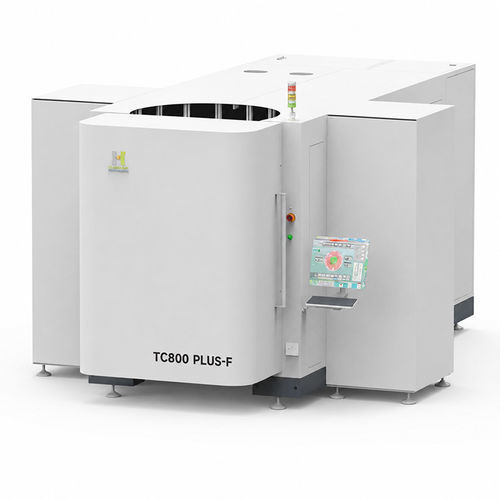
3.Equipment Selection: Select suitable coating equipment according to component size, coating type, chamber capacity, production volume, and factory layout.
4.Fixture & Loading Design: Design customized fixtures for precision parts, small components, complex shapes,and batch loading to improve coating uniformity.
5.Installation & Training: Provide equipment installation, commissioning, operator training, and coating process guidance for stable production.
6.Long-Term Technical Support: Support process optimization, spare parts supply, equipment maintenance, and after-sales service for long-term coating production.

 鄂公网安备42018502009509号