#Industry News
Difference between Screw air compressor and Piston air compressor
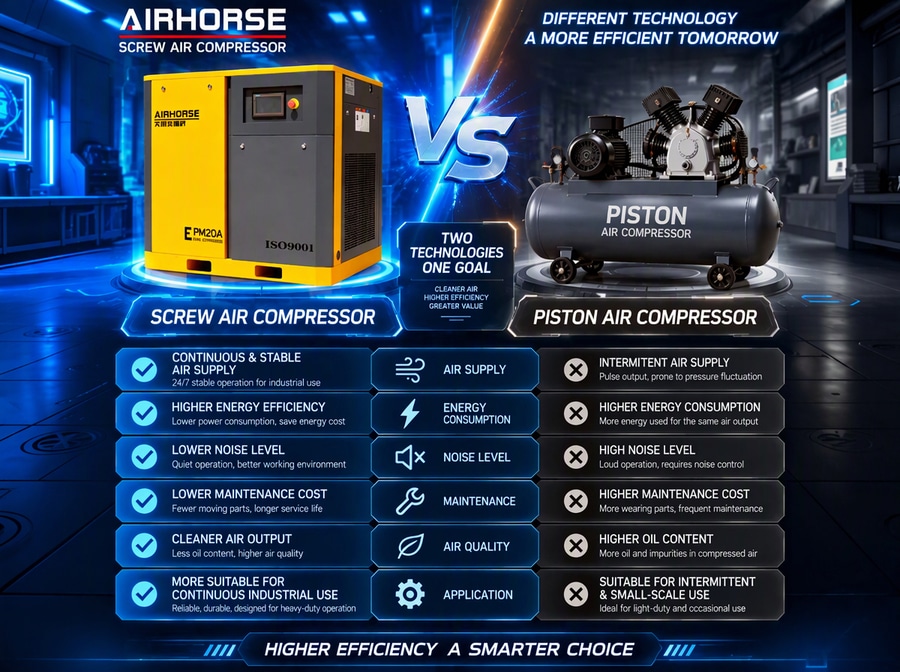
Screw air compressor VS Piston air compressor
Piston air compressor, reciprocating air compressors, portable diesel air compressor and rotary screw air compressors are four of the most popular compressor technologies available today. But do you know which one would be better suited for your specific needs and applications? Understanding the difference between piston and rotary screw air compressors and the capabilities of each technology is key.
Advantages & disadvantages of piston air compressor vs screw air compressors:
When comparing piston air compressor and screw air compressors, it's important to understand their operational differences and how these relate to their suitability for specific tasks. Piston air compressor typically used for applications that require short, intense bursts of air. In contrast, rotary screw air compressors are designed for applications that need a steady flow of air over extended periods.
Energy efficiency
Rotary screw air compressors are typically more energy-efficient and more efficient than piston air compressors, delivering more air per unit of input energy.
Operating costs and energy efficiency
Rotary screw air compressors generally have lower operating costs and are more energy-efficient in the long run, especially for continuous use scenarios. However, piston air compressors might offer savings for smaller or less frequent applications.
Operational differences
Piston air compressors work by drawing air into a cylinder and compressing it with a reciprocating piston. They are generally best for lower volume air needs and have a duty cycle of about 60-70%, meaning they need to shut down periodically to prevent overheating.
Rotary screw air compressors, on the other hand, use two interlocking rotors to compress air, allowing for 100% duty cycle and continuous operation without the risk of overheating. Screw air compressors can operate continuously for 24 hours without interruption. This means your factory or workshop won’t experience production delays due to air compressor downtime.
Maintenance and durability
Rotary screw air compressors have fewer moving parts than piston air compressors, which translates to less wear and tear and lower maintenance requirements. While piston air compressors are simpler in design and may be easier to maintain, they typically require more frequent service due to more moving parts.
Noise and space requirements
Rotary screw air compressors operate more quietly and require less space compared to piston air compressors, making them suitable for closer proximity to workspaces.
Total Cost of Ownership
The initial cost of a rotary screw air compressor may be higher, but the total cost of ownership can be lower due to its increased efficiency and lower maintenance costs over time. This includes the purchase price, energy consumption, maintenance and downtime costs.
What Factors Should I Consider?
Initial and operating costs, energy efficiency, duty cycle, and service intervals are important factors to consider when determining whether your business will benefit most from a piston or a rotary screw compressor. Noise levels is an additional factor to take into consideration.
Piston air compressor a great option as an entry level compressor, but it's common for facilities outgrow the unit. If you need a consistent and or increased air flow and are looking for something that is compact, efficient, reliable and quiet, going with a rotary screw would be a great option.
Still struggling with which technology is right for you? AIRHORSE air compressed technical engineer are always available to talk you through the decision! Please feel free to contact us.