#Industry News
Different speed transfer cart VS Hydraulic steering transfer cart
trackless transfer cart type
Different Speed Transfer Cart vs. Hydraulic Steering Transfer Cart
This article will explore the differences and advantages of trackless transfer carts. Before that, let’s take a look at what trackless transfer carts are in the context of material handling equipment.
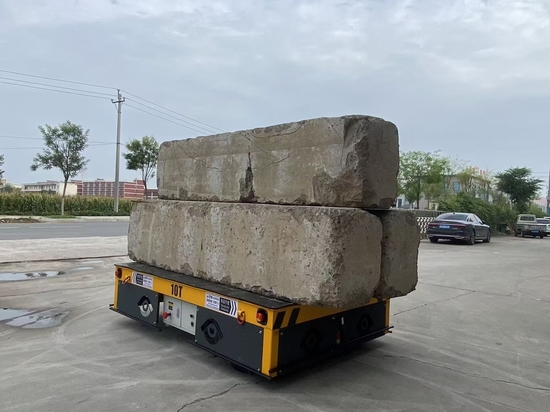
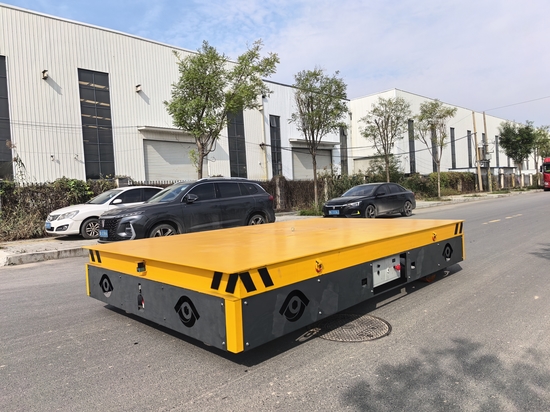
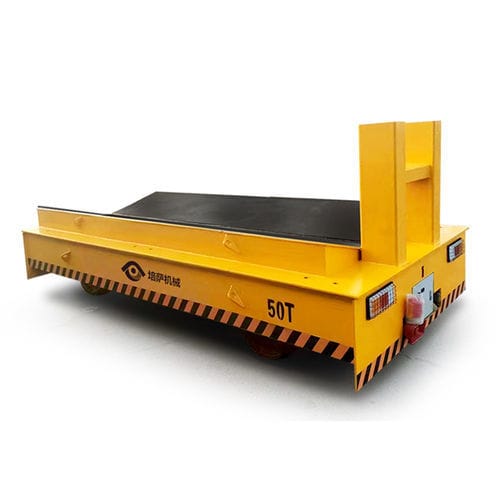
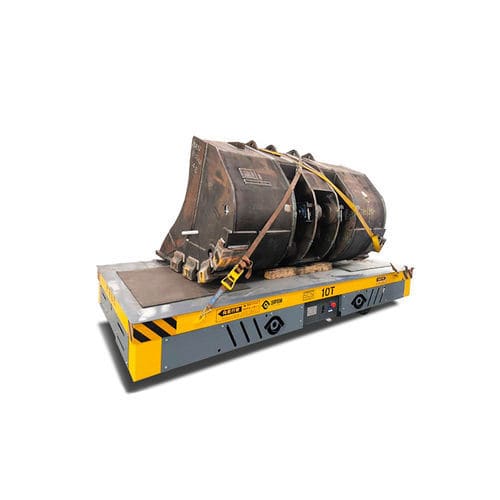
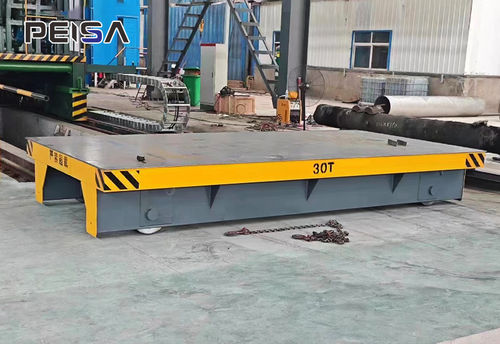
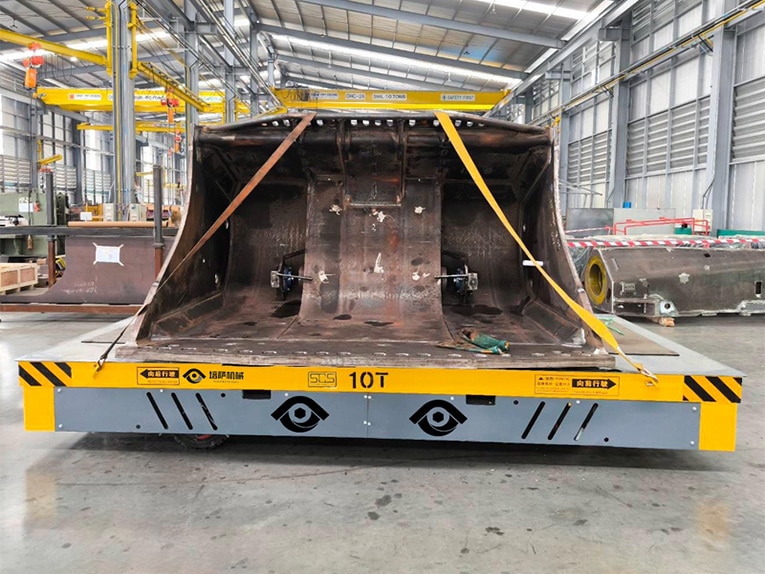
A trackless transfer cart is a self-propelled material transport vehicle. It uses batteries as a power source to drive the motor, which in turn powers the drive system of the electric flat cart. This enables the cart to move forward, backward, turn left and right, and even rotate in place. This type of vehicle is ideal for transporting heavy materials in workshops, warehouses, and both indoor and outdoor environments.
Types of Trackless Transfer Carts:
Different Speed Transfer Cart:
This cart changes its direction by varying the speeds of the left and right wheels. Differential control of the drive motors allows the cart to turn without changing the wheel orientation.
Hydraulic Steering Transfer Cart:
This cart uses a hydraulic pump station to drive the steering wheels by extending and retracting precision hydraulic cylinders.
Advantages:
Different Speed Transfer Cart:
Offers high flexibility, slight operational delay, and 360-degree turning capability, making it suitable for transportation scenarios with limited space.
Hydraulic Steering Transfer Cart:
Provides precise steering control and strong driving force, making it ideal for applications requiring accurate docking and high load capacity.
Summary:
Hydraulic Steering Transfer Cart = High accuracy + High load capacity →
The ideal partner for precision manufacturing and high-end logistics.
Different Speed Transfer Cart = Strong flexibility + Compact structure →
An economical choice for light handling and flexible scheduling.