


#Product Trends
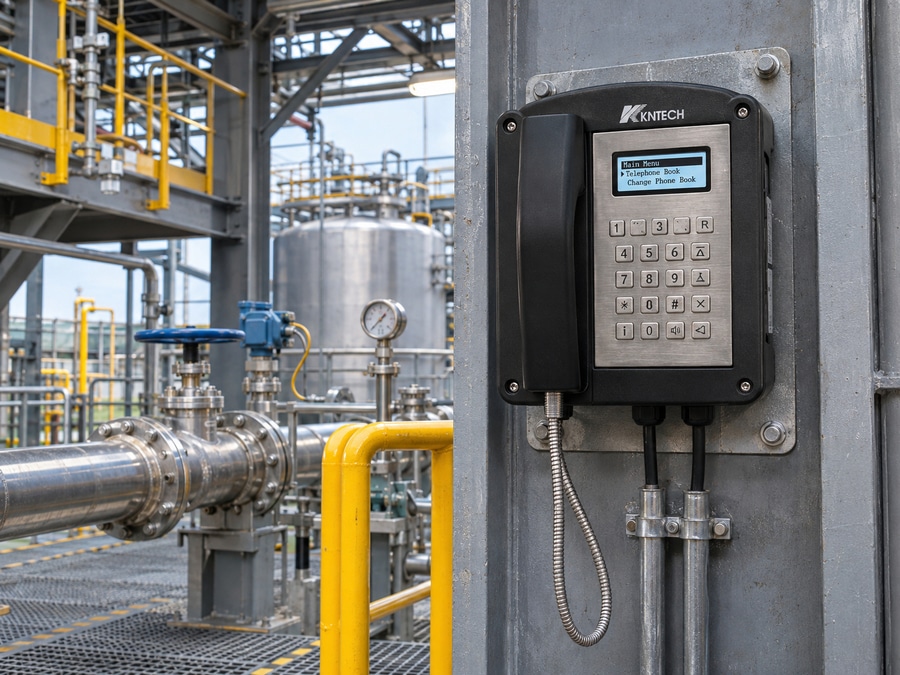
KNTECH KNEx1 Explosion-Proof Telephone: Reliable Industrial Communication for Oil & Gas, Petrochemical and Hazardous Environments
KNTECH KNEx1 Explosion-Proof Telephone: Reliable Industrial Communication for Oil & Gas, Petrochemical and Hazardous Environments
Introduction: Why Reliable Communication Matters in Hazardous Industrial Environments
In industries such as oil and gas, petrochemical processing, chemical manufacturing, offshore energy and power generation, reliable communication is an essential part of safe and efficient operations. Workers often operate in challenging conditions involving explosive gases, combustible dust, high noise levels, moisture, extreme temperatures and heavy industrial equipment.
Under these circumstances, ordinary commercial telephones may not provide the environmental protection, durability or explosion-protection characteristics required for industrial installations.
Communication equipment installed in hazardous areas must be selected carefully, taking into account the hazardous-area classification, environmental conditions, communication infrastructure and applicable safety standards.
To address these requirements, KNTECH introduces the KNEx1 Analogue Explosion-Proof Telephone, a robust industrial communication device designed for use in demanding environments where dependable voice communication is critical.
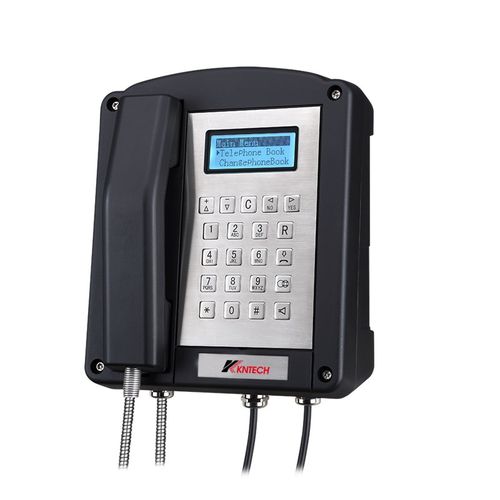
Featuring a glass-fibre-reinforced polyester enclosure, IECEx explosion-protection certification, IP66 protection, a stainless-steel keypad and convenient analogue telephone connectivity, the KNEx1 provides a practical communication solution for industrial operators, engineering contractors and system integrators.
1. Explosion-Proof Design for Hazardous Areas
One of the most important characteristics of the KNEx1 is its explosion-protection design.
Industrial facilities handling flammable gases, vapours or combustible dust require communication equipment that is appropriately certified for the hazardous conditions where it will be installed.
The KNEx1 product documentation identifies IECEx explosion-protection certification and an IIC T6 gas protection classification. The product identification label also includes a dust-protection marking.
This makes the KNEx1 a potential communication solution for applications involving hazardous gas and dust environments, subject to verification against the relevant installation classification and certificate conditions.
For operators in refineries, natural gas processing plants, petrochemical facilities and industrial production environments, an appropriately selected explosion-proof telephone can provide an important communication link between field personnel and the central control room.
Key explosion-protection advantages include:
- Explosion-protection design intended for hazardous industrial locations.
- IECEx certification indicated in KNTECH's product documentation.
- Gas protection classification identified as IIC T6.
- Construction designed for demanding industrial operating conditions.
- Suitability for integration into industrial telephone networks.
The applicable gas and dust zones, ambient temperature limits and any accessory approvals should always be checked against the valid certification documents before installation.
2. Heavy-Duty Construction for Industrial Reliability
Industrial telephones may be exposed to vibration, dust, rain, frequent operation and accidental mechanical impacts.
The KNTECH KNEx1 features a robust SMC 2600 glass-fibre-reinforced polyester enclosure, providing a strong housing designed for industrial applications.
Compared with ordinary office telephone equipment, the KNEx1 is built with an emphasis on mechanical durability and environmental protection.
Its rugged enclosure supports installation in industrial locations such as production areas, processing facilities, maintenance stations and outdoor operating zones.
The telephone also features IK09 impact protection, helping protect the equipment against mechanical impacts encountered in industrial environments.
Its black industrial housing, durable handset and stainless-steel front keypad create a professional design suitable for industrial facilities where equipment reliability and maintainability are important considerations.
3. IP66 Protection Against Dust and Water
Environmental exposure is another major challenge for industrial communication systems.
Outdoor facilities may experience heavy rainfall, airborne dust, moisture and frequent cleaning operations. Offshore installations and industrial processing plants may also require equipment capable of operating in exposed locations.
The KNEx1 is designed with an IP66 enclosure protection rating.
This rating indicates protection against dust ingress and powerful water jets under the relevant test conditions.
For industrial operators, these characteristics can help reduce the risk of environmental exposure affecting the communication equipment.
Typical installation environments may include outdoor production platforms, refinery operating areas, industrial maintenance corridors, covered processing facilities and exposed utility stations.
Although IP66 protection provides significant resistance to dust and water, installation accessories, cable glands and wiring methods must also be selected appropriately to maintain the required protection level.
4. Analogue Communication Compatibility for Industrial Telephone Networks
Many industrial facilities continue to rely on established analogue telephone infrastructure.
Oil refineries, power plants, mining facilities and offshore installations often operate communication networks based on PBX, PABX or PAX systems.
The KNEx1 is designed as an analogue explosion-proof telephone compatible with most conventional PBX, PABX and PAX telephone systems.
This allows system integrators to consider the KNEx1 for new installations or the replacement of existing analogue industrial telephones.
A key advantage is its telephone-line-powered design.
According to the KNEx1 product specification, the telephone does not require a separate external power supply or battery for standard operation.
This can simplify system design, reduce additional power wiring requirements and make the telephone suitable for facilities where analogue telephone lines are already available.
The KNEx1 supports DTMF dialling, allowing users to communicate through compatible telephone exchanges.
For facilities transitioning toward modern IP communication networks, the KNEx1 can also be considered as part of a wider system architecture using suitable analogue gateways, subject to interface compatibility.
5. Clear Communication Features for Industrial Operators
Communication equipment must be convenient to use, particularly when operators are wearing protective equipment or working under time-sensitive conditions.
The KNEx1 includes several practical functions intended to improve daily communication.
Stainless-Steel Keypad and LCD Display
The telephone incorporates a durable stainless-steel keypad and a two-line alphanumeric LCD display.
The keypad provides an industrial user interface for dialling and telephone configuration, while the display supports the presentation of telephone information.
The LCD backlight can be adjusted to different levels, allowing operators to select suitable display brightness according to the installation environment.
Noise-Cancelling Microphone
Industrial environments frequently contain continuous background noise from machinery, compressors, pumps, generators and ventilation systems.
The KNEx1 uses an electret microphone with noise-cancelling functionality designed to support voice communication in these environments.
The telephone also includes adjustable handset receiver and hands-free audio levels.
Audible Ringing
The KNEx1 product documentation specifies a nominal ringing sound level of approximately 95 dB at 1 metre.
This is intended to improve incoming-call awareness in industrial settings.
However, the effective audibility of any telephone depends on surrounding noise levels, installation location and acoustic conditions. Additional signalling equipment may be required in particularly noisy areas.
Hands-Free Communication
The KNEx1 supports hands-free communication functionality, providing flexibility for different operating requirements.
Handset and hands-free audio settings can be adjusted according to user preferences.
These features make the telephone suitable for industrial environments where operators may require different communication methods depending on site procedures.
6. Intelligent Telephone Functions for Operational Efficiency
Beyond basic voice communication, the KNEx1 includes several programmable features that can help simplify industrial telephone operation.
Automatic Answer and Line Release
The telephone supports automatic answering and automatic line release functions.
Busy-tone detection allows the unit to release a call when the telephone line indicates a busy condition.
These functions can be useful in industrial communication networks where efficient call handling and consistent operational procedures are required.
Programmable Phonebook
The KNEx1 supports a programmable phonebook containing up to 50 contacts.
Frequently used numbers, such as control rooms, maintenance departments, security offices and emergency response teams, can be stored for convenient access.
This is especially useful in large industrial facilities where operators regularly communicate with designated departments.
Call Restriction Functions
The telephone offers full and partial dialling restriction functions.
Full soft-lock mode can restrict outgoing calls to numbers stored in the telephone's phonebook.
Half soft-lock mode can restrict calls according to a configured number prefix.
These features allow facility operators to manage telephone usage and help maintain communication procedures.
Optional External Control
The KNEx1 documentation also identifies an optional dry-contact function for external automation.
Additional external accessories, including sounders, headsets and auxiliary earpieces, are listed as available options.
The technical suitability and hazardous-area approval of optional accessories should be confirmed during project design.

 鄂公网安备42018502009509号