
#Industry News
What is an emergency eyewash station?
A guide to emergency eyewash stations.
When working with hazardous substances, accidents can happen in an instant. A splash of a chemical or a speck of debris in the eye can quickly turn into an emergency if not dealt with immediately. This is where an eyewash station comes in.
Designed to deliver a controlled flow of water to the eyes, an eyewash station allows affected workers to flush contaminants away within seconds of exposure, helping to minimise the severity of injury.
Far more than just a convenience, eyewash stations are a vital part of workplace safety compliance. Their presence ensures organisations are prepared to protect employees in the event of an emergency, while also meeting strict international safety standards.
What is an Eyewash Station?
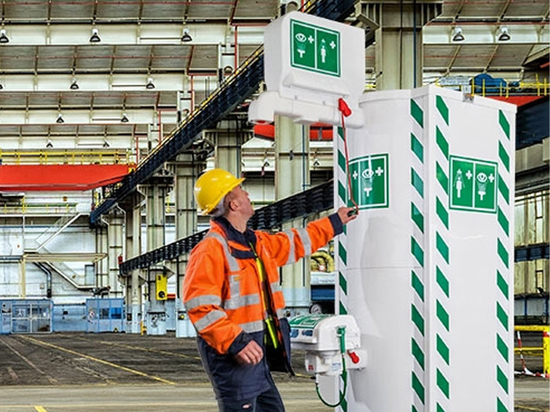
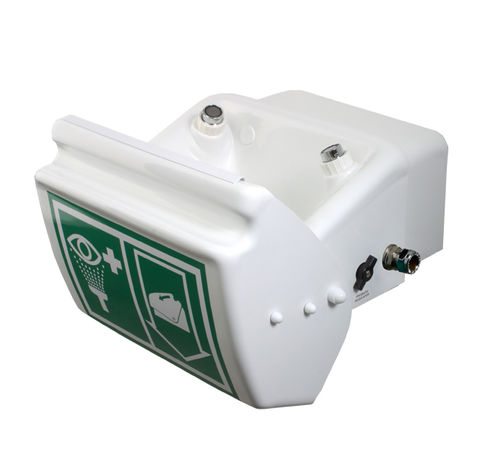
An eyewash station is a piece of emergency equipment designed to flush the eyes with a steady flow of clean water in the event of accidental exposure to hazardous substances. Its purpose is to provide immediate first aid that helps remove chemicals, dust or debris before serious damage can occur.
There are two main types of eyewash stations:
Plumbed units: permanently connected to a reliable water supply, these are ideal for facilities with a fixed location where hazardous materials are handled regularly.
Self-contained (portable) units: filled with potable water, these are particularly useful in areas where plumbing is not available or where mobility is required.
Both types are designed to meet or exceed international safety standards and ensure workers have rapid access to emergency eye flushing whenever hazards are present.
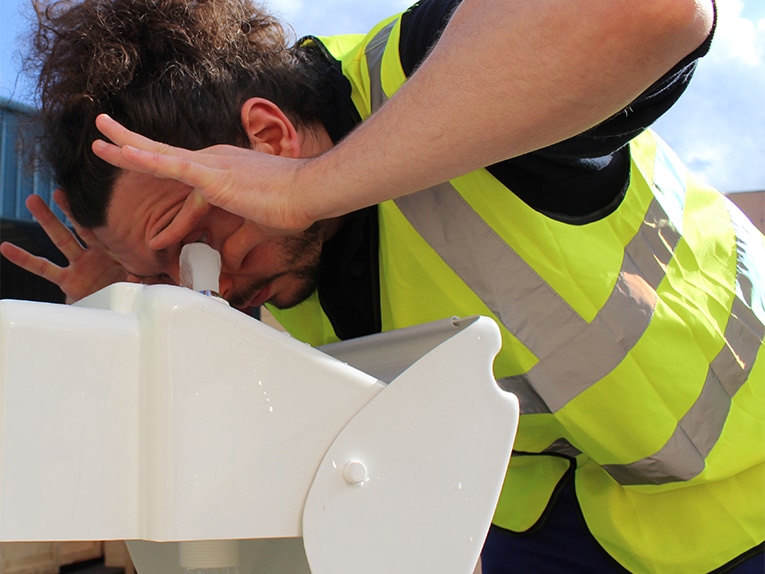
During an emergency, the user activates the station – often by opening the lid, via a simple push plate or foot pedal – and positions their eyes in the stream of fluid. The station delivers a continuous, gentle aerated flow for at least 15 minutes, giving the eyes the best chance to be thoroughly rinsed of contaminants.
To remain effective, eyewash stations must undergo regular testing and maintenance. Weekly activations help flush out stagnant water and verify that the unit is operational, while annual inspections confirm full compliance with standards. Neglecting these checks can mean equipment is unusable when it is needed most.
Do Eyewash Stations Use Tap Water?
Plumbed-in eyewash stations are typically connected to the mains water supply, provided the water is potable (safe for human use). This ensures a reliable and continuous flow of clean water during an emergency.
For self-contained or portable units, water is stored within the unit itself. To maintain water quality, you can either change the water regularly (typically once a week) or use a suitable preservative to extend the safe storage period. Both approaches help prevent bacterial growth and ensure the water remains safe for flushing the eyes.
In many cases, tempering systems are also used to keep the water within safe tepid range of 16-38°C.
International standards such as ANSI/ISEA Z358.1 and EN 15154 set out the requirements for water quality, flow rate and temperature. Following these standards helps ensure eyewash stations provide effective first aid when it is needed most.