#Product Trends
Why Mezzanine Gates Are Essential for Multi-Level Warehouses
Mezzanine Gates
Multi-level warehouses win on space: mezzanines, pick modules, and elevated platforms let you store and process more inventory without expanding the building footprint. The trade-off is risk concentration—especially at mezzanine loading openings where pallets are moved up or down. If that edge is unprotected for even a few seconds, a busy operator can step into a void, or a load can be nudged over the side. That’s why mezzanine gates (also called mezzanine safety gates or pallet loading gates) are considered essential equipment in vertical warehouse layouts.
What Is a Mezzanine Gate?
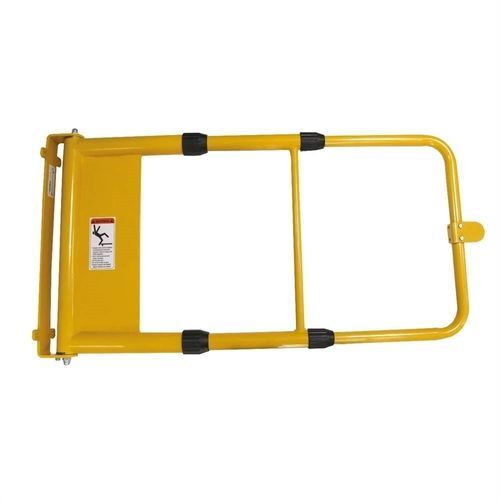
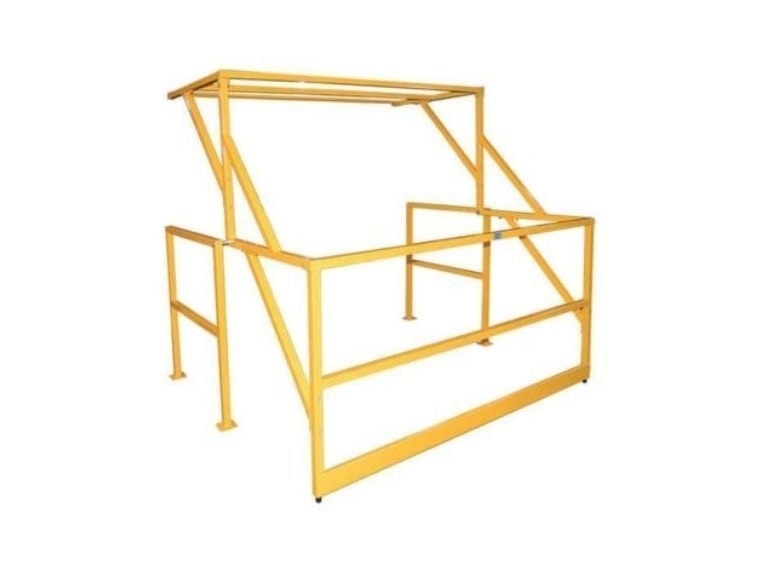
A mezzanine gate is an engineered barrier installed at a mezzanine loading point. Most modern gates use a pivoting/rotating action that keeps one side closed at all times: when the forklift side is open for placing a pallet, the mezzanine side blocks pedestrians; when the mezzanine side is open for picking, the outer edge is protected. This design turns an exposed opening into a controlled transfer bay.
Where Mezzanine Gates Add the Most Value
You’ll typically see mezzanine pallet gates at:
(1) replenishment openings feeding upper-level pick faces,
(2) packing stations on mezzanine floors where cartons are moved down for dispatch,
(3) maintenance platforms where parts are hoisted in. In each case, the goal is the same—move goods between levels while keeping pedestrians separated from the edge.
If your operation uses more than one pallet type (e.g., UK/EU pallets and longer skids), choose a gate width that supports your most common load and leaves enough clearance for safe handling. Getting the fit right prevents operators from “fighting the opening,” which is a common cause of misuse.
1) Continuous Edge Protection Where Accidents Happen Most
Competitor guidance on mezzanine safety consistently focuses on the same danger zone: loading and unloading at height. Improvised controls—chains, removable rails, or “watch your step”—are easy to bypass when the shift gets busy. A purpose-built mezzanine gate provides consistent edge protection every cycle, reducing fall exposure during the exact task that creates the risk.
2) A Standard Pallet-Transfer Process That Improves Throughput
Good warehouses run on repeatable workflows. A pivot mezzanine safety gate supports that by “baking in” a safe sequence: forklift delivers, gate pivots, mezzanine team unloads, and the process resets. Instead of pausing to set up temporary barriers, teams can move continuously while keeping the edge guarded. This is especially valuable during peak season when new or temporary staff need a simple routine to follow.
3) Less Product Damage and Fewer Disruptions
A dropped pallet is more than a mess—it can destroy inventory, damage racking, and shut down an aisle while you investigate and clean up. Mezzanine loading gates help by defining a stable staging area and adding physical containment at the edge, reducing the chance of pallets tipping or being nudged off the platform.
How to Choose the Right Mezzanine Gate
When comparing mezzanine gates, prioritize daily usability as much as specs:
Edge protection by design: choose gates that keep one side closed at all times.
Fit to your pallet flow: confirm usable width/depth/height and forklift approach clearance.
Easy operation: balanced movement encourages correct use on every cycle.
Guard details: handrail, mid-rail, and kick plate/toe board help protect workers and contain small items.
Durability & support: heavy-duty welded steel and clear after-sales service.
Product Spotlight: AMARITE BEB Mezzanine Pivot Safety Gate
If you need a manual pivot gate for mezzanine pallet transfer points, the AMARITE BEB Mezzanine Pivot Safety Gate is designed to provide reliable, repeatable protection in busy warehouse environments.
Key points from the product details:
Manual swing-action gates on each end for safe mezzanine access during pallet transfer.
Gates swing up and down to create a usable loading area of 58″ W × 70″ D × 76″ H.
Balanced swing operation without springs for smoother handling.
Heavy-duty welded steel construction.
Integrated guarding: 42″ handrail, 21″ mid-rail, and 4″ kick plate.
Detachable, compact design to help save space.
The BEB series is offered in multiple width options (BEB1000, BEB2000, BEB2800), allowing you to match the opening to your pallet size and platform layout. View specs and request pricing here:https://www.amarite.net/product/beb-mezzanine-pivot-safety-gate-3/
Implementation Tips for Multi-Level Warehouses
Define a simple SOP (who pivots the gate, pallet placement, and pedestrian access rules).
Add floor markings and signage to reinforce the loading zone and traffic direction.
Inspect pivots, fasteners, rails, and the kick plate routinely—especially in high-cycle areas.
Conclusion
Mezzanine gates are essential because they convert an exposed edge into a controlled, repeatable process for moving pallets between levels. That reduces fall risk, limits product loss, and supports higher throughput without relying on temporary barriers. If your operation is growing vertically, installing a properly sized pivot safety gate at each loading point is one of the highest-impact upgrades you can make.