#Product Trends
5 Common Mistakes Buyers Make When Selecting Rotating Load Skates
Selecting Rotating Load Skates
Rotating load skates play a critical role in modern material handling, especially when moving heavy machinery, industrial equipment, or oversized loads in confined spaces. Thanks to their ability to roll smoothly and turn easily, rotating load skates are widely used in factories, warehouses, shipyards, and construction sites.
However, many buyers make costly mistakes when selecting rotating load skates, often focusing on only one factor and overlooking others that directly affect safety, efficiency, and long-term performance. These mistakes can lead to unstable movement, damage to floors, reduced product lifespan, or even workplace accidents.
In this article, we highlight five common mistakes buyers make when selecting rotating load skates and explain how to avoid them—so you can choose the right solution for your lifting and transport needs.
1. Focusing Only on Load Capacity
One of the most common mistakes buyers make is choosing rotating load skates based solely on load capacity. While tonnage is important, it should never be the only selection criterion.
For example, a rotating load skate with a 2,000 kg or 4,000 kg capacity may appear sufficient on paper, but real-world conditions are often more complex. Uneven weight distribution, dynamic movement during turning, or sudden stops can all increase the actual load placed on each skate.
High-quality rotating load skates are designed with:
Excellent stability for load transport
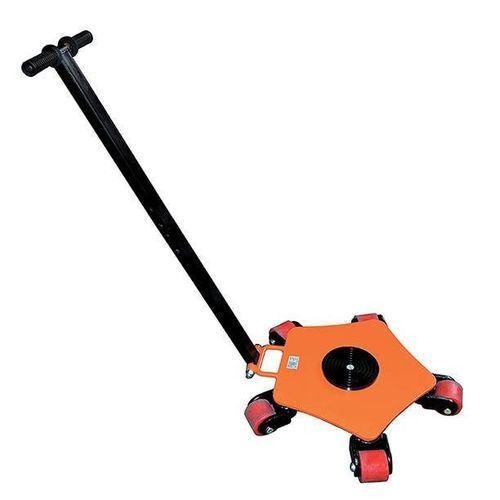
A rotating round plate that evenly distributes weight
The option to combine multiple rotating load skates for larger or irregular loads
Buyers should always consider:
Whether one or multiple skates are required
How the load will be positioned
Whether additional safety margins are needed
Tip: Always select rotating load skates with a load capacity that exceeds your actual working load to ensure safe operation and long-term durability.
2. Ignoring Roller Material and Quality
Another critical mistake is overlooking the roller material, which directly affects load movement, floor protection, and overall performance.
Some buyers focus only on the number of rollers (3 or 5) without paying attention to what they are made of. High-quality rotating load skates use polyurethane rollers, which offer several advantages:
Smooth rolling performance
Excellent wear resistance
Reduced noise during operation
Protection for sensitive floors
Polyurethane rollers with a standard diameter (Ø80 mm) provide the ideal balance between load capacity and maneuverability. Cheaper roller materials may flatten, crack, or damage floors over time—leading to higher maintenance costs and operational downtime.
Tip: Always confirm the roller material and diameter, not just the quantity. Premium polyurethane rollers ensure long-term performance and safer load handling.
3. Overlooking Floor Conditions
Many buyers fail to evaluate floor conditions before purchasing rotating load skates. This is a serious oversight that can affect both safety and efficiency.
Different environments require different solutions:
Smooth concrete floors
Epoxy-coated warehouse floors
Steel plates or workshop floors
Slightly uneven or sloped surfaces
Rotating load skates equipped with:
Anti-slip rubber coating
Stable rotating round plates
Evenly spaced rollers
are far better suited for a wide range of surfaces. The anti-slip rubber coating helps prevent the load from shifting during transport, especially when turning or changing direction.
Tip: Always match the rotating load skate design to your actual floor conditions. A skate that performs well on smooth concrete may not be suitable for uneven or slippery surfaces.
4. Ignoring the Towing and Steering Method
A surprisingly common mistake is not considering how the rotating load skate will be steered or pulled.
Without proper control, even the best load skate can become difficult to maneuver—especially in tight spaces or when precise positioning is required.
Well-designed rotating load skates are:
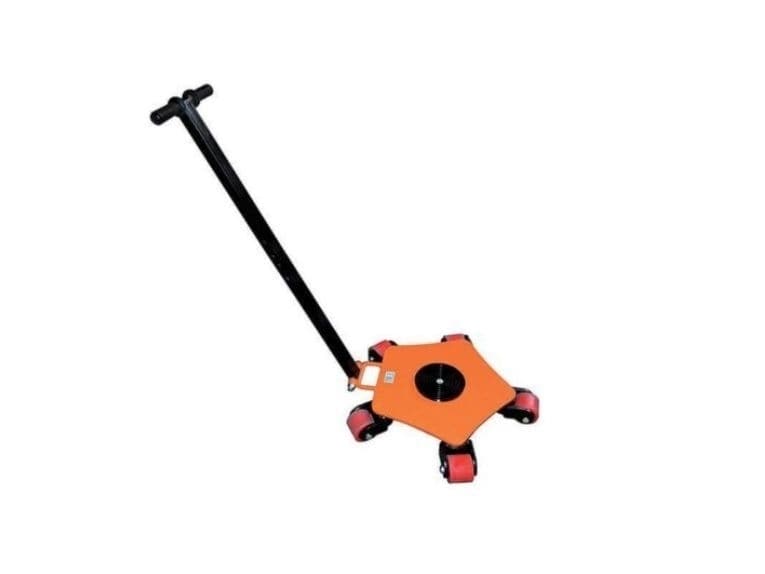
Delivered with a removable steering handle
Easy to roll and turn under heavy loads
Compatible with additional rotating load skates or connecting bars
The steering handle allows operators to:
Control direction safely
Reduce physical strain
Improve accuracy during positioning
In some applications, a connecting bar is essential for synchronizing movement between multiple skates, ensuring smooth and controlled transport of larger loads.
Tip: Never underestimate the importance of steering and towing accessories. Proper control improves safety, efficiency, and operator comfort.
5. Neglecting Flexibility and Expandability for Future Needs
The fifth mistake—often overlooked—is choosing rotating load skates without considering future flexibility or expandability.
Many buyers purchase equipment only for their current application, without thinking ahead. However, production requirements, machine sizes, or transport challenges often change over time.
High-quality rotating load skates are designed to:
Be combined with additional skates
Support different load configurations
Adapt to various industrial applications
Models with different specifications—such as:
RS2P (2,000 kg capacity, 3 rollers, lighter weight)
RS4P (4,000 kg capacity, 5 rollers, higher stability)
allow users to select the best solution for each task while maintaining compatibility across their equipment fleet.
Tip: Choose rotating load skates that offer modular design and expansion options. This protects your investment and ensures long-term usability.
Final Thoughts: Choose Smart, Move Safely
Selecting the right rotating load skate is about much more than load capacity. Buyers must consider roller material, floor conditions, steering methods, stability features, and future flexibility.
By avoiding these five common mistakes, you can:
Improve workplace safety
Protect floors and equipment
Increase operational efficiency
Extend the lifespan of your load handling equipment
A well-designed rotating load skate with polyurethane rollers, anti-slip rubber coating, rotating round plate, and steering handle provides the stability and control required for professional load transport.
When chosen correctly, rotating load skates are not just tools—they are long-term solutions for safe, efficient, and reliable heavy-load movement.