#Product Trends
The Crystal Oscillator Solution for Reliable Solar Energy
The Crystal Oscillator Solution for Reliable Solar Energy
Photovoltaic (PV) inverters perform the critical function of converting direct current (DC) generated by solar panels into grid-compatible alternating current (AC). Their operational scenarios range from residential rooftop systems to large-scale industrial solar farms, where they must endure harsh environmental conditions including extreme temperature fluctuations, humidity, and electromagnetic interference. Within these systems, crystal oscillators provide the essential clock signals that ensure precise synchronization, efficient power conversion, stable maximum power point tracking (MPPT), and reliable grid communication.
Common Crystal Oscillator Parameters for PV Inverters
The demanding nature of PV applications requires components with specific performance characteristics:
Frequency Stability: Typically ±10ppm to ±50ppm, with tighter tolerances (±10ppm to ±20ppm) required for communication interfaces and control logic to ensure timing accuracy.
Operating Temperature Range: A broad temperature rating is crucial. Industrial-grade components cover -40°C to +85°C, while high-reliability, automotive-grade oscillators support -40°C to +105°C or even up to 125°C for critical functions.
Load Capacitance: Standard values such as 8pF, 10pF, 12pF, or 18pF are common and must be matched with the system's microcontroller.
Key Frequencies: Fundamental frequencies like 10MHz, 16MHz, 20MHz, 25MHz, and 32.768KHz (for Real-Time Clocks) are widely used for processing, control, and timing.
AEC-Q200 Compliance: For automotive-grade components used in high-stress environments, this certification validates reliability against thermal cycling and mechanical stress.
Recommended Solutions by Application
1. For Real-Time Clock (RTC) & Timing Circuits:
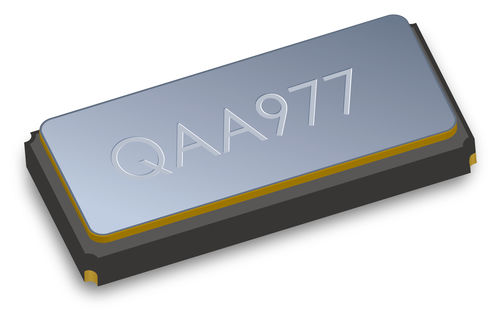
The passive surface-mount crystal oscillator SMLF-3215 (9CAA32768122TF) series is ideally suited for timing functions. Fabricated using advanced photolithography technology, it offers high precision and low power consumption, providing a stable and accurate clock signal for data logging and system scheduling in PV inverters.
2. For System Clock & Control Logic:
Industrial-grade, wide-temperature crystal oscillators are recommended for the main control and processing units. This series guarantees high frequency stability across an operating temperature range of -40°C to +85°C, effectively preventing timing errors and system malfunctions in the variable outdoor environments where PV systems operate.
3. For High-Reliability & Extreme Environments:
In applications demanding superior thermal resilience, such as inverters installed in high-ambient-temperature locations, high-temperature active crystal oscillators are advised. These components maintain high precision and stability across an extended operating range of -40°C to +105°C, directly contributing to enhanced system robustness, performance stability, and operational lifespan.