
#Industry News
Ultra High Purity Diaphragm Valve vs Bellows Valve: Which Is Better for Semiconductor Gas Systems?
Ultra High Purity Diaphragm Valve vs Bellows Valve: Which Is Better for Semiconductor Gas Systems?
In modern semiconductor manufacturing, gas delivery systems are among the most critical infrastructures inside a fabrication facility (fab). Processes such as chemical vapor deposition (CVD), atomic layer deposition (ALD), ion implantation, and plasma etching all rely on ultra-clean specialty gases delivered with absolute precision. Even microscopic contamination, particle generation, or leakage can negatively impact wafer yield, device reliability, and process stability.
For this reason, ultra-high purity (UHP) valves play a central role in semiconductor gas distribution systems. Among the many valve technologies available, two designs dominate the industry: ultra-high purity diaphragm valves and bellows valves. Both are engineered for clean gas applications, but their structures, sealing mechanisms, and operating characteristics differ significantly.
This article explores the differences between UHP diaphragm valves and bellows valves, compares their performance in semiconductor gas systems, and explains which valve technology is better suited for specific semiconductor applications.
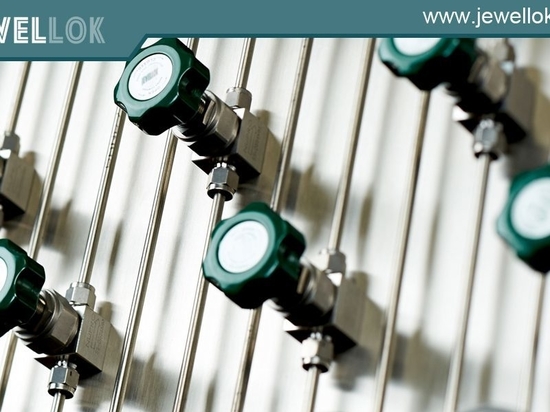
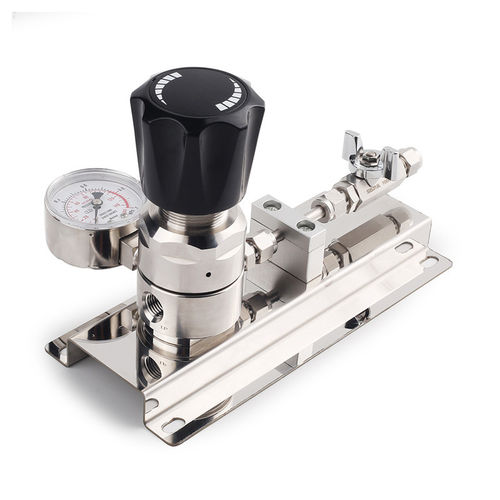
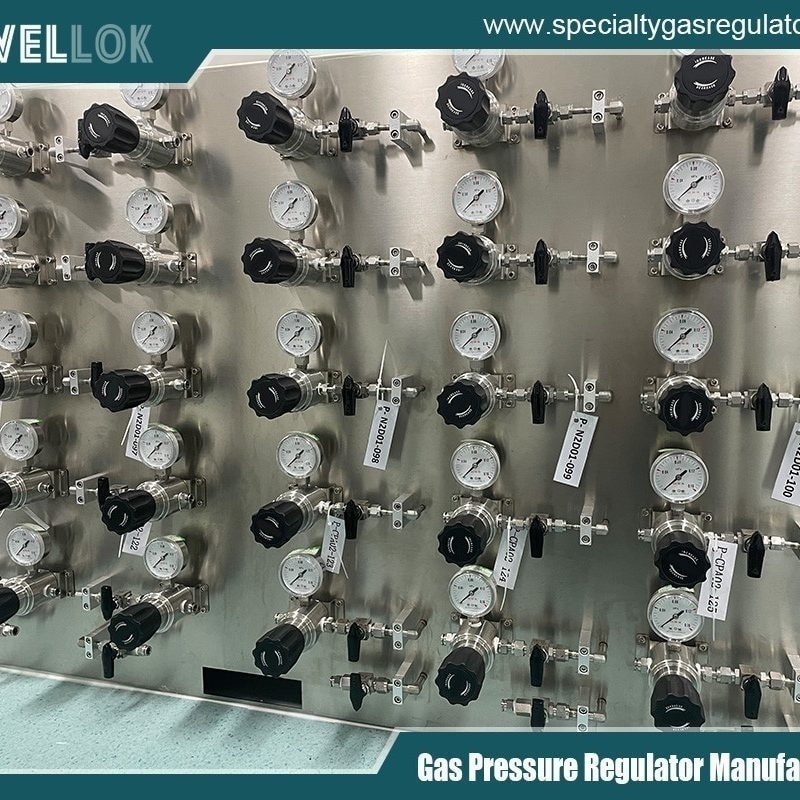
ultra-high purity (UHP) stainless steel 316L diaphragm valves and pressure reducers
ultra-high purity (UHP) stainless steel 316L diaphragm valves and pressure reducers
Understanding Semiconductor Gas System Requirements
Semiconductor gas systems are far more demanding than conventional industrial fluid systems. Modern fabs commonly use gases with purity levels reaching 5N, 6N, or even higher than 99.9999%. Many process gases are also corrosive, toxic, pyrophoric, or moisture-sensitive.
Typical semiconductor gas system requirements include:
Extremely low leakage rates
Minimal particle generation
Low dead volume
Excellent purge efficiency
Corrosion resistance
High cycle life
Compatibility with vacuum environments
Stable and repeatable flow control
Even tiny internal cavities can trap moisture or hydrocarbons, later releasing contaminants back into the gas stream. Minimizing dead volume is therefore essential in UHP gas systems.
To meet these stringent standards, semiconductor manufacturers typically use electropolished 316L stainless steel valves assembled in cleanroom environments and helium leak tested to extremely low leak rates.
What Is an Ultra High Purity Diaphragm Valve?
An ultra-high purity diaphragm valve uses a flexible diaphragm to isolate the process gas from the actuator and moving mechanical components. The diaphragm moves vertically to seal against the valve seat, opening or closing the gas flow path.
The diaphragm acts as a physical barrier between the gas media and external mechanical parts, eliminating the need for traditional stem packing seals. This design dramatically reduces leakage and contamination risks.
Key Features of UHP Diaphragm Valves
1. Low Particle Generation
Diaphragm valves are specifically designed to minimize friction and eliminate sliding parts within the wetted flow path. This reduces particle generation during operation, making them ideal for semiconductor processes.
2. Minimal Dead Volume
Modern UHP diaphragm valves feature optimized internal geometries with cavity-free or near-zero dead space designs. This improves purge efficiency and reduces gas entrapment.
3. Excellent Leak Integrity
High-quality diaphragm valves commonly achieve helium leak rates below 1×10⁻⁹ std·cm³/s He, suitable for toxic and corrosive gas handling.
4. Superior Surface Cleanliness
Most semiconductor-grade diaphragm valves use:
Electropolished internal surfaces
316L VIM/VAR stainless steel
Ultrasonic cleaning
Cleanroom assembly and packaging
These processes help maintain ultra-clean gas purity standards.
5. High Corrosion Resistance
UHP diaphragm valves are widely used with corrosive gases such as:
HCl
Cl₂
NH₃
WF₆
HF
Special alloy diaphragms and electropolished stainless steel improve chemical compatibility and long-term reliability.
What Is a Bellows Valve?
A bellows valve uses a welded metal bellows assembly to isolate the process gas from the external environment. The bellows expands and contracts during valve operation while maintaining a hermetic seal.
Unlike diaphragm valves, bellows valves are often used in vacuum systems, high-temperature applications, and high-pressure gas systems where metal-to-metal sealing provides additional durability.
Bellows valves are common in:
Ultra-high vacuum (UHV) systems
Analytical instrumentation
Research laboratories
Vacuum transfer systems
Certain semiconductor process tools
Key Characteristics of Bellows Valves
1. Hermetic Metal Seal
Bellows valves use all-metal welded bellows assemblies, providing extremely reliable sealing performance under vacuum conditions.
This makes them highly suitable for:
Vacuum isolation
High-temperature environments
Vacuum chambers
Analytical gas systems
2. Higher Pressure and Temperature Capability
Compared with diaphragm valves, bellows valves generally tolerate:
Higher operating temperatures
Greater pressure ranges
More aggressive vacuum cycling
3. Longer Structural Fatigue Resistance
Metal bellows can offer excellent durability in some demanding mechanical applications, especially where elastomer-free construction is required.
4. Slightly Larger Internal Volume
Bellows valve designs often include larger internal cavities than diaphragm valves. This can increase dead volume and reduce purge efficiency in ultra-high purity gas distribution applications.
Diaphragm Valve vs Bellows Valve: Technical Comparison
1. Purity Performance
Diaphragm Valve Advantage
For semiconductor gas delivery systems, purity is usually the highest priority. Diaphragm valves are specifically optimized for ultra-clean gas handling with minimal internal entrapment zones and reduced particle generation.
Bellows valves may contain larger internal spaces and more complex flow paths, which can increase contamination risk during gas switching and purging.
As semiconductor nodes continue shrinking below 5 nm, contamination tolerance becomes increasingly strict. Minimizing trapped moisture and hydrocarbons is critical.
Winner: Diaphragm Valve
2. Particle Generation
Particle contamination is one of the leading causes of wafer defects.
Diaphragm valves reduce particle generation because:
No sliding stem seals contact the process gas
Smooth electropolished surfaces reduce friction
Flow paths are optimized for cleanliness
Bellows valves may generate slightly higher particle levels due to their bellows movement and internal geometry.
Winner: Diaphragm Valve
3. Leak Tightness
Both valve types offer exceptional leak integrity.
Bellows valves provide excellent hermetic sealing under vacuum environments, while diaphragm valves achieve extremely low helium leak rates suitable for toxic semiconductor gases.
For most semiconductor gas panels and valve manifold boxes (VMBs), diaphragm valves already exceed leak-tightness requirements.
Winner: Tie
4. Vacuum Compatibility
Bellows valves are often preferred in ultra-high vacuum applications because their all-metal sealing structures perform exceptionally well under deep vacuum conditions.
Diaphragm valves can also operate under vacuum, but bellows valves traditionally dominate specialized vacuum isolation systems.
Winner: Bellows Valve
5. Dead Volume and Purge Efficiency
Dead volume is a major concern in semiconductor gas delivery systems because trapped gas can cause:
Cross contamination
Moisture retention
Slower gas switching
Longer purge times
Diaphragm valves typically feature:
Compact flow paths
Near-zero dead space
Faster purge efficiency
Bellows valves generally have larger internal cavities.
Winner: Diaphragm Valve
6. Maintenance and Serviceability
Diaphragm valves are relatively easy to maintain and replace within semiconductor gas cabinets and distribution systems.
Bellows assemblies can be more complex and expensive to repair if fatigue failure occurs.
Winner: Diaphragm Valve
7. High Temperature Capability
Bellows valves generally tolerate higher temperatures than diaphragm valves because they rely on all-metal sealing structures.
This makes bellows valves attractive for:
Vacuum furnaces
Analytical systems
High-temperature process environments
Winner: Bellows Valve
Which Valve Is Better for Semiconductor Gas Systems?
For the majority of semiconductor gas delivery applications, ultra-high purity diaphragm valves are considered the superior choice.
Industry sources consistently identify diaphragm valves as the standard solution for:
Gas cabinets
Valve manifold boxes (VMBs)
Gas sticks
Bulk specialty gas distribution
Tool hook-up systems
Point-of-use gas control panels
Their advantages include:
Lower particle generation
Better purge efficiency
Reduced dead volume
Excellent corrosion resistance
High cycle life
Superior cleanliness
These features directly support semiconductor manufacturing goals of maximizing yield and maintaining ultra-clean process conditions.
Bellows valves remain valuable in specialized applications involving:
Ultra-high vacuum systems
High-temperature processes
Vacuum instrumentation
Research and analytical equipment
However, for mainstream semiconductor specialty gas distribution, diaphragm valves are generally preferred.
Typical Semiconductor Applications for Each Valve Type
UHP Diaphragm Valve Applications
Semiconductor gas cabinets
VMB/VMP systems
CVD gas distribution
ALD process gas control
Bulk specialty gas delivery
Purge gas systems
Toxic gas handling
Corrosive gas distribution
Bellows Valve Applications
Ultra-high vacuum chambers
Vacuum transfer systems
Research equipment
Analytical instrumentation
High-temperature vacuum lines
Vacuum isolation applications
Future Trends in UHP Valve Technology
As semiconductor manufacturing advances toward smaller process nodes and more advanced packaging technologies, UHP valve requirements continue to evolve.
Future valve developments focus on:
Lower particle generation
Reduced dead volume
Faster purge cycles
Improved corrosion resistance
Higher cycle life
Smart pneumatic actuation
Advanced surface treatment technologies
Manufacturers are also increasingly using:
VIM/VAR stainless steel
Improved electropolishing methods
Cleanroom-certified assembly processes
Enhanced helium leak testing
These improvements aim to meet the growing demands of advanced semiconductor fabrication and next-generation chip manufacturing.
high pressure hydrogen gas manifold system
high pressure hydrogen gas manifold system
Conclusion
Both ultra-high purity diaphragm valves and bellows valves play important roles in semiconductor fluid control systems, but they are optimized for different operating environments.
Diaphragm valves excel in:
Ultra-clean gas handling
Low particle generation
Minimal dead volume
Semiconductor gas distribution
Corrosive specialty gas applications
Bellows valves excel in:
Vacuum isolation
High-temperature systems
Ultra-high vacuum environments
Specialized analytical applications
For most semiconductor gas delivery systems, the ultra-high purity diaphragm valve remains the preferred solution because it delivers the best balance of purity, leak integrity, purge efficiency, and contamination control.
As semiconductor manufacturing continues moving toward increasingly advanced process technologies, the importance of high-performance UHP diaphragm valves will only continue to grow.
For more about ultra high purity diaphragm valve vs bellows valve: which is better for semiconductor gas systems, you can pay a visit to Jewellok at https://www.specialtygasregulator.com/product-category/specialty-gas-cabinet/ for more info.