
#Industry News
Why UHP 316L Stainless Steel Ball Valves Are Critical for Gas Delivery Systems
Why UHP 316L Stainless Steel Ball Valves Are Critical for Gas Delivery Systems
In advanced industries such as semiconductor manufacturing, pharmaceuticals, biotechnology, aerospace, and precision chemical processing, the reliability of gas delivery systems directly affects product quality, process stability, and operational safety. These industries require extremely pure gases to be transported, controlled, and delivered under strict conditions. Even a small amount of contamination, leakage, or pressure instability can result in significant production losses and reduced equipment performance.
Among the many components used in high purity gas systems, UHP 316L stainless steel ball valves play a critical role in ensuring safe, reliable, and contamination-free gas control. Designed specifically for ultra-high-purity (UHP) applications, these valves provide excellent corrosion resistance, superior sealing performance, low particle generation, and long-term reliability in demanding environments.
This article explains why UHP 316L stainless steel ball valves are essential for gas delivery systems, their key technical advantages, applications, and how they contribute to high-performance industrial processes.
1. The Importance of Gas Delivery Systems in Advanced Manufacturing
A gas delivery system is a precision-engineered network designed to supply process gases from storage sources to manufacturing equipment. These systems typically include gas cabinets, pressure control panels, regulators, filters, tubing, fittings, and valves.
In semiconductor fabrication, gases such as nitrogen (N₂), oxygen (O₂), hydrogen (H₂), argon (Ar), silane (SiH₄), ammonia (NH₃), and various specialty gases are used in processes including:
Chemical vapor deposition (CVD)
Atomic layer deposition (ALD)
Etching
Ion implantation
Thin-film coating
Cleaning processes
The purity requirements of these gases are extremely strict. Semiconductor manufacturers often require gas systems capable of maintaining contamination levels at parts-per-billion (ppb) or even parts-per-trillion (ppt) levels.
Any failure in the gas delivery system can cause:
Wafer contamination
Reduced production yield
Equipment downtime
Safety risks
Increased maintenance costs
Therefore, every component within the gas pathway must meet high standards for cleanliness, durability, and leak prevention. This is where UHP 316L stainless steel ball valves become a key component.
2. What Are UHP 316L Stainless Steel Ball Valves?
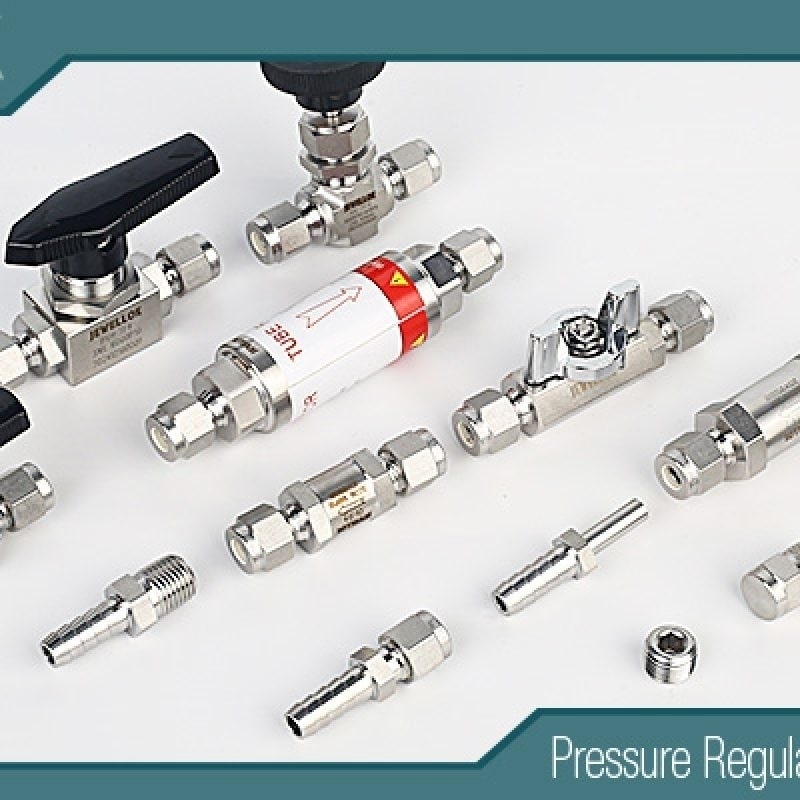
UHP 316L stainless steel ball valves are precision flow control devices manufactured from high-quality 316L stainless steel materials and designed for ultra-high-purity gas applications.
Unlike standard industrial valves, UHP ball valves are engineered with special manufacturing processes to minimize contamination risks. Their internal surfaces are typically electropolished to achieve extremely low surface roughness, reducing the possibility of particle accumulation and gas adsorption.
The main components of a UHP ball valve include:
316L stainless steel valve body
Stainless steel ball and stem
High-performance sealing materials
Precision-machined flow passages
VCR or UHP-compatible connection ends
These valves allow operators to quickly start, stop, or isolate gas flow while maintaining system integrity.
3. Why 316L Stainless Steel Is the Preferred Material
Material selection is one of the most important factors in high purity gas systems. 316L stainless steel has become the industry standard because of its excellent combination of corrosion resistance, mechanical strength, and cleanliness.
3.1 Superior Corrosion Resistance
316L stainless steel contains molybdenum, which improves resistance against corrosive chemicals and aggressive gases.
Compared with standard stainless steel grades, 316L provides better protection against:
Chloride corrosion
Chemical attack
Moisture exposure
Specialty gas reactions
This makes it suitable for handling challenging process gases used in semiconductor and chemical manufacturing.
3.2 Low Carbon Content for Improved Durability
The “L” in 316L represents low carbon content. This characteristic reduces carbide precipitation during welding processes and improves corrosion resistance in welded areas.
For complex gas delivery systems containing welded tubing and components, 316L stainless steel helps maintain long-term reliability.
3.3 Excellent Cleanliness Performance
High purity manufacturing requires materials that do not introduce unwanted contaminants.
316L stainless steel provides:
Low outgassing characteristics
Excellent surface stability
Reduced particle generation
Compatibility with ultra-clean environments
These advantages make it ideal for semiconductor cleanroom applications.
4. Key Advantages of UHP 316L Stainless Steel Ball Valves
4.1 Ultra-Low Leakage Performance
Leak prevention is one of the most important requirements in gas delivery systems.
A high-quality UHP ball valve provides reliable sealing through precision machining and advanced sealing technology. This minimizes:
External gas leakage
Internal leakage
Cross contamination
Process instability
For hazardous or expensive specialty gases, excellent sealing performance is essential for both safety and cost control.
4.2 High Purity and Minimal Particle Generation
Traditional industrial valves may introduce particles due to surface imperfections, corrosion, or mechanical wear.
UHP ball valves are manufactured using specialized processes such as:
Precision machining
Ultrasonic cleaning
Electropolishing
Cleanroom assembly
Helium leak testing
These processes ensure that the valve meets strict cleanliness requirements.
Smooth internal surfaces reduce:
Particle accumulation
Moisture retention
Gas contamination
This is especially important for semiconductor processes where microscopic contamination can affect device performance.
4.3 Excellent Flow Control Capability
Although ball valves are mainly used for isolation applications, UHP ball valves provide excellent flow characteristics due to their full-port design.
Benefits include:
Low pressure drop
Efficient gas flow
Reduced turbulence
Improved system response
This helps maintain stable process conditions in advanced manufacturing equipment.
4.4 Long Service Life and Reliability
Gas delivery systems often operate continuously for thousands of hours. Frequent valve replacement can increase downtime and maintenance expenses.
UHP 316L stainless steel ball valves provide:
High mechanical strength
Excellent wear resistance
Stable sealing performance
Long operating cycles
Their durability makes them a cost-effective solution for critical industrial applications.
5. Applications of UHP 316L Stainless Steel Ball Valves
5.1 Semiconductor Manufacturing
The semiconductor industry is the largest application area for UHP gas components.
UHP ball valves are widely used in:
Gas cabinets
Gas panels
Process equipment connections
CVD systems
Etching equipment
ALD systems
They help maintain the purity and stability required for advanced semiconductor production.
5.2 Pharmaceutical and Biotechnology Industries
Pharmaceutical manufacturing requires highly controlled environments where contamination must be minimized.
UHP stainless steel ball valves are used in:
Clean gas systems
Process gas supply
Sterile manufacturing equipment
Laboratory gas distribution
Their corrosion resistance and cleanability make them suitable for sensitive applications.
5.3 Chemical Processing
Chemical industries frequently handle aggressive gases and chemicals that require reliable flow control.
316L stainless steel ball valves provide:
Chemical compatibility
Safe isolation
Reduced maintenance requirements
They are commonly used in specialty chemical delivery systems and industrial gas applications.
5.4 Research Laboratories
Advanced research facilities require precise gas control for experiments and analytical equipment.
Applications include:
Vacuum systems
Gas chromatography
Material research equipment
Laboratory gas distribution networks
UHP ball valves ensure consistent and contamination-free gas supply.
6. Manufacturing Requirements for UHP Ball Valves
Producing high-quality UHP 316L stainless steel ball valves requires advanced manufacturing technology and strict quality control.
Important manufacturing processes include:
Precision Machining
High-accuracy CNC machining ensures:
Proper valve dimensions
Smooth internal surfaces
Reliable sealing performance
Electropolishing
Electropolishing improves the internal surface quality by removing microscopic imperfections.
Advantages include:
Lower surface roughness
Improved corrosion resistance
Reduced contamination risk
Clean Assembly
UHP valves must be assembled in controlled environments to prevent contamination.
Manufacturers typically use:
Cleanroom assembly
Particle control procedures
Special cleaning processes
Leak Testing
Professional UHP valve manufacturers perform rigorous testing, including:
Helium leak testing
Pressure testing
Functional testing
These tests confirm valve reliability before installation.
7. UHP Ball Valves Compared with Standard Industrial Valves
Although standard ball valves are suitable for general industrial applications, they cannot meet the requirements of ultra-high-purity systems.
Feature Standard Ball Valve UHP 316L Stainless Steel Ball Valve
Material General stainless steel or alloy High-grade 316L stainless steel
Surface Finish Standard machining Electropolished surface
Cleanliness General industrial level Semiconductor-grade purity
Leakage Control Standard sealing Ultra-low leakage performance
Particle Control Limited Extremely low particle generation
Application General fluids High purity gases
For critical gas delivery applications, UHP valves provide significantly higher performance and reliability.
8. How to Select the Right UHP 316L Stainless Steel Ball Valve
When choosing a UHP ball valve for a gas delivery system, engineers should consider several factors:
Gas Compatibility
The valve material and sealing materials must be compatible with the process gas.
Pressure Rating
The valve must support the required operating pressure and safety requirements.
Connection Type
Common connection options include:
VCR fittings
Tube weld connections
Face seal fittings
Surface Finish
For semiconductor applications, low surface roughness is essential to prevent contamination.
Certification and Testing
Reliable suppliers should provide:
Material certificates
Leak test reports
Cleaning records
Quality inspection documentation
9. The Future of UHP Gas Control Technology
As semiconductor technology advances toward smaller process nodes and higher performance devices, gas delivery requirements continue to become more demanding.
Future trends include:
Higher purity requirements
More advanced automation
Improved valve monitoring
Longer maintenance intervals
Smart gas management systems
UHP 316L stainless steel ball valves will continue to play an essential role in supporting next-generation manufacturing technologies.
Conclusion
UHP 316L stainless steel ball valves are critical components in modern gas delivery systems because they provide the purity, reliability, and performance required by advanced industries. Their corrosion-resistant 316L construction, ultra-clean surface treatment, low leakage performance, and long service life make them ideal for semiconductor manufacturing, pharmaceutical processing, chemical applications, and laboratory systems.
As manufacturing processes become more precise and contamination control becomes increasingly important, high-quality UHP ball valves will remain a fundamental solution for safe and efficient gas management.
Choosing a reliable UHP valve manufacturer with advanced machining capabilities, strict quality control, and semiconductor-grade production standards is essential for building dependable high purity gas delivery systems.
For more about why UHP 316L stainless steel ball valves are critical for gas delivery systems, you can pay a visit to Jewellok at https://www.jewellok.com/ for more info.