
#Industry News
How to Select a Specialty Gas Delivery System for a University Research Laboratory
How to Select a Specialty Gas Delivery System for a University Research Laboratory
How to Select a Specialty Gas Delivery System for a University Research Laboratory
University research laboratories are highly dynamic environments that host a diverse range of scientific disciplines, including material science, analytical chemistry, quantum physics, and biomedical engineering. Unlike industrial production facilities that run a few fixed chemical processes continuously, university laboratories frequently change their experimental setups, instrumentation, and chemical requirements. This high degree of operational variability introduces unique challenges when managing specialty gases like high-purity helium, hydrogen, ammonia, silane, and corrosive acid vapors.
Selecting an appropriate specialty gas delivery system is a critical engineering decision for university facility managers and research directors. A properly specified system does more than preserve gas purity for sensitive analytical instruments like gas chromatography-mass spectrometers and inductively coupled plasma systems. It also serves as the primary engineering control protecting student researchers, faculty members, and institutional infrastructure from hazardous leaks, over-pressurization, and structural corrosion.
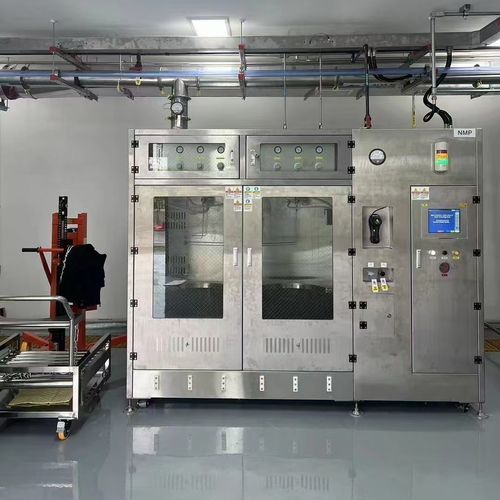
Ultra High Purity Bulk Specialty Gas Delivery System
Ultra High Purity Bulk Specialty Gas Delivery System
Characterizing Gas Profiles and Laboratory Purity Metrics
The first phase in selecting a specialty gas delivery infrastructure is conducting a comprehensive chemical footprint audit. This audit categorizes every gas planned for use by its hazard profile and its required analytical purity level. University research generally divides specialty gases into three primary operational categories:
Inert Analytical Gases: Gases such as Grade 5.0 or Grade 6.0 helium, argon, and nitrogen are standard requirements for advanced spectrometry and material cooling. To prevent trace moisture, oxygen, and hydrocarbons from contaminating sample analysis, the distribution system must incorporate high-purity inline purifiers and specialized metal-to-metal diaphragm seals.
Flammable and Pyrophoric Gases: Gases like hydrogen, methane, and silane present immediate fire and explosion hazards. Delivery networks for these media require specialized engineering controls, including inline flashback arrestors, automated emergency shut-off valves, and coaxial double-containment piping.
Toxic and Corrosive Gases: Gases such as ammonia, anhydrous hydrogen chloride, and boron trichloride aggressively attack standard metals and present extreme inhalation hazards. These gases must be managed using specialized automated gas cabinets integrated directly with local exhaust scrubbers to handle purge discharges safely.
Evaluating Source Control Manifolds and Automation Levels
Once the gas matrices are established, engineers must select the appropriate source control hardware to regulate gas flow from cylinders or liquid dewars. The level of source automation directly influences both research continuity and facility safety.
Manual Manifold Systems: While manual changeover panels offer a lower initial capital investment, they require manual intervention when a cylinder bank is empty. This structure introduces risks of process downtime during critical, multi-day university experiments and exposes system regulators to ambient air contamination during frequent cylinder changes.
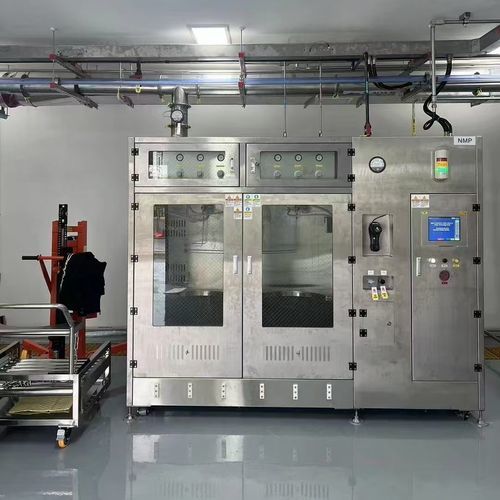
Semi-Automatic and Fully Automatic Changeover Panels: For high-purity analytical lines, facilities should select automatic changeover manifolds that utilize differential pressure or electronic transducer controls. These systems constantly monitor pressure across two parallel cylinder banks. When the primary source drops below a set operational threshold, the manifold seamlessly switches to the reserve bank. This automatic switchover ensures a continuous gas supply to sensitive instruments with zero downtime, preserving sample runs and experimental data.
Material Selection and Pipeline Metallurgy Standards
Preserving specialty gas purity as it travels across a university campus or through a multi-story science building requires strict adherence to pipeline metallurgy standards. Selecting incorrect or low-grade materials can lead to internal outgassing, particle shedding, and rapid chemical degradation.
Ultra-High Purity Gas Lines: For analytical loops supporting trace-level detection, engineering teams must specify seamless, electropolished ASTM A269 316L stainless steel tubing. The electropolishing process removes microscopic surface imperfections, creating an ultra-smooth internal finish. This smooth surface prevents gas molecules, ambient moisture, and micro-particles from becoming trapped inside metallic pits, ensuring the gas maintains its target purity from the source room to the instrument.
Standard Utility Gas Lines: For basic laboratory applications like bunsen burners or low-tier inert purging, bright annealed stainless steel or high-grade copper pipelines provide a cost-effective, reliable alternative that balances budget constraints with basic contaminant control.
Implementing Point of Use Control Panels
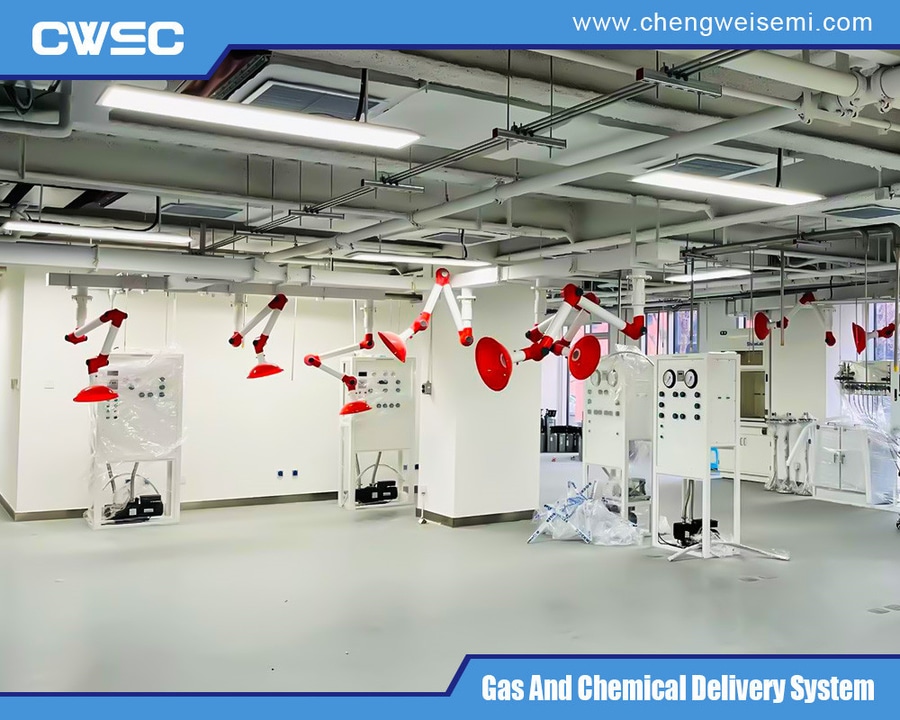
The final critical component of a specialty gas delivery system is the point of use control panel installed directly at laboratory benches, inside fume hoods, or adjacent to analytical tools. Point of use panels give researchers localized control over fluid dynamics without affecting the primary facility distribution lines.
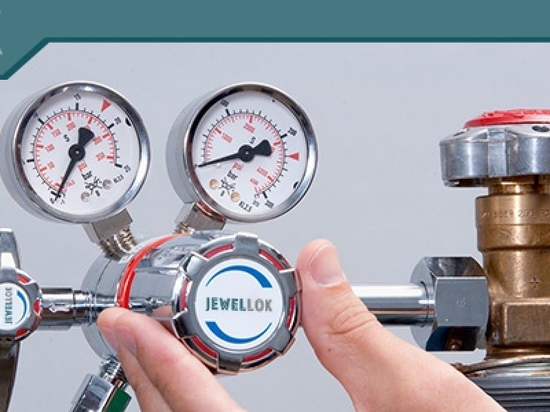
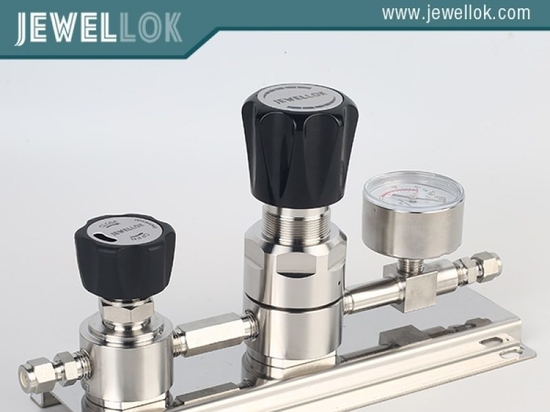
Every endpoint regulator panel should utilize a dual-stage stainless steel diaphragm regulator. Dual-stage regulators are essential because they prevent supply pressure effect, a phenomenon where the output pressure of a regulator rises as the cylinder source pressure depletes. By providing a stable, unfluctuating delivery pressure, dual-stage panels protect sensitive flow controllers inside laboratory instruments from damage and calibration drift. Additionally, point of use panels must incorporate local isolation valves to allow safe equipment maintenance and rapid manual shut-off during local emergencies.
Field Installation, Welding, and Validation Testing
The physical installation of a university specialty gas network must follow strict mechanical quality control standards to guarantee long-term safety and performance. All permanent connections on stainless steel pipelines must be executed using automated orbital tungsten inert gas welding equipment.
During the orbital welding process, installation technicians must maintain a continuous internal back-purge using high-purity argon backing gas. This continuous purge prevents internal weld oxidation, commonly known as sugaring, which would otherwise ruin gas purity and create rough areas that trap trace contaminants.
Following physical assembly, the entire pipeline network must pass a multi-tiered safety verification process. First, contractors perform a high-pressure drop test, Myers or nitrogen pressure holding up to 1.5 times the maximum working pressure and holding it for at least 24 hours to confirm zero structural seal degradation. Second, high-purity specialty lines undergo helium mass spectrometer leak detection testing, targeting a strict leak boundary rate below 1×10⁻⁹ mbar liters per second to ensure total system containment.
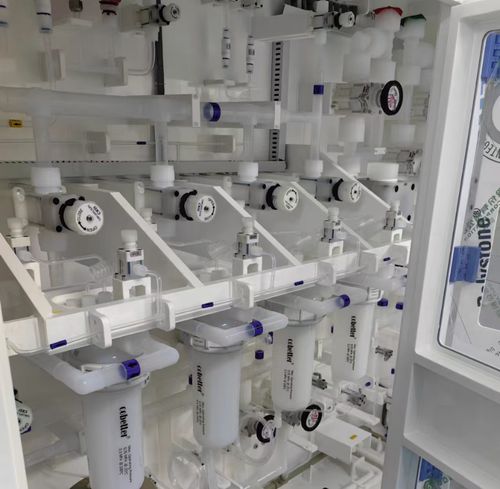
Ultra High Purity Bulk Specialty Gas Delivery System
Ultra High Purity Bulk Specialty Gas Delivery System
Summary of Selection Guidelines for Institutional Safety
Selecting the ideal specialty gas delivery system for a university research laboratory requires balancing operational flexibility with strict safety controls. By shifting away from decentralized cylinder storage to automated centralized gas rooms equipped with automatic changeover manifolds, universities minimize hazardous footprints within student workspaces. Investing in electropolished 316L stainless steel metallurgy, dual-stage point of use regulators, and rigorous orbital weld validation ensures long-term regulatory compliance. This comprehensive approach provides a continuous, highly secure infrastructure foundation that supports advanced scientific exploration and breakthrough discoveries.
For more about how to select specialty gas delivery system for university research laboratory, you can pay a visit to Chengwei Semiconductor at https://www.chengweisemi.com/laboratory/ for more info.