
#Industry News
Lab Exhaust Gas Scrubber System Manufacturer for Laboratory Applications
Lab Exhaust Gas Scrubber System Manufacturer for Laboratory Applications
Laboratories in chemical, pharmaceutical, semiconductor, biotechnology, environmental testing, and academic research facilities often handle corrosive, toxic, acidic, alkaline, and volatile chemicals. During laboratory processes, these substances can generate hazardous exhaust gases that must be effectively captured, treated, and discharged before they enter the surrounding environment. A properly designed lab exhaust gas scrubber system provides an essential layer of protection for laboratory personnel, equipment, facilities, and the environment.
As a professional lab exhaust gas scrubber system manufacturer, Jewellok provides customized exhaust gas treatment solutions for laboratory applications where conventional ventilation alone cannot provide sufficient contaminant removal. Depending on the gas composition and process conditions, scrubber systems can be configured for wet chemical absorption, neutralization, particulate removal, VOC treatment, or multi-stage treatment.
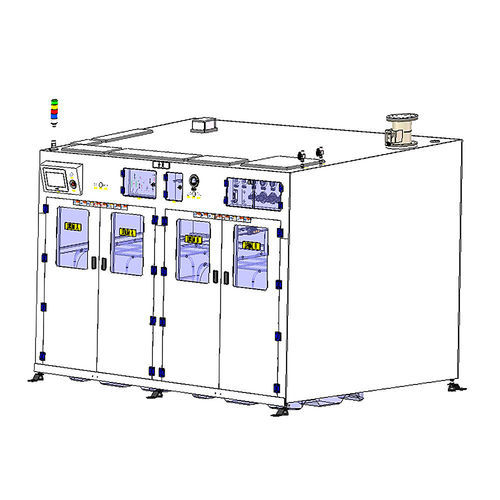
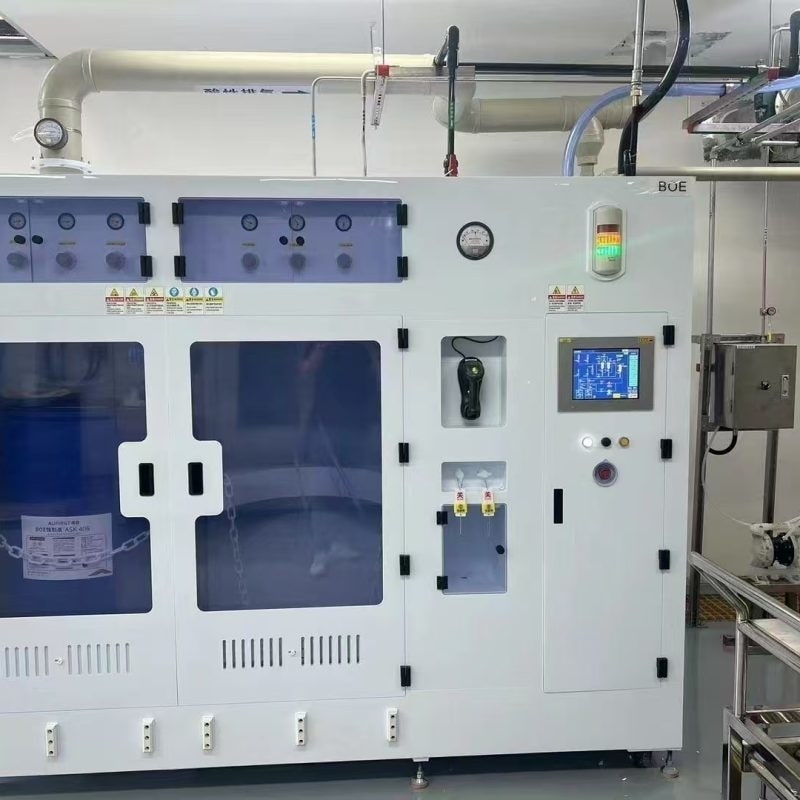
chemical delivery module (cdm) and chemical delivery system (cds)
What Is a Lab Exhaust Gas Scrubber System?
A laboratory exhaust gas scrubber system is an engineered air pollution control system designed to remove or reduce hazardous contaminants from laboratory exhaust streams.
Unlike a standard laboratory exhaust fan, which primarily transports contaminated air away from the workspace, a scrubber actively treats pollutants before the exhaust is released into the atmosphere. This distinction is particularly important when laboratories work with corrosive or toxic chemicals.
A typical laboratory scrubber system may include:
Exhaust gas inlet and duct connection
Scrubbing tower or treatment chamber
Spray nozzles or packing media
Circulation pump
Scrubbing liquid tank
Mist eliminator
pH monitoring system
Liquid level monitoring
Pressure and flow monitoring
PLC-based control system
Exhaust fan
Treated gas outlet
Automatic alarm and safety interlock system
The exact configuration depends on the contaminants, gas concentration, exhaust volume, temperature, humidity, and required removal efficiency.
Why Laboratories Need Exhaust Gas Scrubbing
Laboratory exhaust can contain a wide variety of pollutants. Chemical laboratories may generate hydrochloric acid mist, sulfuric acid mist, nitric acid vapor, ammonia, chlorine-containing compounds, solvent vapors, and other hazardous substances.
Research laboratories may also perform processes involving:
Acid digestion
Chemical synthesis
Solvent evaporation
Wet chemistry
Sample preparation
Etching
Cleaning
Pharmaceutical processing
Biological experiments
Material testing
Semiconductor research
Pilot-scale chemical processes
Some contaminants can cause corrosion to ventilation equipment and building structures, while others may pose health or environmental risks.
A laboratory exhaust gas scrubber therefore performs more than simple ventilation. It provides controlled contaminant removal and helps create a safer and more stable exhaust treatment process.
Wet Scrubber Technology for Laboratory Exhaust
Wet scrubbing is one of the most widely used technologies for treating water-soluble and reactive laboratory exhaust gases.
In a wet scrubber, contaminated gas comes into contact with a liquid scrubbing medium. The pollutants are absorbed, dissolved, reacted with, or otherwise removed by the liquid.
For example, acidic gases can often be treated using an alkaline solution, while alkaline gases may require an acidic scrubbing solution.
A typical packed-bed wet scrubber uses specially selected packing material to increase the gas-liquid contact area. The contaminated gas passes through the packed section while the scrubbing liquid is distributed over the packing. This creates intensive contact between the gas and liquid phases.
The resulting removal performance depends on factors such as:
Gas concentration
Gas flow rate
Liquid-to-gas ratio
Scrubbing liquid chemistry
Contact area
Packing characteristics
Temperature
Residence time
pH control
Pressure drop
For laboratory applications, the system should be sized according to actual process conditions rather than simply selecting equipment based on exhaust fan capacity.
Multi-Stage Scrubbing for Complex Laboratory Exhaust
Some laboratory exhaust streams contain multiple contaminants with significantly different chemical properties. In these situations, a single treatment stage may not provide sufficient performance.
A multi-stage laboratory exhaust gas scrubber can combine different treatment mechanisms in a single integrated system.
For example, the first stage may remove acid gases, while the second stage provides alkaline gas absorption. Additional stages may be used for particulate removal, VOC treatment, or final polishing.
A multi-stage configuration may include:
Stage 1 – Primary Gas Absorption
The first stage removes high concentrations of water-soluble or reactive contaminants.
Stage 2 – Chemical Neutralization
The scrubbing liquid is controlled according to the target contaminant. Automated pH adjustment can maintain the appropriate chemical conditions.
Stage 3 – Mist Elimination
A high-efficiency mist eliminator removes entrained droplets from the treated exhaust stream.
Stage 4 – Final Polishing
Where necessary, additional treatment such as activated carbon or other adsorption media can provide final contaminant reduction.
This type of configuration is especially useful for laboratories with variable chemical processes or mixed exhaust streams.
Materials of Construction for Laboratory Scrubbers
Material selection is one of the most important considerations when designing laboratory exhaust treatment equipment.
Laboratory exhaust may contain highly corrosive chemicals, so conventional carbon steel or unsuitable plastics can suffer from rapid degradation.
Depending on the chemical environment, scrubber components may be manufactured using materials such as:
Polypropylene (PP)
PVC
CPVC
PVDF
PTFE
FRP
Stainless steel
Special corrosion-resistant alloys
Polypropylene is commonly used for many chemical exhaust applications because of its combination of corrosion resistance, mechanical strength, and cost efficiency.
For more aggressive chemical environments, PVDF or PTFE may be selected for wetted components, seals, valves, and piping.
The material should always be selected based on the actual chemical composition, temperature, concentration, and operating conditions.
Automatic pH Control and Chemical Dosing
Stable scrubbing performance requires effective control of the scrubbing liquid.
As contaminants are absorbed into the liquid, the chemical properties of the solution can change. For example, acidic gases may gradually reduce the pH of an alkaline scrubbing solution.
An automated control system can continuously monitor pH and activate chemical dosing when the measured value reaches a predefined limit.
A typical automatic chemical control system includes:
Online pH sensor
Chemical dosing pump
Chemical storage tank
Level sensor
PLC controller
Solenoid or automatic valves
Alarm system
HMI interface
This approach reduces manual intervention and helps maintain stable treatment conditions.
For laboratories where exhaust loads change frequently, automatic control can be particularly valuable because the scrubber can respond to changing process conditions.
Intelligent Control and Safety Functions
Modern laboratory scrubbers can be equipped with PLC-based control systems to monitor operating parameters and provide automatic safety protection.
Important parameters may include:
Exhaust airflow
Scrubber pressure
Differential pressure
Circulation pump status
Scrubbing liquid level
pH value
Chemical dosing status
Exhaust temperature
Fan operation
System alarms
The control system can generate alarms when abnormal conditions occur.
For example, if the circulating pump stops unexpectedly, the system can trigger an alarm and interlock the exhaust process. If the liquid level becomes too low, the system can prevent continued operation of the circulation pump to reduce the risk of equipment damage.
These functions are especially important for laboratories that operate continuously or contain hazardous chemical processes.
Laboratory Fume Hood Scrubber Applications
One of the most common applications is treating exhaust generated by laboratory fume hoods.
A fume hood captures hazardous vapors and gases at the source. However, depending on the chemical process, the contaminated exhaust may still require treatment before discharge.
A compact scrubber can be installed downstream of the laboratory exhaust system.
Typical applications include:
Acid fume hoods
Chemical synthesis laboratories
Analytical laboratories
University laboratories
Pharmaceutical laboratories
Research and development facilities
Industrial laboratories
Environmental testing laboratories
The scrubber should be carefully matched to the airflow and pressure requirements of the fume hood system. Excessive pressure drop can negatively affect hood capture performance, while insufficient exhaust capacity can compromise laboratory safety.
Acid Gas and Corrosive Gas Treatment
Acidic gases are among the most common contaminants requiring treatment in laboratory environments.
Typical pollutants include hydrochloric acid, sulfur-containing compounds, nitric acid-related vapors, and other acidic substances.
Alkaline scrubbing solutions can neutralize many acidic pollutants through chemical reactions.
For example, alkaline solutions can react with acidic gases to form relatively less hazardous salts that remain in the liquid phase.
However, scrubber design should not rely solely on general chemical assumptions. Actual gas composition, concentration, temperature, flow rate, and reaction chemistry should be evaluated during system engineering.
For highly corrosive applications, every wetted component—including pumps, piping, valves, nozzles, sensors, and seals—should be selected for chemical compatibility.
Compact Scrubber Systems for Laboratory Facilities
Space can be a major limitation in laboratories. Unlike large industrial plants, many laboratory buildings have restricted mechanical-room space or limited rooftop installation areas.
For this reason, laboratory scrubbers are often designed as compact systems with integrated components.
A compact laboratory scrubber can integrate:
Scrubbing tower
Pump
Tank
Control cabinet
pH monitoring
Dosing system
Mist eliminator
Exhaust fan
Modular construction also makes transportation, installation, maintenance, and future expansion easier.
For multiple laboratories, centralized exhaust treatment may also be considered. The correct approach depends on whether the exhaust streams are chemically compatible and whether separate treatment is required for different contaminants.
How to Select a Lab Exhaust Gas Scrubber System
Selecting the correct scrubber requires a detailed understanding of the laboratory process.
Important design parameters include:
1. Exhaust Airflow
The scrubber must accommodate the required exhaust volume without creating excessive pressure loss.
2. Contaminant Type
Different gases require different treatment mechanisms and scrubbing solutions.
3. Gas Concentration
High-concentration exhaust may require multiple treatment stages or additional safety measures.
4. Operating Temperature
Temperature affects gas solubility, reaction rates, material selection, and equipment performance.
5. Chemical Compatibility
All wetted materials should be compatible with the process chemicals.
6. Required Removal Efficiency
The target treatment efficiency should be established according to the application and applicable environmental requirements.
7. Maintenance Requirements
The design should provide convenient access to pumps, sensors, packing, filters, dosing systems, and other service components.
Why Choose Jewellok as a Lab Exhaust Gas Scrubber System Manufacturer?
Jewellok focuses on engineered gas and chemical handling solutions for demanding industrial and laboratory environments.
As a professional lab exhaust gas scrubber system manufacturer, Jewellok can develop customized configurations based on laboratory exhaust characteristics rather than relying on a one-size-fits-all design.
The engineering approach can integrate corrosion-resistant materials, automatic chemical dosing, online monitoring, PLC control, alarm functions, and modular construction.
For laboratories handling acids, alkaline gases, corrosive chemicals, solvents, or mixed exhaust streams, system configuration can be optimized according to the specific process requirements.
Jewellok can also support customized solutions for laboratory fume hoods, chemical processing areas, semiconductor research facilities, pharmaceutical laboratories, and other specialized environments.
chemical delivery module (cdm) and chemical delivery system (cds)
Conclusion
A reliable lab exhaust gas scrubber system is an important component of modern laboratory ventilation and environmental protection. It provides controlled treatment of hazardous gases and helps reduce the release of corrosive, toxic, acidic, alkaline, and other contaminants.
Effective scrubber performance depends on much more than the selection of a tower. Gas composition, airflow, chemical concentration, material compatibility, liquid circulation, pH control, pressure drop, mist elimination, automation, and maintenance requirements must all be considered during system design.
For laboratories with complex or hazardous exhaust streams, a customized system from an experienced lab exhaust gas scrubber system manufacturer can provide better operational stability, safety, and long-term reliability.
Jewellok provides customized laboratory exhaust gas treatment solutions designed around specific process conditions, making it a suitable engineering partner for laboratories, research facilities, pharmaceutical applications, semiconductor environments, and other industries requiring reliable exhaust gas control.
For more about lab exhaust gas scrubber system manufacturer for laboratory applications, you can pay a visit to Jewellok at https://www.specialtygasregulator.com/product-category/specialty-gas-cabinet/ for more info.