
#Product Trends
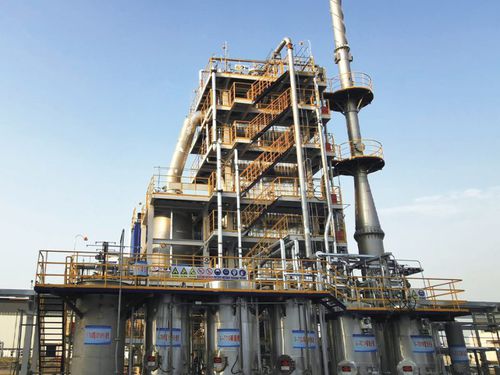
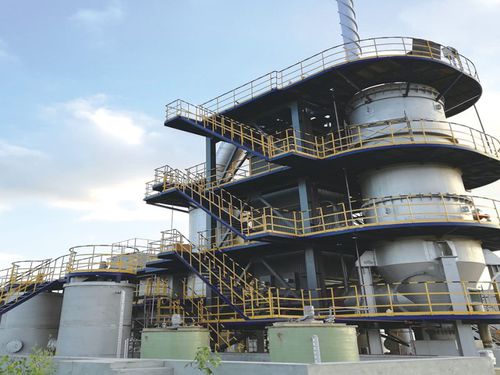
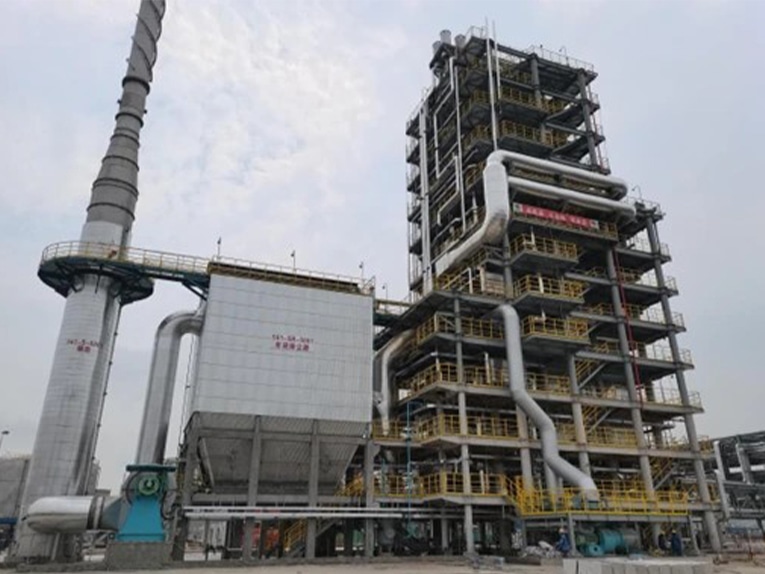
Dual waste liquid treatment incineration system for 750,000 tons/year propylene and downstream processing projects
Advanced Dual-Line Incineration System for Large-Scale Petrochemical Facilities
Acceptance Time: March 2023
Location: Qinzhou, Guangxi
Solution: TO (Direct-Fired Thermal Oxidizer)
Pollution Source: Acrylic acid and fatty salt-containing waste liquid, high-calorific waste liquid, high-calorific off-gas, low-calorific off-gas
Capacity:
Line 1: 1,178 kg/h waste liquid + 9,000 kg/h waste liquid + 3,704 Nm³/h off-gas
Line 2: 2,792 kg/h waste liquid + 3,500 kg/h waste liquid + 2,673 Nm³/h off-gas
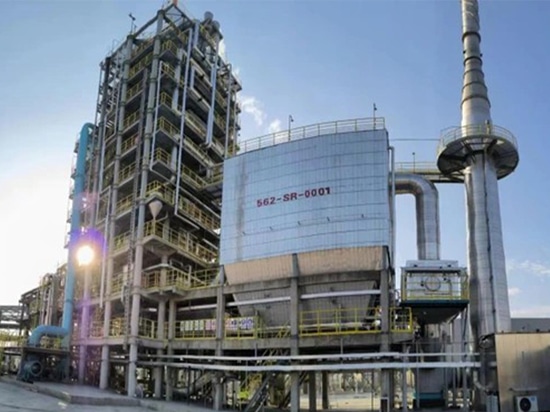
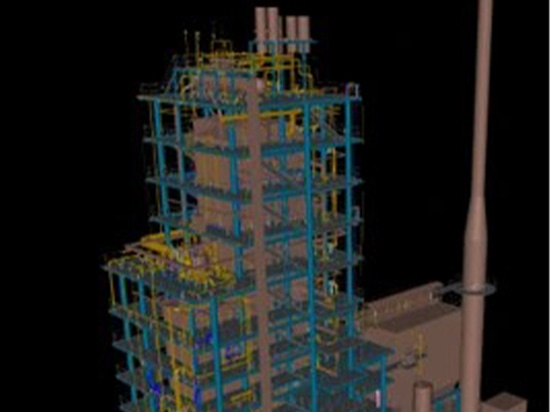
This project consists of two sets of waste liquid treatment systems for the thermal oxidation of part of the waste liquid and off-gas generated from a 750,000 tons/year propylene and downstream processing complex. The engineering design is undertaken by Ruiding Environmental Engineering Co., Ltd. The process uses direct-fired thermal oxidizers (TO). Under normal operation, high-calorific waste liquid is pressurized by the owner’s pump and sent to a waste liquid atomizer at the furnace front. After atomization with 0.5 MPaG saturated steam, it is combusted in the incinerator at high temperature. Low-calorific waste liquid is similarly pressurized and conveyed to an atomizer at the membrane wall shoulder, where it is atomized with 0.7 MPaG compressed air and oxidized at high temperature. The system is also equipped with waste gas burners to handle organic off-gas. The thermal oxidizer is designed to ensure that the flue gas generated from waste liquid and off-gas combustion has a residence time of at least 2 seconds in the furnace, with an outlet flue gas temperature of not less than 1,100°C.
After complete thermal oxidation and reduction, the flue gas passes through a waste heat boiler, where it is cooled to about 170°C, facilitating entry into the downstream dust removal system. The waste heat boiler recovers energy by generating 4.0 MPaG, 450°C superheated steam, which can be used to preheat incoming waste gas and improve overall energy efficiency. Flue gas containing fine particulates then enters a bag filter. As the gas flows through the filter bags, dust is captured on the outer surface, ensuring that particulate emissions meet national environmental standards. As dust accumulates and resistance increases, a pulse-jet cleaning system is activated: control instruments open pulse valves in sequence, allowing compressed air (primary air) to be injected through nozzles, inducing several times its volume of secondary air via the venturi. This causes the filter bags to expand sharply and dislodge the dust layer.
Because high-temperature incineration of wastewater and waste gas generates a small amount of thermal and prompt NOx, SNCR atomizers are installed at specific furnace locations where the temperature ranges from 850 to 1,050°C. Using the SNCR process, these injectants achieve in-furnace denitrification of the flue gas. An induced draft fan located downstream of the bag filter draws the treated flue gas and discharges it through the chimney in compliance with environmental air quality standards. After successful acceptance testing, the project was officially commissioned and put into operation on March 26, 2023.