
#Product Trends
Brick Cutting Line in the United Kingdom
This project was completed in March 2026 with the installation of an automated brick cutting line in the United Kingdom.
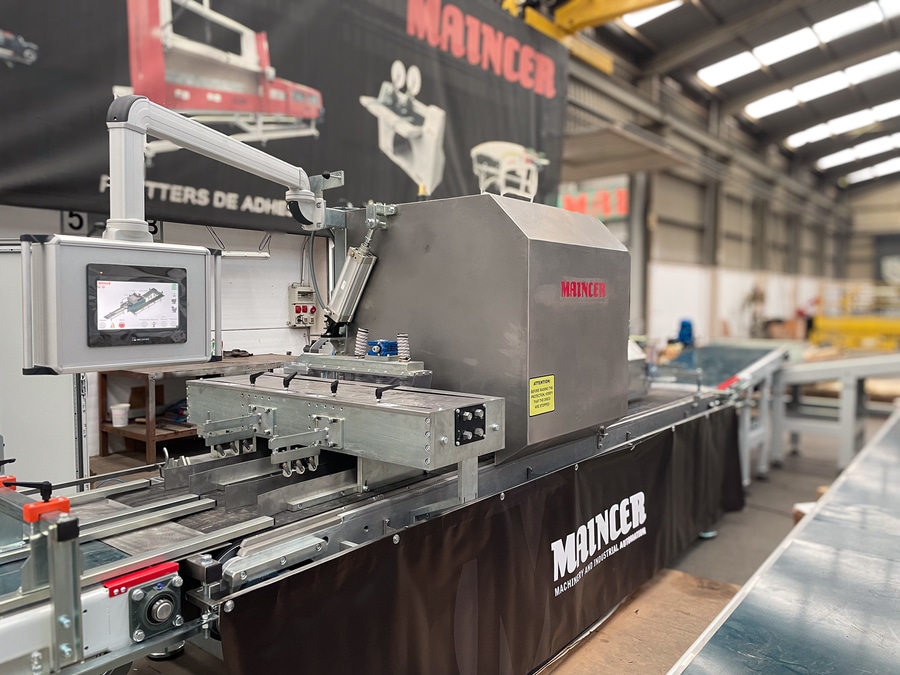
In March 2026, an automated brick cutting line was installed to optimize the production of brick slips, transverse cuts, and corner pieces. The project was developed to replace a manual cutting system with limited production capacity, improving productivity, cutting precision, and operational efficiency throughout the process.
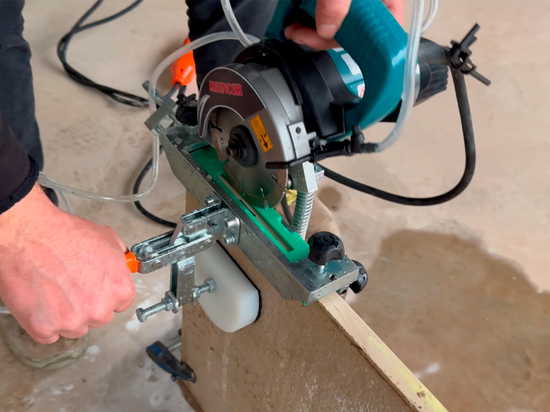
The previous production system relied on manual cutting machines that required constant operator intervention, resulting in slower production rates and reduced efficiency. The customer required a more advanced solution capable of automating the cutting process, increasing production capacity, improving cutting precision, reducing operating costs, and optimizing the manufacture of brick slips and corner pieces. In addition, the installation needed to provide enough flexibility to adapt to different cutting operations depending on production requirements.
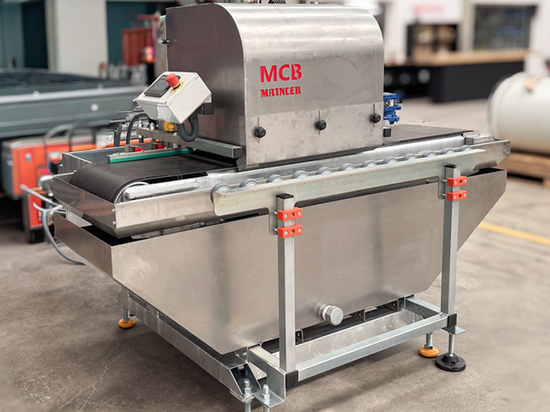
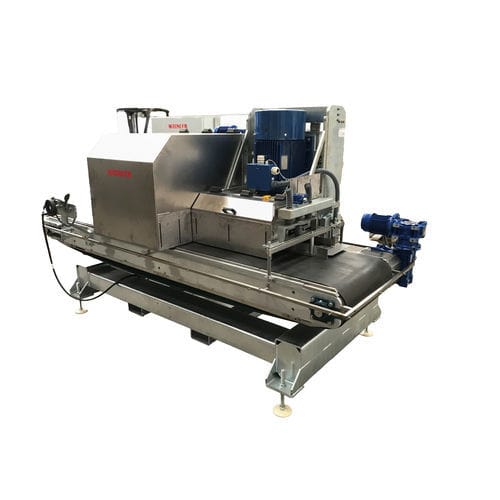
The implemented solution consists of an automated brick cutting line with four conveyors arranged in a “U” configuration, designed to optimize both brick feeding and finished product collection. The installation allows longitudinal cuts, transverse cuts, brick slip production, and corner brick cutting within the same system. Operators can easily modify the configuration of the motors and cutting discs according to the type of cut required, enabling quick adaptation to different production formats.
During operation, the operator places the bricks onto the conveyor belt, while the system automatically feeds the material into the cutting machine. Depending on the selected production type, the line activates the corresponding motors and cutting discs to perform straight or corner cuts with high precision. Once the cutting process is completed, the finished pieces continue automatically along the conveyor line, while waste material is discharged separately. The operator only needs to collect the finished products, significantly improving workflow efficiency and reducing manual handling.
The automated installation has enabled a more efficient and reliable production process, increasing productivity, improving cutting quality, and optimizing the manufacture of brick slips and corner pieces for industrial ceramic production.