
#Product Trends
Ceramic Grooving for Ventilated Facades
Improving On-Site Installation Efficiency
The successful installation of a ventilated facade depends on precision at every stage of the project. While most ceramic panels are machined in advance during production, installers often need to make adjustments on site to accommodate project-specific requirements, such as corners, returns, cornices, or custom finishing pieces.
In these situations, having a portable and accurate grooving solution allows installers to work faster, minimise delays, and achieve a high-quality finish without returning pieces to the factory.
Why Ceramic Grooving Is Essential During Installation
Although ceramic cladding systems are manufactured to tight tolerances, real construction sites rarely follow identical conditions. Small dimensional variations, design modifications, or unforeseen installation constraints frequently require ceramic pieces to be adapted before they can be fixed to the facade structure.
Creating precise grooves on site enables installers to:
Adapt special and finishing pieces quickly.
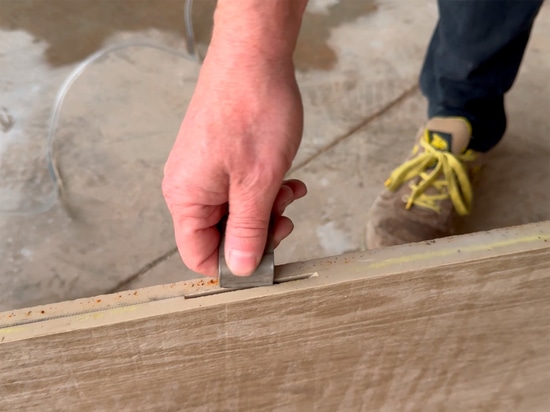
Correct or complement pre-machined grooves when necessary.
Avoid transporting pieces back to the workshop.
Reduce installation time and project costs.
Maintain the quality and precision required for ventilated facade systems.
This flexibility helps keep projects on schedule while ensuring reliable installation.
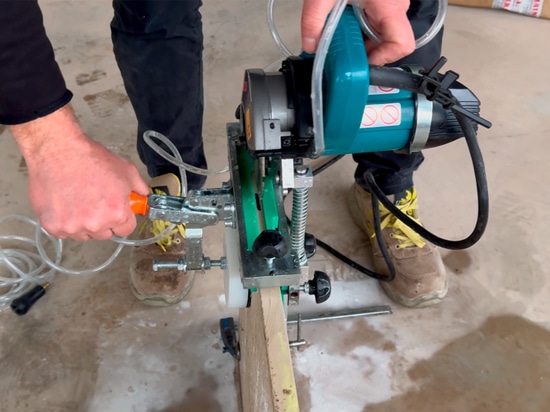
A Portable Solution for On-Site Grooving
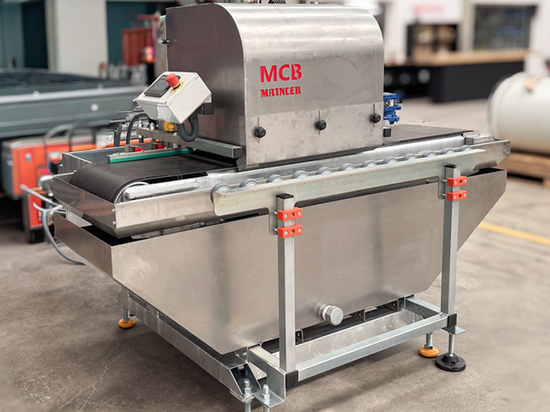
Unlike industrial grooving equipment designed for continuous production, on-site installation requires compact, lightweight, and easy-to-handle equipment.
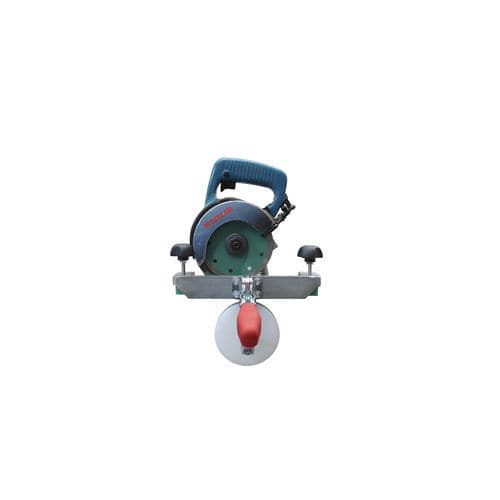
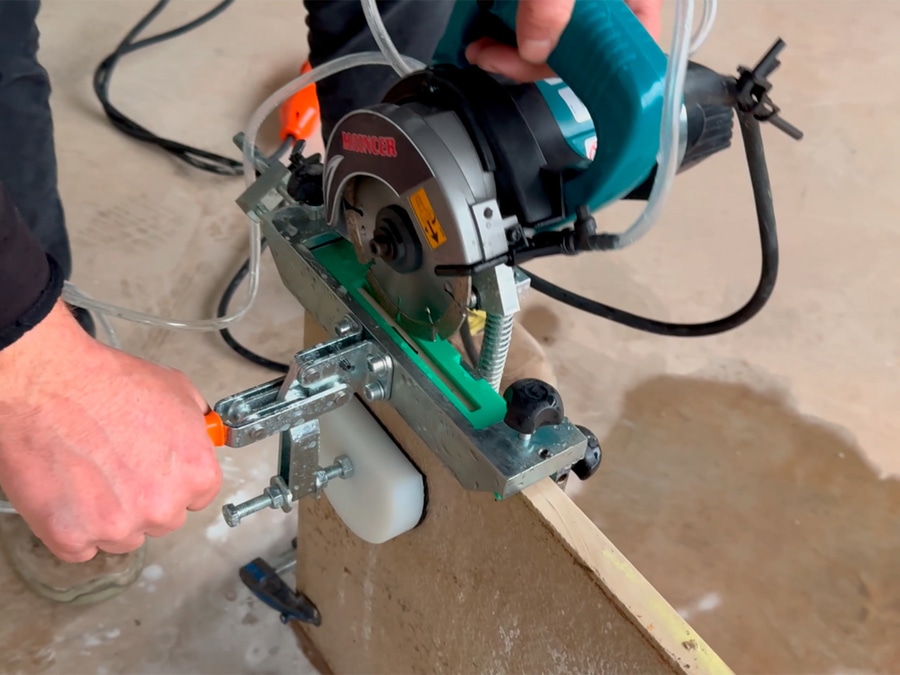
The HFV Ventilated Facade Tool has been specifically developed for this purpose. It enables installers to machine accurate grooves directly on ceramic pieces during installation, providing the precision required for mechanical fixing systems while offering excellent portability and ease of operation.
Its robust design allows professionals to perform machining operations efficiently without compromising the quality of the finished facade.
Benefits of On-Site Ceramic Grooving
Using dedicated grooving equipment during installation offers several advantages:
Greater flexibility for adapting special ceramic pieces.
Faster installation with fewer interruptions.
Reduced handling and transport of materials.
Accurate, repeatable grooves for secure fixing.
Improved productivity on construction sites.
These benefits contribute to smoother installation workflows and help contractors deliver high-quality ventilated facades more efficiently.
Conclusion
On-site ceramic grooving has become an essential operation in modern ventilated facade installation. As projects demand greater flexibility and increasingly customised solutions, installers need reliable equipment capable of delivering precision directly on the construction site.
Portable tools such as the HFV Ventilated Facade Tool simplify the adaptation of ceramic components, improve installation efficiency, and ensure the high-quality finish expected from modern ventilated facade systems.