#Product Trends
Marine Exhaust Blanket for Marine Engine Thermal Protection
Marine Exhaust Blanket
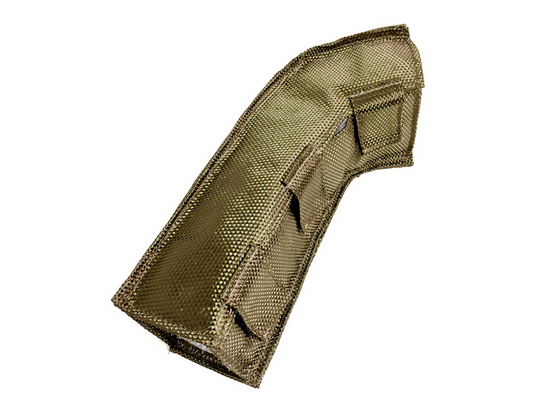
A marine exhaust blanket is a fitted thermal insulation cover designed to protect marine engine compartments from excessive heat generated by exhaust systems. It can be manufactured for exhaust pipes, manifolds, elbows, turbocharger outlets, mufflers and other high-temperature components found on marine diesel engines and power systems.
Marine exhaust components can operate at temperatures far above the surrounding engine-room environment. Because marine equipment is often installed in confined spaces, heat from an exposed exhaust surface can affect nearby hoses, wiring, sensors, fuel-system components and structural parts.
A custom marine exhaust blanket creates an insulating barrier around the hot component. Depending on the design, it can reduce surface temperature, limit radiant heat transfer and improve thermal conditions around the engine.
For marine applications, the blanket also needs to remain stable under vibration and repeated thermal cycling. Removable construction is particularly useful because marine exhaust components require periodic inspection and maintenance.
BSTFLEX manufactures custom marine exhaust blankets according to component dimensions, operating temperature, insulation requirements and installation conditions.
What Is a Marine Exhaust Blanket?
A marine exhaust blanket is a multi-layer insulation cover fabricated to fit around a high-temperature exhaust component.
Unlike loose insulation or permanently installed wrapping material, a fitted blanket can be manufactured as a shaped assembly with defined edges, openings and fastening points.
A typical marine exhaust blanket may include:
High-temperature outer fabric
Thermal insulation core
Inner heat-resistant fabric
Stainless steel fastening hardware
Reinforced edges
Custom openings
Separate removable sections
The exact construction depends on the exhaust temperature and the geometry of the component.
For simple straight pipes, the blanket can use a relatively straightforward cylindrical configuration. Complex manifolds, elbows and turbocharger connections require more detailed patterns.
Why Marine Engines Need Exhaust Blankets
Heat generated by a marine exhaust system does not remain confined to the exhaust pipe.
Radiant heat can reach nearby components, while convection can raise the temperature of the surrounding engine-room air.
This can become a concern when the exhaust is positioned close to heat-sensitive equipment.
A marine exhaust blanket can help control this thermal exposure.
Typical objectives include:
Lowering external exhaust surface temperatures
Reducing radiant heat
Protecting nearby equipment
Improving engine-room thermal management
Reducing heat exposure to hoses and wiring
Improving accessibility and maintenance safety
Providing thermal protection in restricted spaces
The blanket should be considered part of the overall exhaust thermal-management system rather than simply a protective covering.
Marine Exhaust Blanket Applications
Marine exhaust blankets can be customized for individual components throughout an engine exhaust assembly.
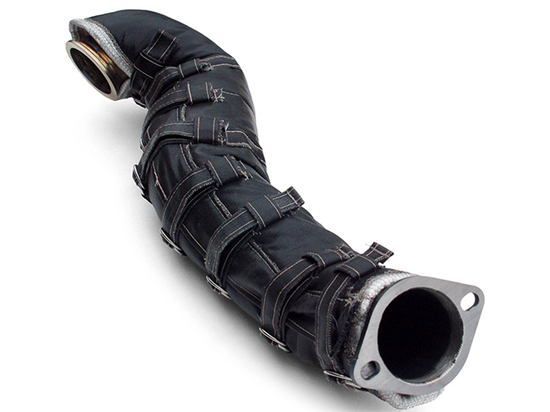
Exhaust Pipes
Straight exhaust pipes are commonly insulated to reduce heat transfer into the engine compartment.
A removable blanket can be manufactured to match the pipe diameter and required insulation thickness.
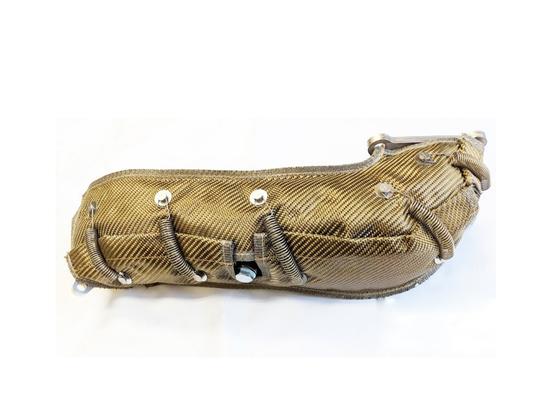
Exhaust Manifolds
Manifolds often combine multiple exhaust passages and connection points.
Their irregular shape makes them difficult to insulate with standard pipe sleeves. A custom blanket can be fabricated around the actual manifold geometry.
Exhaust Elbows
Exhaust elbows change direction and may have different radii and connection dimensions.
Multi-piece blanket construction allows the insulation to follow the bend without excessive folding.
Turbocharger Exhaust Components
Turbocharger exhaust outlets can create concentrated high-temperature zones.
A high-temperature marine exhaust blanket can be designed around the turbocharger connection while leaving required service areas accessible.
Marine Mufflers
Mufflers can have a large exposed surface area and may contribute significantly to engine-room heat.
A sectional blanket can cover the main muffler body while providing openings around flanges, brackets and connections.
Exhaust Flanges
Flanges and joints can be covered with independent insulation sections.
This makes it possible to remove a service section without removing the entire exhaust insulation system.
Marine Exhaust Blanket Material Selection
The choice of marine exhaust blanket material depends on several factors rather than temperature alone.
Important considerations include:
Operating temperature
Maximum temperature
Required insulation performance
Available space
Vibration
Moisture exposure
Required flexibility
Maintenance frequency
Expected service life
Common materials include fiberglass, silica, ceramic fiber, aluminized fabric and silicone-coated fiberglass.
Fiberglass
Fiberglass fabrics and insulation provide a flexible and economical option for many high-temperature exhaust applications.
They can be used where the operating temperature falls within the specified capability of the selected fiberglass construction.
Silica
Silica fabric and silica insulation are suitable for applications requiring higher-temperature resistance.
They can be used around demanding exhaust components where additional thermal capability is required.
Ceramic Fiber
Ceramic fiber provides high-temperature insulation performance and can be used as the core of a marine exhaust blanket for demanding exhaust applications.
Aluminized Fabric
Aluminized fabric can provide reflective thermal protection and may be selected where radiant heat management is important.
Silicone-Coated Fiberglass
Silicone-coated fiberglass can provide a flexible and durable exterior for applications where the blanket will be repeatedly handled during installation or maintenance.
The final marine exhaust blanket material combination should be selected according to the complete operating environment.
Marine Exhaust Blanket Construction
The construction of the blanket affects both thermal performance and serviceability.
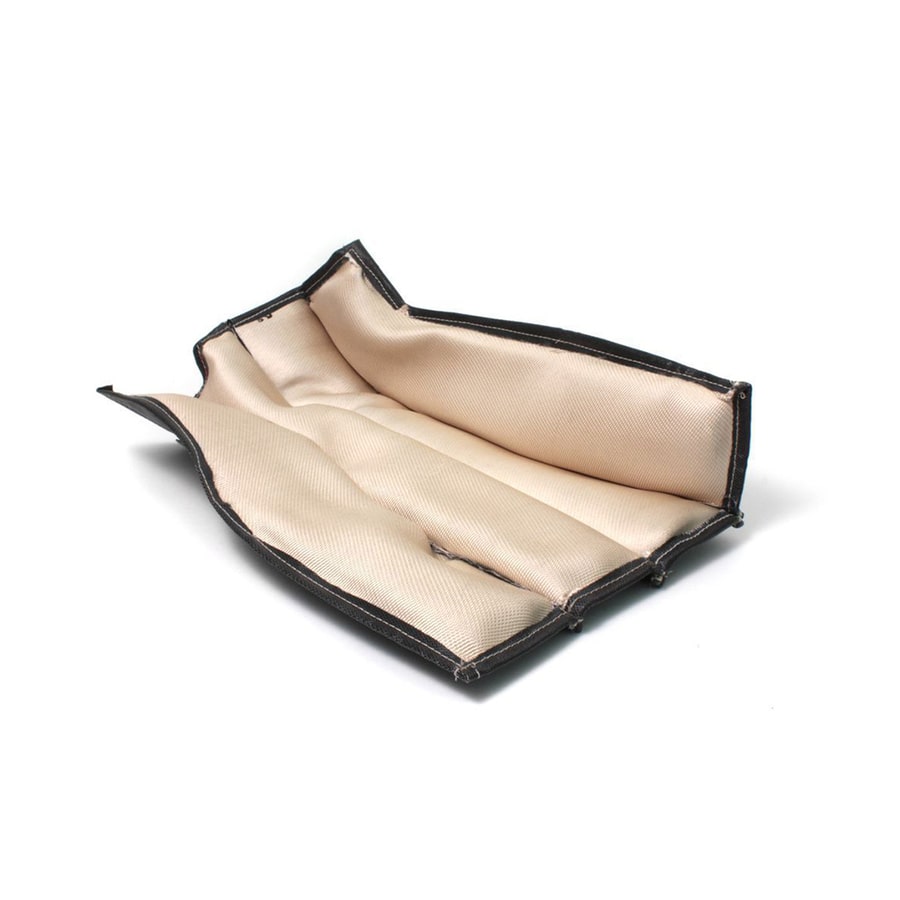
A typical assembly has an outer cover, insulation core and inner layer.
The outer cover protects the insulation from handling and mechanical exposure.
The insulation core provides the primary thermal resistance.
The inner layer separates the insulation from the hot exhaust component and can be selected according to the operating temperature.
The fastening system keeps the blanket fitted around the component.
For marine applications, fastening hardware may include stainless steel wire, straps, buckles, hooks, lacing systems or other mechanical closures.
The fastening arrangement should be designed for the expected vibration and thermal movement of the exhaust system.
Removable Marine Exhaust Blanket Design
Marine engine exhaust systems need regular inspection.
Components may need to be checked for:
Cracks
Corrosion
Loose connections
Exhaust leakage
Damaged joints
Mounting problems
Thermal deterioration
If insulation is permanently attached to the component, maintenance can become more difficult.
A removable marine exhaust blanket allows technicians to expose the exhaust component when necessary.
For larger systems, several independent sections can be used.
For example, one engine exhaust system may have separate blankets for the manifold, elbow, pipe, flange and muffler.
This sectional approach means that only the required area needs to be removed during service.
Marine Exhaust Blankets and Engine Vibration
Marine engines generate continuous vibration during operation.
This creates a different mechanical environment from stationary piping systems.
The blanket must remain securely attached without excessive stress on the insulation, stitching or fastening points.
The design can therefore incorporate reinforced edges and suitable fastening systems.
For components that experience movement, the blanket pattern can also include appropriate allowances around connection points.
The objective is to maintain coverage while avoiding unnecessary mechanical loading.
Marine Exhaust Blankets in Confined Engine Rooms
Space limitations are a major consideration in marine engine-room thermal management.
An exhaust pipe may run close to:
Electrical wiring
Fuel lines
Hydraulic hoses
Rubber components
Sensors
Plastic parts
Control equipment
Engine-room structures
A properly designed exhaust blanket provides a thermal barrier without requiring large changes to the exhaust layout.
Insulation thickness should be selected carefully because additional thickness requires additional installation space.
The best solution is therefore not necessarily the thickest blanket. It is the construction that provides the required thermal performance within the available clearance.
Custom Marine Exhaust Blankets
Marine engines and vessels use different exhaust layouts, making universal insulation difficult to apply to every installation.
Custom marine exhaust blankets can be produced according to:
Exhaust pipe diameter
Component dimensions
Component drawings
Photographs
Physical templates
CAD data
Operating temperature
Required insulation thickness
Available clearance
Fastening requirements
Custom cutouts can also be incorporated around sensors, clamps, brackets, flanges and other components.
This is particularly useful for older vessels and retrofit projects where the exhaust configuration has already been installed.
Marine Exhaust Blanket for Retrofit Applications
A marine exhaust blanket can be installed on existing equipment as well as newly manufactured engines.
Retrofit insulation may be required when an engine-room temperature problem is identified or when existing thermal protection no longer meets the requirements of the equipment.
Typical retrofit applications include:
Existing marine diesel engines
Replacement engines
Marine generator upgrades
Modified exhaust systems
Damaged or aged insulation
Additional protection for nearby components
Engine-room thermal-management improvements
The blanket can be designed from measurements and photographs of the existing installation.
This allows the insulation to accommodate the actual configuration instead of relying on standard dimensions.
Marine Exhaust Blanket Selection Parameters
Before ordering a marine exhaust blanket, the following information should be established:
Parameter Recommended Information
Exhaust component Pipe, manifold, elbow, muffler, turbocharger, etc.
Operating temperature Normal working temperature
Maximum temperature Expected peak temperature
Dimensions Diameter, length and component geometry
Clearance Distance to surrounding equipment
Insulation requirement Required thickness or thermal performance
Environment Engine room, outdoor, offshore, etc.
Vibration Expected mechanical movement
Maintenance Required removal frequency
Fastening Preferred installation method
Accurate information improves the fit of the finished blanket and helps ensure that the material construction is appropriate for the application.
Marine Exhaust Blanket Manufacturer
BSTFLEX manufactures custom marine exhaust blankets for high-temperature engine and exhaust applications.
Products can be designed for marine diesel engines, marine generators, workboats, commercial vessels, fishing vessels, tugboats, offshore equipment and other marine power systems.
Custom blankets can cover exhaust pipes, manifolds, elbows, turbocharger connections, mufflers, flanges and other high-temperature components.
Depending on the application, the construction can use fiberglass, silica, ceramic fiber, aluminized fabric, silicone-coated fiberglass and other high-temperature materials.
The blanket can also be manufactured in multiple removable sections to simplify installation and future maintenance.
For a custom marine exhaust blanket, customers can provide component dimensions, operating temperature, drawings, photographs or templates. Based on these details, the insulation construction and blanket pattern can be developed around the actual marine exhaust system.