#Product Trends
Exhaust Pipe Insulation Material for High Temperature Applications
Exhaust Pipe Insulation Material
Exhaust pipe insulation material determines how effectively an insulation system can control heat around a hot exhaust pipe. The right material needs to withstand the operating temperature while providing the required thermal resistance, flexibility, durability and installation characteristics.
Exhaust systems are used across automotive, diesel engine, generator, marine and industrial equipment. Although the applications are different, they share a common thermal-management challenge: hot exhaust piping can transfer significant heat to the surrounding environment.
Selecting an insulation material is therefore not simply a matter of choosing the highest temperature rating. The material needs to match the actual exhaust temperature, available installation space, pipe geometry, vibration, maintenance requirements and environmental conditions.
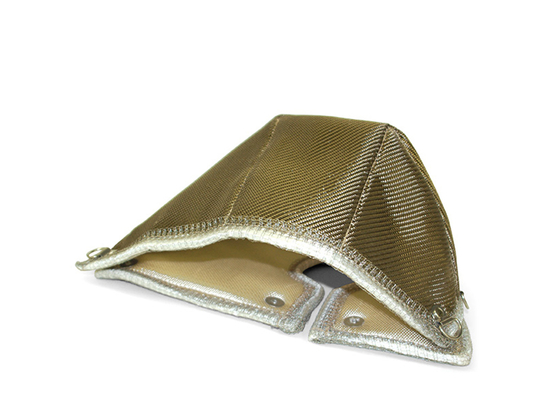
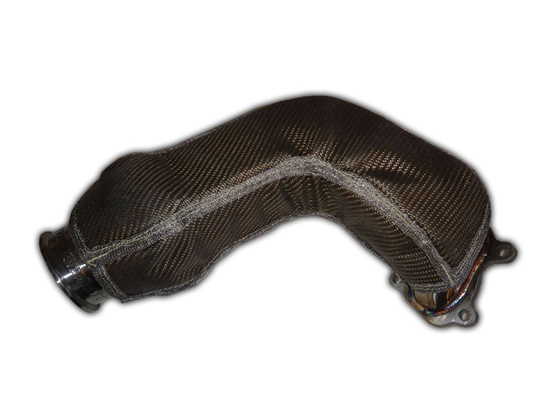
Common exhaust pipe insulation materials include fiberglass, silica, ceramic fiber and reflective high-temperature fabrics. These materials can be used individually or combined into a multi-layer insulation blanket or fitted exhaust pipe cover.
BSTFLEX manufactures custom exhaust insulation solutions using different high-temperature materials according to the requirements of the exhaust system.
What Makes a Good Exhaust Pipe Insulation Material?
A suitable exhaust insulation material needs to perform several functions simultaneously.
First, it must tolerate the operating temperature of the exhaust pipe.
Second, it needs to provide sufficient thermal resistance to reduce heat transfer.
Third, the material should be compatible with the physical conditions around the exhaust system.
Depending on the application, important characteristics include:
High-temperature resistance
Low thermal conductivity
Flexibility
Thermal stability
Resistance to repeated heating and cooling
Mechanical durability
Suitable surface protection
Compatibility with available installation space
Ease of fabrication
Serviceability
No single material provides the best solution for every exhaust system.
The selection should begin with the actual operating conditions.
Fiberglass as an Exhaust Insulation Material
Fiberglass is one of the most widely used materials for high-temperature insulation.
Fiberglass fabric can be used as an outer layer, inner layer or protective textile within an exhaust insulation assembly. Fiberglass insulation can also be used as the thermal core.
Its combination of flexibility, temperature resistance and cost efficiency makes it suitable for many exhaust pipe applications.
Fiberglass-based constructions can be used for:
Exhaust pipes
Exhaust tubes
Generator exhaust systems
Diesel engine exhausts
Automotive exhaust systems
Marine exhaust piping
Industrial hot piping
The specific temperature capability depends on the grade and construction of the fiberglass material.
Fiberglass is therefore suitable when the operating temperature falls within the manufacturer's specified range.
Silica Exhaust Pipe Insulation Material
Silica is used for applications requiring higher-temperature resistance.
Silica fabric and silica insulation can provide greater thermal capability than many conventional fiberglass constructions.
This makes silica useful around demanding exhaust components such as:
High-temperature exhaust pipes
Turbocharger exhaust sections
Exhaust manifolds
Performance engine exhaust systems
Diesel engine exhaust components
Marine engine exhaust systems
Silica can be used as part of a removable insulation blanket or fitted exhaust pipe cover.
The final construction should still be selected according to the actual component temperature rather than relying only on the material's maximum temperature capability.
Ceramic Fiber for Exhaust Pipe Insulation
Ceramic fiber is another high-temperature insulation material used in demanding exhaust applications.
Its primary advantage is its ability to provide thermal insulation at elevated temperatures.
Ceramic fiber can be used as the core of a multi-layer exhaust insulation blanket.
Typical applications include:
High-temperature engine exhausts
Turbocharger systems
Exhaust manifolds
Industrial engines
Generators
Diesel exhaust systems
Marine exhaust components
Because ceramic fiber constructions can provide significant thermal resistance, they are particularly useful where exhaust temperatures are high and heat transfer needs to be controlled.
The insulation should be protected by an appropriate fabric construction when the application involves handling, vibration or mechanical contact.
Aluminized Exhaust Insulation Material
Aluminized fabric is often used as the reflective outer layer of an exhaust insulation system.
Its primary function is different from that of the insulation core.
Instead of providing all of the thermal resistance itself, the reflective surface can help manage radiant heat.
An aluminized outer surface can therefore be combined with an insulating core such as fiberglass, silica or ceramic fiber.
This layered approach can be useful when the exhaust component is located close to heat-sensitive equipment.
Typical applications include:
Automotive engine compartments
Turbocharger systems
Diesel engines
Generator sets
Marine engine rooms
Industrial exhaust systems
The actual performance depends on the complete assembly rather than the reflective fabric alone.
Silicone-Coated Fiberglass
Silicone-coated fiberglass is commonly used when the insulation needs a flexible and durable outer surface.
The fiberglass substrate provides high-temperature capability while the silicone coating can improve handling characteristics and protect the textile.
This material can be useful for removable insulation blankets that are repeatedly installed and removed.
Applications can include:
Exhaust pipes
Exhaust elbows
Turbocharger insulation
Generator exhaust systems
Marine exhaust components
Industrial hot piping
The suitability of the material should be evaluated against the temperature of the outer surface rather than the temperature of the exhaust gas inside the pipe.
Exhaust Pipe Insulation Material vs Insulation Core
One important distinction is the difference between the material used as the insulation core and the material used as the outer cover.
The insulation core is responsible primarily for thermal resistance.
The outer cover provides mechanical protection and may also contribute to radiant heat management.
For example, a custom exhaust pipe insulation blanket could combine:
Layer Possible Material Primary Function
Outer cover Aluminized fabric Reflective heat management
Outer textile Fiberglass fabric Mechanical protection
Insulation core Fiberglass Thermal resistance
High-temperature core Silica or ceramic fiber High-temperature insulation
Inner layer High-temperature fabric Protects insulation
Fastening Stainless steel hardware Secures blanket
This layered construction allows the insulation system to be engineered according to the application rather than relying on one material for every requirement.
How to Choose Exhaust Pipe Insulation Material
The first parameter to determine is the actual operating temperature of the exhaust pipe.
The continuous temperature should be distinguished from the maximum temperature.
This distinction is important because an exhaust system may occasionally experience temperatures considerably above its normal operating temperature.
The next consideration is the required thermal performance.
If the objective is to reduce the surface temperature significantly, the insulation thickness and thermal-core material become important.
Available clearance should then be evaluated.
A material with excellent thermal resistance may not be the best choice if the required insulation thickness cannot fit around the pipe.
Other considerations include vibration, moisture, mechanical contact and maintenance requirements.
Key selection factors include:
Continuous exhaust temperature
Maximum exhaust temperature
Required surface-temperature reduction
Pipe diameter
Available clearance
Insulation thickness
Pipe geometry
Vibration
Environmental conditions
Maintenance requirements
Exhaust Pipe Insulation Material for Automotive Applications
Automotive exhaust systems often have strict space limitations.
An insulated pipe may pass close to wiring, hoses, body panels, intake components and other heat-sensitive parts.
For this reason, the insulation material needs to provide appropriate thermal performance without creating excessive bulk.
Fiberglass can be suitable for many moderate-temperature applications.
Silica or ceramic fiber can be considered for higher-temperature areas.
A reflective outer fabric can be added where radiant heat control is particularly important.
The material combination should be selected according to the specific vehicle and exhaust configuration.
Exhaust Pipe Insulation Material for Diesel Engines
Diesel engine exhaust systems can operate under sustained high-temperature conditions, particularly under heavy load.
Exhaust pipes, manifolds and turbocharger outlets may require thermal protection to limit heat transfer to nearby components.
A custom insulation system can combine a high-temperature core with a durable outer fabric.
For diesel applications, vibration and thermal cycling should also be considered because the insulation may remain installed while the engine operates continuously.
Exhaust Pipe Insulation Material for Generators
Generator exhaust systems are another common application.
Diesel generator sets may have hot exhaust piping installed close to the engine enclosure, electrical equipment or structural components.
Insulation can help control the temperature around these areas.
Depending on the generator design, fiberglass, silica or ceramic fiber can be selected for the insulation core.
Removable blanket construction can also simplify maintenance around the exhaust pipe and muffler.
Exhaust Pipe Insulation Material for Marine Systems
Marine exhaust systems introduce additional considerations such as confined engine rooms, vibration, moisture and restricted maintenance access.
A marine exhaust insulation system may therefore require a combination of high-temperature insulation and a durable outer fabric.
Silica or ceramic fiber can be used for demanding high-temperature sections, while fiberglass-based constructions may be suitable for other areas.
The fastening system should also be selected for the expected vibration and maintenance conditions.
Exhaust Pipe Insulation Material for Industrial Applications
Industrial engines, process equipment and power-generation systems can also require exhaust pipe thermal insulation.
Unlike automotive applications, industrial exhaust piping may have larger diameters and longer straight sections.
The insulation design can therefore use larger removable sections or segmented blankets.
For industrial applications, the material selection should consider continuous operating temperature, service life, accessibility and maintenance intervals.
Removable Exhaust Pipe Insulation
The insulation material is only one part of the system.
For exhaust pipes requiring regular inspection, a removable construction can make the insulation much easier to service.
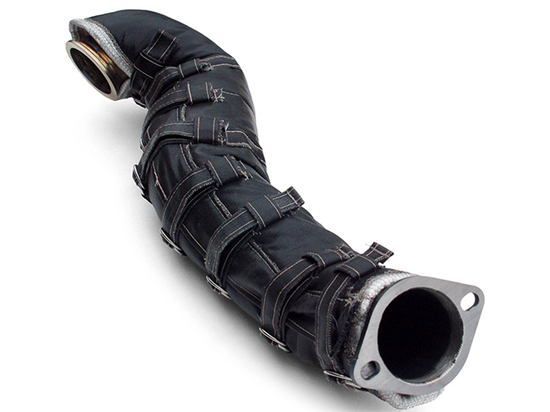
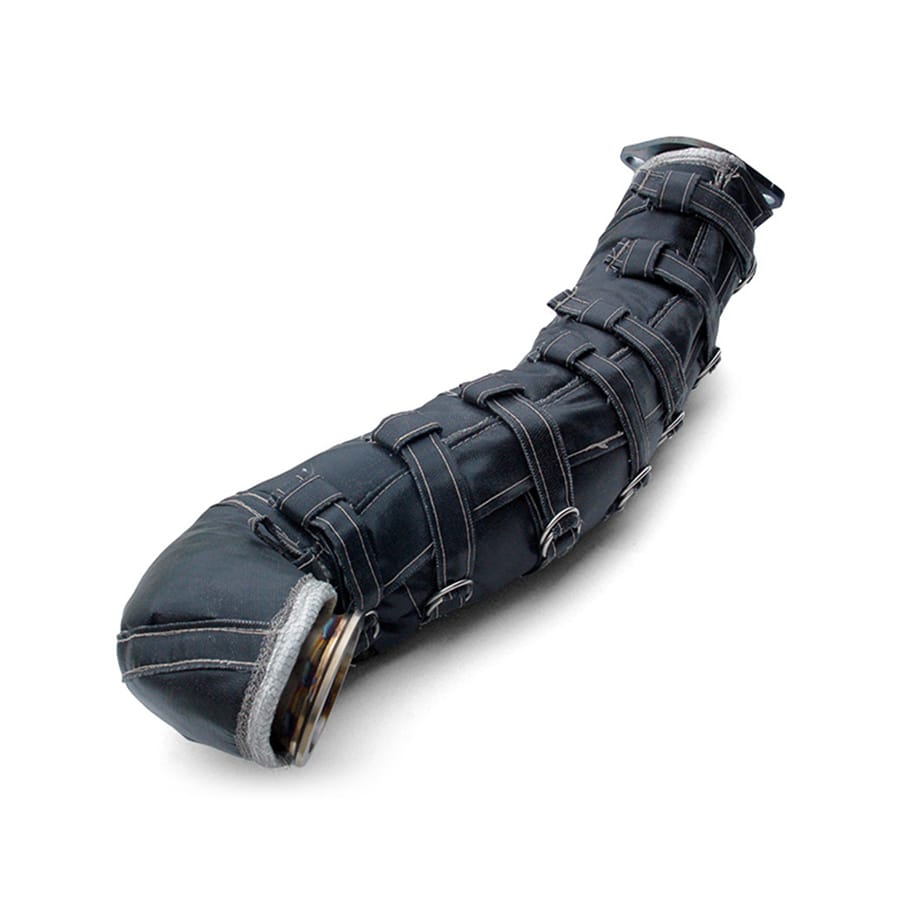
A removable blanket can be opened or detached from the pipe without destroying the insulation.
This is particularly useful around:
Exhaust flanges
Inspection points
Sensors
Clamps
Expansion joints
Turbocharger connections
Exhaust manifolds
Different fastening systems can be incorporated depending on the application.
Stainless steel wire, straps, buckles and lacing systems are possible options.
Why Custom Exhaust Insulation Material Selection Matters
Standard insulation products are often based on a limited set of dimensions and operating conditions.
Actual exhaust systems vary significantly.
Two pipes with the same diameter may require completely different insulation constructions because one operates at a higher temperature or has much less surrounding clearance.
Custom material selection allows the insulation to be optimized for the actual application.
The final design can account for:
Temperature
Geometry
Clearance
Insulation thickness
Outer surface requirements
Vibration
Maintenance
Installation method
This approach avoids selecting insulation based only on a generic temperature rating.
Exhaust Pipe Insulation Material Selection Table
Material Typical Role Main Advantage
Fiberglass Fabric or insulation core Flexible and cost-effective
Silica Fabric or insulation core High-temperature capability
Ceramic fiber Insulation core High-temperature thermal resistance
Aluminized fabric Outer cover Reflective radiant heat management
Silicone-coated fiberglass Outer cover Flexible and durable surface
Stainless steel Fastening hardware Mechanical retention
The actual temperature range and suitability must be confirmed for the specific grade and construction selected.
Custom Exhaust Pipe Insulation Manufacturer
BSTFLEX manufactures custom exhaust pipe insulation systems using different high-temperature materials according to application requirements.
Available constructions can incorporate fiberglass, silica, ceramic fiber, aluminized fabric, silicone-coated fiberglass and other high-temperature textiles.
The insulation can be produced as fitted pipe covers, removable blankets or sectional insulation assemblies.
Custom dimensions, thicknesses, openings and fastening systems can be developed for automotive, diesel engine, generator, marine and industrial exhaust systems.
For material selection, customers can provide the exhaust temperature, pipe dimensions, component drawings or photographs, available clearance and required thermal performance.
Based on these parameters, the appropriate exhaust pipe insulation material and construction can be selected for the specific application.