#Industry News
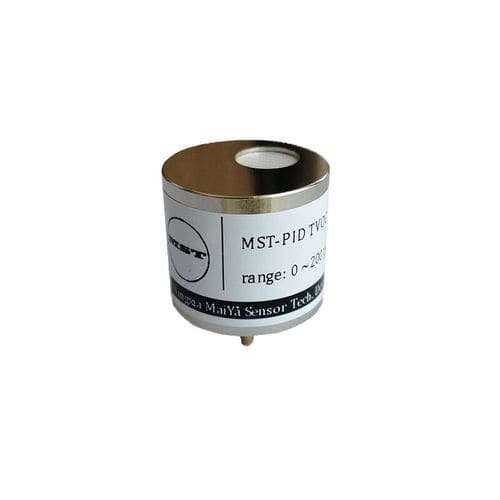
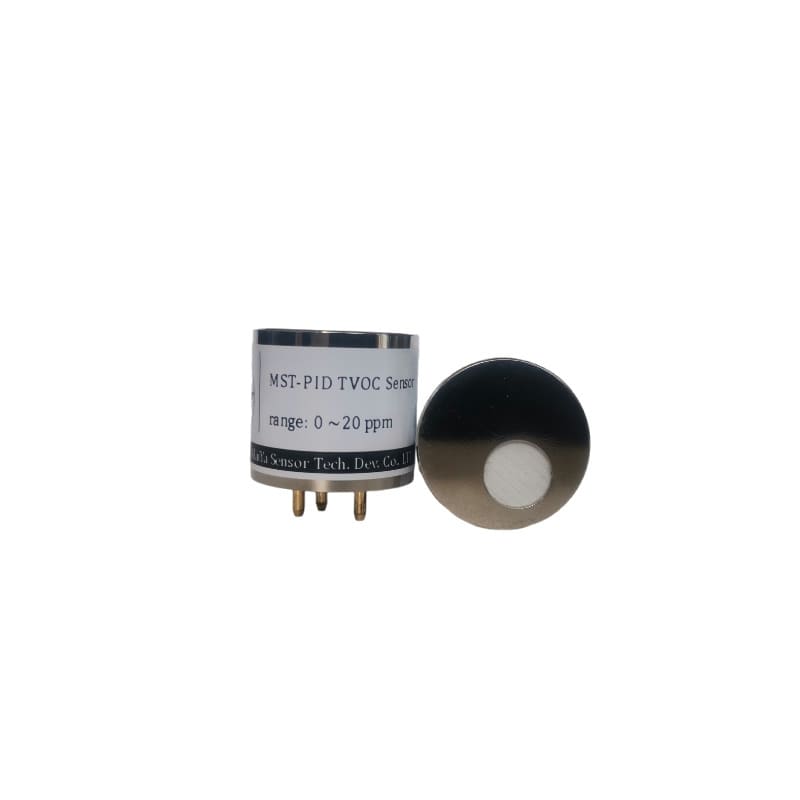
There are three points that need special attention when using PID sensors
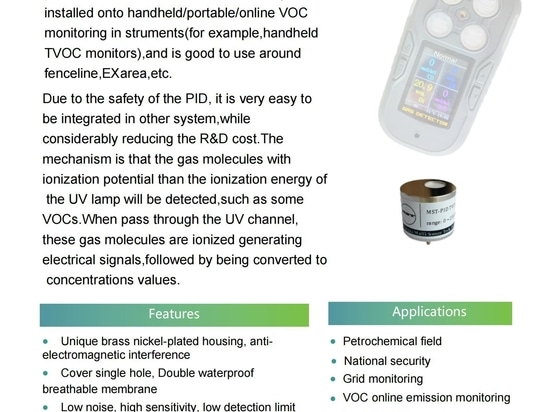
PID gas analyzer
Calibration of the zero point of the PID sensor: It is best not to calibrate the zero point of the PID sensor in pure nitrogen. Dry and clean air is recommended. This is mainly because the oxygen in the clean and dry air will generate ozone in the VUV environment. The generated ozone has a certain cleaning effect on the internal components of the PID sensor. In addition, there are more or less VOCs gases in the nitrogen in the standard gas cylinder. The nitrogen in the gas cylinder can be filtered by activated carbon and then used to calibrate the zero point of the PID sensor.
Encapsulation of the PID sensor: Be sure not to pour glue or fix the sensor. On the one hand, the glue will volatilize various VOCs gases. On the other hand, the glue will penetrate into the interior of the PID sensor and cause signal attenuation. As shown in the figure, when the top cover is opened, the glue has obviously penetrated into the sensor.
Selection of the PID sensor: Pay special attention to the measurement range. The measurement range of the PID sensor cannot reach the value marked on the label. For example, the maximum measurement range of the Baseline PID-20 is only about 18 ppm; the maximum measurement range of the Alpha BID-A1 is only about 5300 ppm.