#Industry News
Full-Process Gas Detection Guide for Waste Incineration Plants: Two Core Indicators to Verify Complete Combustion
1.From Waste Receiving to Ash Disposal: A Complete Breakdown of the Necessity of Gas Detection Throughout the Incineration Process
Introduction
Municipal solid waste (MSW) incineration is the core approach for urban waste reduction, harmless treatment and resource recovery. Through high-temperature combustion, waste is converted into bottom ash and thermal energy, which can also be used for waste heat power generation. However, the core challenge in incineration operation is how to stably control combustion conditions and ensure complete combustion. Incomplete combustion not only reduces heat utilization efficiency and drives up operating costs, but also leads to excessive emissions of pollutants such as carbon monoxide and dioxins, and even brings safety risks of deflagration caused by accumulation of combustible gases.
Gas composition detection is the most direct and sensitive method to judge combustion status, and is also a mandatory requirement specified in the Standard for Pollution Control on Municipal Solid Waste Incineration (GB 18485-2014). This article sorts out the complete waste incineration process, explains the core role of gas detection in combustion control and safety protection, and introduces reasonable configuration schemes for different scenarios.
I. Complete Process Flow of Municipal Solid Waste Incineration
A typical municipal solid waste incineration plant consists of 6 core links, each corresponding to different gas environments and risk points:
1. Waste Receiving and Storage
Waste is weighed and discharged into a closed waste storage pit, where it ferments anaerobically for 3-7 days to leach out leachate and improve its calorific value. Anaerobic fermentation of waste in the pit continuously produces gases such as methane (CH₄) and hydrogen sulfide (H₂S), making it a high-risk area for flammable explosion and poisoning accidents.
2. Feeding and Furnace Incineration
A waste grab crane feeds the fermented waste into a hopper, which is then fed into the furnace via a pusher. The furnace is divided into a drying zone, a combustion zone and a burn-out zone in sequence. Waste must stay in a high-temperature environment above 850℃ for no less than 2 seconds to ensure the full decomposition and combustion of organic matter.
3. Waste Heat Utilization
High-temperature flue gas enters the waste heat boiler to heat water and produce steam for power generation or heat supply. The temperature of the flue gas drops significantly at this stage.
4. Flue Gas Purification
The flue gas goes through treatment processes such as deacidification, denitrification, activated carbon adsorption and baghouse dust removal in sequence to remove various pollutants before being discharged up to standard.
5. Ash Collection and Disposal
Bottom ash discharged from the furnace bottom is collected after water cooling and can be utilized as resources. Fly ash collected from flue gas treatment is stabilized and disposed of in accordance with hazardous waste regulations.
6. Auxiliary Facilities
These include leachate treatment stations, ammonia storage areas, combustion-supporting fuel oil areas, etc. Each area corresponds to different risks of toxic, harmful, flammable and explosive gases.
II. Gas Detection: The Core Basis for Judging Combustion Completeness
The essence of waste incineration is the high-temperature oxidation reaction of organic matter. In an ideal state of complete combustion, carbon and hydrogen elements in waste are all converted into carbon dioxide and water, releasing all thermal energy. However, in actual operation, affected by factors such as fluctuating waste composition, unreasonable air distribution, insufficient furnace temperature and poor turbulent mixing effect, varying degrees of incomplete combustion will occur.
Among the industry-recognized “3T+E” combustion control principles (Temperature, Time, Turbulence, Excess air), both the excess air coefficient and combustion completeness need to be directly quantified by gas concentration. Relying only on parameters such as furnace temperature and furnace negative pressure cannot accurately reflect the real combustion status, and gas detection is the most direct judgment method.
Core Indicator 1: Carbon Monoxide (CO) – The “Gold Standard” for Combustion Efficiency
Generation Principle: When oxygen supply is insufficient, furnace temperature is low, or flue gas residence time is insufficient, organic carbon cannot be completely oxidized into carbon dioxide (CO₂), and carbon monoxide (CO) is generated. Unburned volatile matter also carries CO and is discharged with the flue gas.
Indicator Significance: CO concentration is the most direct barometer of combustion completeness. A continuous rise in concentration indicates deteriorating combustion conditions, which not only reduces heat utilization efficiency, but also is accompanied by a significant increase in the generation of highly toxic pollutants such as dioxins and VOCs. A stable low concentration indicates complete combustion and stable operating conditions.
Compliance Requirement: According to the Standard for Pollution Control on Municipal Solid Waste Incineration (GB 18485-2014), the 1-hour average value of carbon monoxide in incinerator flue gas shall not exceed 100mg/m³, which is a core red line indicator for environmental protection assessment.
Core Indicator 2: Oxygen (O₂) – Key Reference for Air Distribution Rationality
Detection Significance: Oxygen is a necessary condition for combustion, and the excess air coefficient directly determines combustion completeness and thermal efficiency.
Indicator Significance: If O₂ concentration is too low (<6%VOL), it indicates insufficient overall oxygen supply, which is inevitably accompanied by increased CO concentration and incomplete combustion. If O₂ concentration is too high (>10%VOL), it indicates excessive air supply. A large amount of cold air entering the furnace will take away heat, reduce furnace temperature, and is not conducive to stable combustion. At the same time, it will increase the energy consumption of the induced draft fan and the load of flue gas treatment.
Reasonable Control Range: The industry conventionally controls it at 6%~10%VOL, which can not only ensure complete combustion, but also keep flue gas heat loss within a reasonable range.
Supplementary Detection for Safety
In addition to controlling combustion conditions, gas detection is also a necessary guarantee for safe production. Methane (combustible) and hydrogen sulfide (toxic) in waste storage pits, toxic and harmful gases in leachate stations, ammonia leakage in ammonia areas, and oxygen deficiency and toxic gas risks in confined space operations all need to be identified in advance through gas detection to prevent accidents.
III. Common Detection Equipment and Configuration Methods
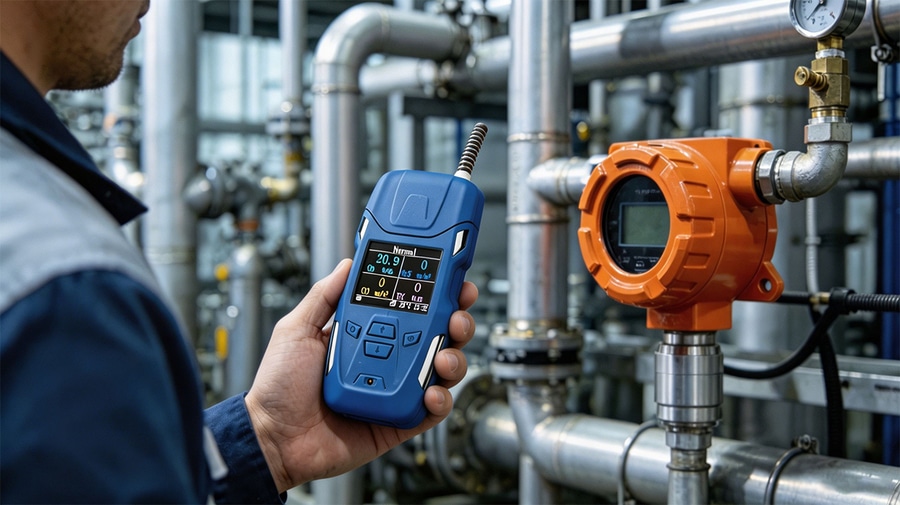
Gas detection in waste incineration plants usually adopts a combined mode of “fixed continuous monitoring + portable mobile inspection” to cover the needs of different scenarios.
1. Fixed Gas Detectors
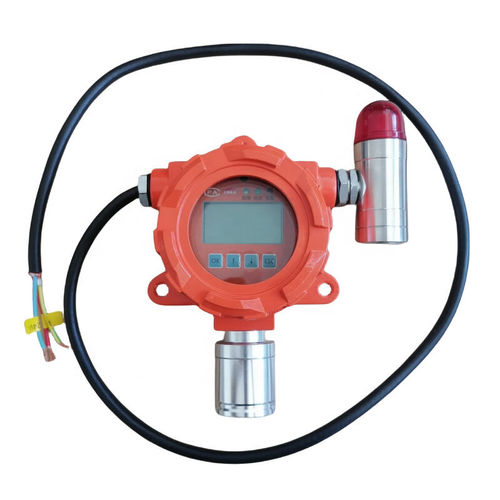
Application Scenarios: Installed at fixed points to achieve 24-hour uninterrupted monitoring. Data can be uploaded to the plant’s automatic control system in real time. When the concentration exceeds the standard, it automatically triggers an audible and visual alarm, and can also be linked with emergency equipment such as ventilation and shut-off devices.
Key Installation Points: Main flue at furnace outlet (CO, O₂, for monitoring combustion conditions), above the waste storage pit (CH₄, H₂S, for preventing deflagration and poisoning), leachate collection area, ammonia storage area, ash discharge room, etc.
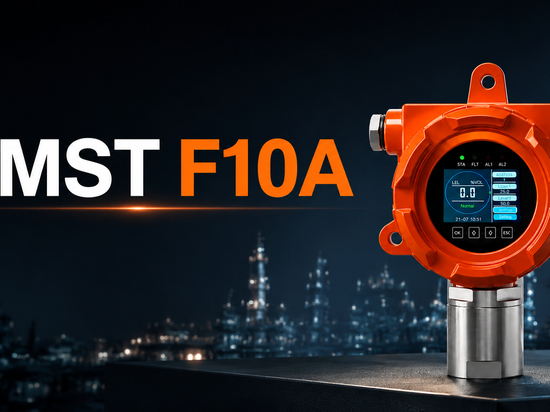
Recommended Equipment: Fixed MST F100 from MAIYA SENSOR. It supports customizable single-gas. It is available in 0-40mA and RS485 protocol versions. With a matching controller, it can be seamlessly integrated into the plant’s automatic control system. The circuit board is treated with anti-corrosion coating, and the probe is equipped with a filter membrane, which can effectively prevent corrosion and extend the service life of the equipment.
2. Portable Gas Detectors
Application Scenarios: Mobile scenarios such as daily plant inspection, equipment maintenance, pre-operation detection for confined spaces, and emergency leak investigation.
Two Common Types:
oDiffusion-type Detectors: Compact in size, suitable for wearing during daily patrols to monitor ambient gas concentration in real time.
oPump-suction Detectors: Built with a sampling pump, and can be used with extended sampling hoses. It can extract gas samples from deep areas without personnel entering hazardous spaces, and is suitable for stratified detection before confined space operations.
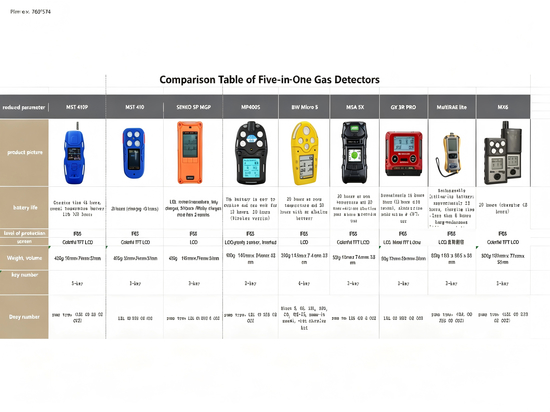
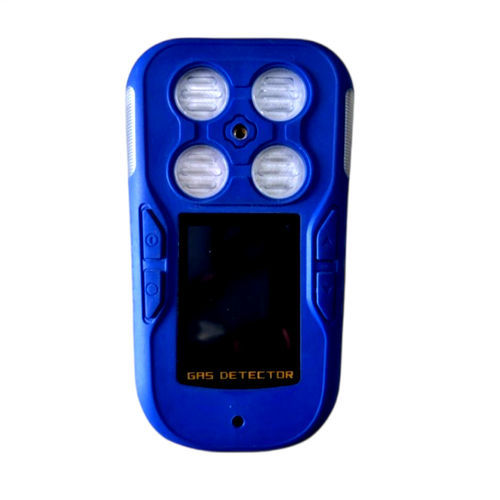
Recommended Equipment: Portable multi-gas detectors MST 410 (diffusion type) and MST 410P (pump-suction type) from MAIYA SENSOR. They support flexible customization of multi-gas combinations to meet different needs such as daily inspection and confined space operations. The MST 410P is also equipped with a float and hose, facilitating gas detection in underground wells or water-accumulated environments.
IV. Core Principles of Gas Detection Configuration
1. Prioritize Working Conditions, Ensure Safety as the Bottom Line
Prioritize ensuring the monitoring of CO and O₂ combustion conditions at the furnace outlet, which is the core of environmental compliance and operation optimization. Simultaneously cover high-risk areas such as waste storage bins, confined spaces and hazardous chemical storage areas, leaving no safety blind spots.
2. Complementary Fixed and Mobile Solutions
Fixed equipment realizes all-weather continuous monitoring, while portable equipment covers mobile scenarios such as inspection, maintenance and emergency response. The combination of the two forms a complete gas safety protection system.
3. Adapt to Working Conditions, Regular Calibration
Select equipment with corresponding protection levels according to the temperature, dust and humidity conditions of different points. Strictly calibrate sensors regularly in accordance with specifications to ensure accurate and reliable detection data.
Warm Reminder
Combustion control of waste incineration is directly related to environmental compliance, energy consumption costs and production safety, and gas detection is the most direct and effective control method. It is recommended that operators combine CO and O₂ concentrations with parameters such as furnace temperature and negative pressure for analysis, and precisely adjust air distribution and feeding rate to achieve stable and complete combustion.
All confined space operations must strictly follow the procedure of “ventilation first, then detection, and finally operation”. Personnel must carry portable gas detectors throughout the operation to eliminate safety accidents.
Interactive Guide
Does your waste incineration plant have questions about combustion condition optimization or gas detection point configuration? Feel free to leave a message in the comment section to discuss with other industry practitioners.