#Product Trends
Let the Data Speak the Truth
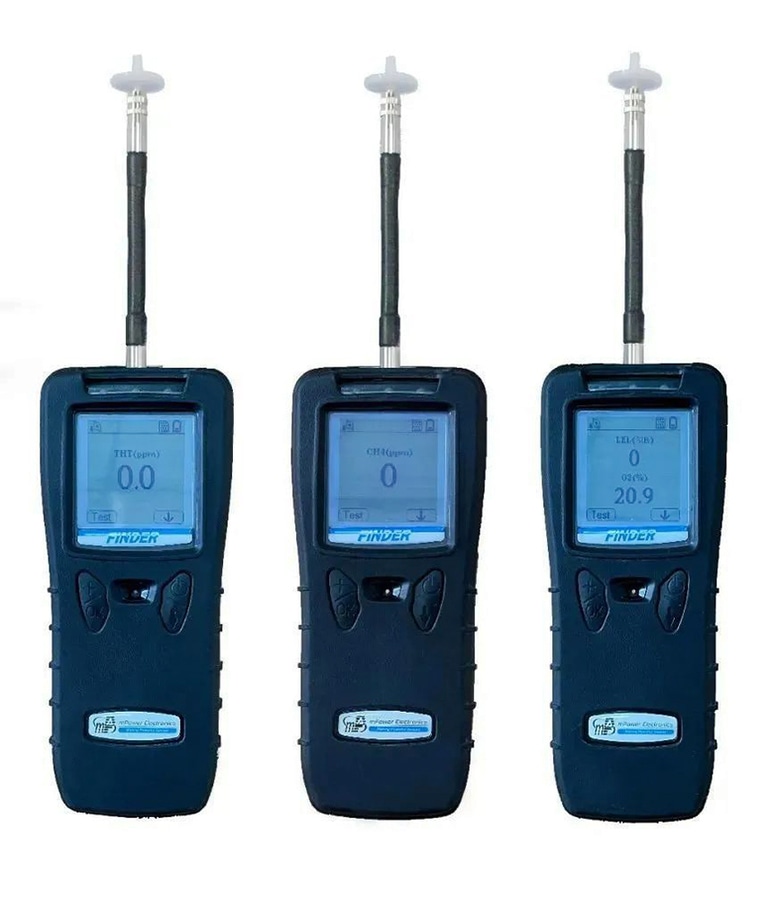
Composite Gas Detector MP160
In the fields of modern industrial production and urban public safety, the risks of flammable gas leaks, accumulation of toxic and harmful gases, and environmental oxygen deficiency have always been significant hidden dangers that threaten the safety of personnel and the stable operation of production facilities.
These gas risks are widespread in various scenarios ranging from gas transmission and chemical production to municipal pipe networks and oil storage tank areas, featuring strong suddenness, rapid diffusion, and high harmfulness.
Traditional gas detection equipment can often only cover a limited range and fail to meet the needs of micro-leak early warning (ppm level), explosion risk monitoring (% LEL level), and high-concentration environment detection (% Vol level) at the same time. This forces operators to frequently replace equipment in different scenarios, which not only reduces work efficiency but also may form blind spots in safety monitoring during equipment switching.
Part.1
Brith
Science and Technology
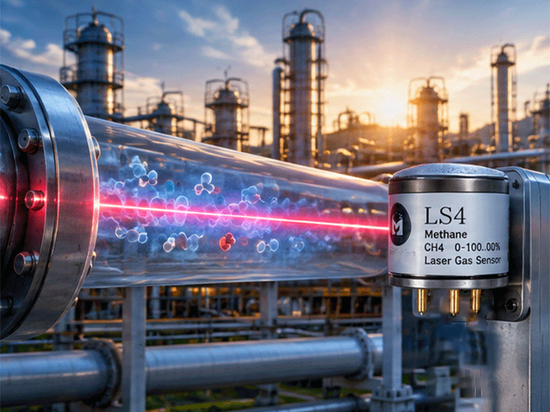
The birth of mPower's composite gas detector MP160 is precisely aimed at solving this fundamental pain point in the gas industry and industrial safety monitoring field. By virtue of multi-sensor fusion technology (NDIR infrared, HRC catalytic combustion, electrochemical), this device has achieved a revolutionary breakthrough of "one device covering all flammable gas concentration scenarios" for the first time. Its full-range detection capabilities include:
Core Value
✅Avoid equipment replacement due to range switching, and improve detection efficiency and safety
✅ Detect gas leaks in a true, accurate and reliable manner
Part.2
Detonate the Market
Since the launch of its composite gas detector MP160, Mengpu'an has quickly made this revolutionary device a safety standard in high-risk industries such as petroleum, gas, and fire protection, thanks to its core performance of "seamless coverage of ppm-LEL-Vol". The order volume has even shown an exponential growth.
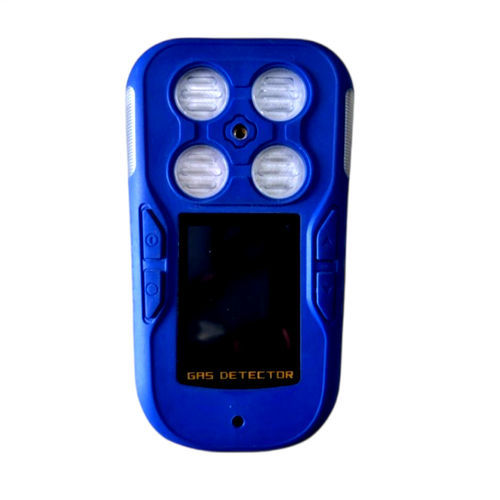
The portable composite gas detector MP160 can provide detection of trace ppm-level combustible gas leaks, LEL-level industrial safety combustible gas detection, and accurate Vol full-range combustible gas detection. At the same time, it can support toxic and harmful gases including oxygen and tetrahydrothiophene. It is widely used in industries such as gas leak detection, industrial safety, petroleum and petrochemicals, chemical industry, fire protection, telecommunications, municipal administration, and sewage treatment.
Part.3
Data Interpretation
1. The actual concentration at the sampling point is unknown (not a standard substance). The reading shown by a well-known brand is relatively low; the reading shown by the composite gas detector MP160 is relatively higher than that of the well-known brand.
2. When the composite gas detector MP160 is exposed to standard gas, its displayed readings are lower than the known standard gas concentrations: 2.2% Vol (vs. 2.5% Vol) and 83.6% Vol (vs. 99.9% Vol). The errors in the low and high ranges are 12% and 16.4% lower respectively.
3.After calibration with 2.5% Vol standard gas, the low-concentration data is very accurate, with errors in the middle and high ranges being 4.8% and 6.1% respectively....
4. After calibration with 50.9% Vol standard gas, the low-concentration data is very accurate, with errors in the low and high ranges being 0.1% and 0.1% respectively.
Part.4
Test Conclusion
The composite gas detector MP160 shows good linearity in the readings when detecting standard substances.2. Calibration with 2.5% Vol (CH4) standard gas at the calibration point results in relatively accurate measurements for low concentrations, with a slight error for high concentrations.3. Calibration with 50.9% Vol (CH4) standard gas at the calibration point leads to relatively accurate measurements for low, medium, and high concentrations.
Concluding Remarks
The skyrocketing popularity of the MP160 is by no means accidental. Armed with the technical edge of "full-range detection", it has precisely targeted the long-standing pain points in the industrial safety field that remained unsolved for two decades, forcing industry giants to collectively update their procurement standards.