#Product Trends
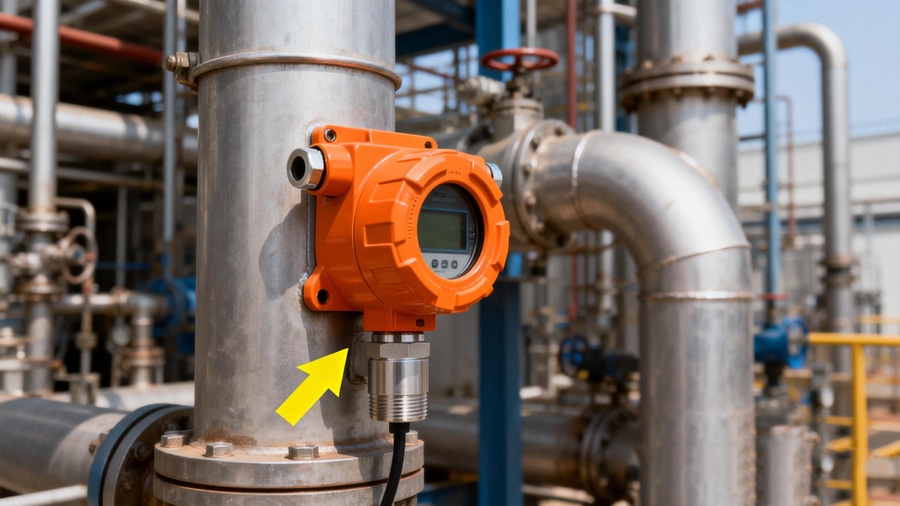
MaiYa Sensor LS4 Laser Methane Sensor – Empowering Industrial Enterprises to Achieve Methane Emission Reduction Compliance
Tightened Methane Emission Regulations Are Coming
Policy Highlights! Tightened Methane Emission Regulations Are Coming – LS4 Is the Key to Industrial Enterprise Compliance
Introduction
Under the "dual carbon" goals, methane emission reduction is no longer an option but a survival imperative for industrial enterprises! With the implementation of the Action Plan for Methane Emission Control, the emission reduction roadmaps for the "14th Five-Year Plan" and "15th Five-Year Plan" periods have been clearly defined. The Monitoring, Reporting and Verification (MRV) system and Leak Detection and Repair (LDAR) technology have been identified as core initiatives. Pilot programs for "quantitative accounting + automatic reporting" have been launched in multiple regions, and the implementation of a unified national regulatory standard is imminent.
Shifting from "policy advocacy" to "rigid constraints", enterprises in key industries such as oil and gas, coal mining, chemicals, and landfills are facing unprecedented pressure to reduce methane emissions. Accurate and reliable methane monitoring equipment is the core weapon for enterprises to maintain compliance and avoid fines of millions of yuan. The LS4 laser methane sensor from MaiYa Sensor, with its four core competitive advantages, provides comprehensive support for industrial enterprises to achieve methane emission reduction compliance.
I. Policy Analysis: Two Core Requirements Point to the Strength of Monitoring Equipment
The Action Plan for Methane Emission Control clearly puts forward two core tasks, each imposing stringent standards on methane monitoring equipment:
1. Establish and improve the MRV system: It requires enterprise methane emission data to be "monitorable, reportable, and verifiable". Data accuracy directly determines whether enterprises can pass regulatory inspections and avoid rectification risks.
2. Promote the regular application of LDAR technology: It requires enterprises to conduct periodic leak detection and repair on equipment sealing points and pipelines. The equipment must be suitable for complex industrial environments and meet the needs of long-term, stable monitoring.
At the same time, the Air Pollution Prevention and Control Law targets non-compliant emissions: Excessive methane emissions will not only result in fines of millions of yuan but also affect project approval and green credit applications. Under such intense policy pressure, choosing a methane sensor that meets policy requirements is the key to removing obstacles for enterprise development.
II. LS4 Laser Methane Sensor: Four Advantages to Precisely Meet Industrial Emission Reduction Needs
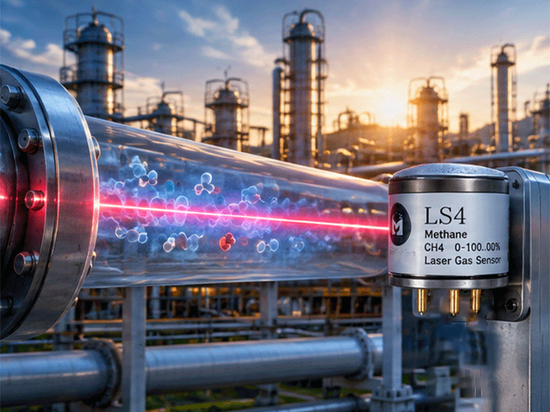
Facing the dual challenges of policy requirements and industrial scenarios, the LS4 laser methane sensor from MaiYa Sensor leverages TDLAS core technology to excel in accuracy, stability, response speed, and adaptability, perfectly addressing the pain points of enterprise monitoring.
1. Accurate Monitoring Without Interference – A Strong Support for MRV System Data Reporting
The core of the MRV system is data accuracy, but the complex gas environments in industrial sites (such as multi-component gases in oil and gas fields and high-humidity, dusty environments in landfills) often cause traditional sensors to "malfunction".
The LS4 adopts TDLAS technology, featuring unique selectivity for methane and complete immunity to interference from other gases, water vapor, or dust, ensuring "zero-error" monitoring data. Its measurement range covers 0–100%VOL, with a resolution of 0.01%VOL and an error as low as ±0.03%VOL (0–1%) or ±5% of the true value (1%–100%). It can accurately capture trace leaks, providing enterprises with authoritative data directly usable for reporting and verification, enabling easy compliance with MRV system audits.
2. Stable, Reliable and Long-Lasting – A Cost-Saver for LDAR Periodic Monitoring
LDAR technology requires enterprises to conduct periodic inspections of sealing points, and frequent calibration and equipment replacement will significantly increase enterprise operation and maintenance costs.
The LS4 fundamentally solves this problem: it requires no frequent calibration and maintains high stability during long-term use, with a sensor lifespan of over 5 years, greatly reducing equipment replacement frequency. With an IP65 protection rating, it is high-temperature resistant, corrosion-resistant, and dust-proof, easily adapting to harsh environments such as oil and gas field field operations, coal mine underground work, and chemical plant workshops, truly achieving "one-time installation, long-term benefits".
3. Rapid Response and Flexible Output – An Efficiency Driver for Real-Time Monitoring and System Integration
Methane leaks are sudden, and rapid response is essential for timely loss control. Meanwhile, enterprises building monitoring platforms require equipment to support flexible data docking.
The LS4 has a response time of ≤20 seconds. Once methane concentration exceeds the threshold, it can immediately trigger an alarm, gaining valuable time for enterprise emergency response. It supports dual output modes of TTL serial port and 0.4V–2V analog signal, enabling seamless integration with existing enterprise monitoring systems and PLC control cabinets, realizing real-time data reading and automatic uploading without additional manual data entry, significantly improving monitoring efficiency.
4. Compact Structure and Wide Application – An Adaptable Solution for Full-Scenario Coverage
Methane leak points in industrial enterprises are scattered, with various types of sealing points (valves, flanges, pump shafts, etc.), placing high demands on sensor installation flexibility.
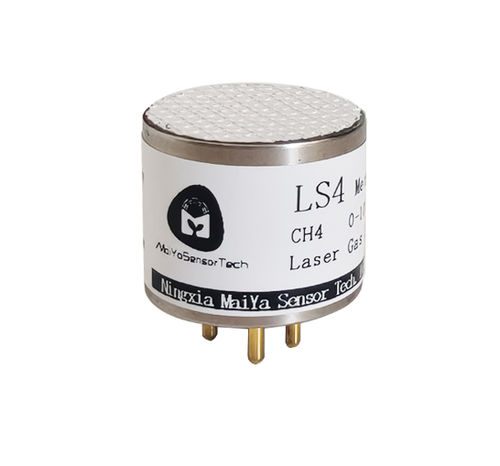
With a compact size of only Φ20mm × 16.6mm, the LS4 adopts a 304 stainless steel shell, which is shockproof, dustproof, and waterproof, occupying minimal space. It can be paired with detectors for fixed installation at key locations such as pipelines and storage tanks, or mounted on mobile devices such as drones and inspection vehicles, meeting the full-scenario monitoring needs of oil and gas pipelines, coal mine gas drainage, landfills, chemical parks, etc., truly achieving "full coverage and dead-corner-free monitoring".
III. Industry Adaptation: Addressing Pain Points in Three Key Fields
1. Oil and Gas Field Sector: To address the pain points of insufficient torch combustion and long-distance pipeline leaks, the LS4 features strong anti-interference capability, accurately capturing methane emissions from a distance, helping enterprises achieve the goal of "zero routine flaring".
2. Coal Mining Sector: Adapted to high-humidity and high-dust underground environments, it stably monitors gas concentration, providing data support for gas drainage and utilization while avoiding explosion risks.
3. Landfill/Chemical Sector: Resistant to corrosion from complex media, it real-time monitors landfill gas and chemical equipment leaks, meeting the dual needs of emission reduction and safe production.
Kindly Reminder
Enterprise methane emission reduction layout should follow a "two-step approach": First, prioritize deploying detectors equipped with LS4 sensors at high-leakage risk points (valves, flanges, storage tank areas) to establish a basic monitoring network; Second, align with LDAR technical specifications and MRV system requirements to ensure closed-loop data management and prepare for subsequent policy inspections.
Interactive Guide
Is your enterprise facing methane emission reduction compliance pressure? Want to obtain exclusive monitoring solutions for oil and gas fields/coal mines/chemicals? Welcome to send a private message with "Methane Compliance + Industry Type", and the MaiYa Sensor technical team will provide you with one-on-one customized solutions!